
CHARBONNEAU – Those with incurable mental illness should qualify for MAID
(Image: Geralt, Pixabay.com)
THE FEDERAL GOVERNMENT continues to deny those with incurable mental illness access to Medical Assistance in Dying. It’s based on the mistaken notion that a mental world exists separate from a physical one.
 It’s a persistent concept proposed by René Descartes in the 1600s. He said that mind and body are fundamentally different kinds of things: the body is a physical object that occupies space and follows the laws of physics and the mind is a non-physical thinking substance that does not occupy space.
His “mind-body dualism” shaped medicine, law, and culture for centuries.
There is no such distinction. All mental states are physical states. Unless you believe we are inhabited by spirits, how could it be otherwise?
The state has used ancient ideas from the beginning of the MAID debate, such as the feudal thinking that a person’s life was not their own.
Kings considered subjects as chattels. In taking one’s own life the king was deprived of a subject and the state punished the surviving family by seizing their inheritance, land, and household goods, driving many families into sudden poverty.
The state resisted MAID from the beginning and had to be taken to court in 2015. The government lost that case (Carter v. Canada).
The Supreme Court of Canada unanimously ruled that prohibition in physician-assisted dying violated the Canadian Charter of Rights and Freedoms.
Gloria Taylor was one who joined in that case. She had ALS (amyotrophic lateral sclerosis), a progressive neurological disease that gradually destroys motor neurons, leading to increasing paralysis while usually leaving a person’s cognitive abilities intact.
When she joined the legal challenge, Taylor feared reaching a point where she would be unable to communicate, swallow, or care for herself, yet would still be mentally aware of her situation.
After that loss, the state opposed MAID for those who had incurable diseases but were not about to die in the foreseeable future.
It took two years for parliament to respond to a Quebec Superior Court that found that those who were suffering but not about to die also qualified for MAID.
The Truchon and Gladu decision in 2019 found that assisted dying laws were unconstitutional and removed the requirement that death be “reasonably foreseeable.”
Parliament responded with Bill C-7 in 2021, creating a two-track system in which those who were suffering from physical pain, but not about to die, had access to MAID.
But parliament refused to allow those who were suffering from mental anguish the same rights. Typical of the feds when they want to stall, they struck a committee to establish guidelines.
The committee was stacked against MAID for sufferers of mental illness from the start. Committee co-chairs both opposed it. Of the witnesses that the committee heard, 75 per cent were opposed.
So it was no surprise that, five years later, the committee wants to stall another year.
The committee says that mental illness is different from physical illness; mental illness could be cured, they say, treatment is just around the corner.
The same arguments for allowing those with incurable physical illness the access to MAID should apply to those with incurable mental illness.
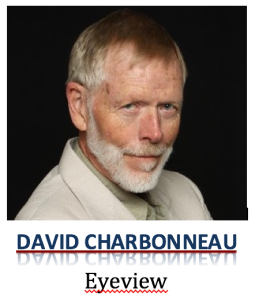
David Charbonneau is a retired TRU electronics instructor who hosts a blog at http://www.eyeviewkamloops.wordpress.com.


Do not some people believe that humans are body, mind and spirit? If so, I can see a possible tension for them with taking the life of a person based on a physical or mental infirmity.
However, another tension exists with the taking of the life of a human whose life support system is different from the adult human beings we see in day to day life. There is a time when a person has to develop from an embryo to a being who exists outside his or her mother’s body. We ALL went through that process. Yet, perfectly healthy human beings are eliminated by process. That’s the power of choice that we have as a human race.
Does a tension exist for a politician who, for one day of the week, asserts the value of each human life yet supports (by standing in a public display) the health and future of one person over the health of another in the act of taking one of their lives?
LikeLike