
ROTHENBURGER – Request from City’s privacy officer was dressed as an order
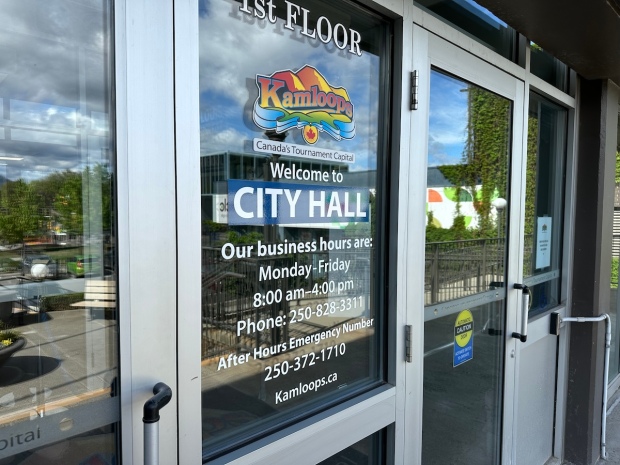
(Image: Mel Rothenburger)
PRIVACY IS SERIOUS BUSINESS. When it comes to public bodies, it’s the flip side of transparency. In B.C. there’s a lot of regulation around it, particularly in the Freedom of Information and Protection of Privacy Act, known as FIPPA.
 Most local governments, at least in bigger cities and regional districts, now have dedicated staff to deal with matters covered by that act. Mainly, they involve applications from the public for access to records created in the course of doing the public’s business.
Sometimes, though, possession of records obtained outside the FOI process may be deemed to be a breach of privacy. For example, if someone receives details of a public servant’s health records or employment status, a demand might be made by City Hall that the records be returned or destroyed.
Such an occasion occurred this week involving Mayor Reid Hamer-Jackson’s email activity. He’s been sending out daily emails to deputy mayors and copying them to local media as part of his transparency pledge. Sometimes, the emails include screenshots of documents or previous communications to back up his point.
One of them came to the attention of the City’s privacy officer Stephanie Nichols, who fired off a demand to those in receipt of the email to delete it.
The subject line was “Direction to Delete Record Containing Personal Information.” The email began, “On September 13, 2026, at 7:16 am. you received an email from Mayor Hamer-Jackson with the subject line ’Fw: O’Reilly NL radio.’ In the email and the two images attached, Mayor Hamer-Jackson disclosed sensitive personal information that he was not authorized to share.
“We have determined this is a breach of privacy and will be reporting this matter to the BC Office of the Information and Privacy Commissioner.”
It was then followed with a “we direct you” to do a whole bunch of things to destroy any copies of the email in existence, with a deadline of 4 p.m. the following day to confirm that this had been done.
Nichols pointed out that the City has the authority under the act to take legal action to recover the information. It was pretty strong stuff.
In reviewing what the mayor had sent out, I had a little trouble understanding what the big deal was. It involved a City employee but it seemed to me the references were nothing that would be embarrassing or damaging to that person’s reputation, so I asked for clarification of why it was considered a breach of privacy, especially since it had previously been published in the media.
Nichols replied simply that it contained sensitive person information and was “an unreasonable invasion of a third party’s personal privacy.” She noted that the City has a legal obligation to protect personal information regardless of whether it’s already in the public realm.
She again mentioned the 4 p.m. “deadline” but this time “asked” me, rather than “directed,” me to comply, calling it a “request.”
It wasn’t much of an answer but I thanked her for changing the terminology from “direct” to “request” and “ask,” “as I don’t believe your authority includes setting such a short timeline for compliance.”
Meanwhile, unbeknownst to yours truly, Kamloops Critic publisher Richard Wilbur was going through a somewhat similar process. When he got his email from Nichols, he asked her to clarify the legal authority for her demand.
She replied that she was “seeking voluntary compliance,” and “we encourage you to comply with the actions requested to avoid the need for further action.”
Again, quite a different tone than the initial “Direction to delete record” email.
Wilbur, who has made a mark with his thorough research on the goings-on at City Hall, wrote in his Kamloops Critic blog on Friday (headlined, ‘The City Directed Me to Delete an Email, Then Said It Was Voluntary’) that he hasn’t deleted the mayor’s email or its attachments, and will wait to be informed whether a Section 73.1 notice is issued. “I have no intention of publishing the employee’s personal information,” he wrote, but says he’s preserving the email and attachments because he has filed an FOI application asking for the City’s records behind Nichols’ Sept. 15 email.
I decided, for two reasons, to delete the mayor’s email as Nichols asked. First of all, the FIPPA doesn’t leave any leeway. While the privacy breach cited by Nichols is, in my view, marginal at best, legislation doesn’t distinguish between marginal and major.
Section 22 clearly states that disclosure of personal information is presumed to be an unreasonable invasion of privacy if, among other things, it “relates to employment, occupational or educational history.” Employment history is defined as any information regarding the individual’s work record, including duties associated with the position.
So, while I’m not a lawyer or privacy expert, it seems pretty certain that, technically, a breach of privacy occurred. I say technically because I can’t conceive of any possible harm this particular employee might suffer from this particular breach.
The second reason I complied is that I have no wish, use nor cause to retain the record. Wilbur’s rationale that he needs it for an FOI application, though, makes sense.
The next step in the process, if the City pushes the matter, is to formally demand compliance under Section 73.1 of the Act. That involves a 20-day deadline to comply. Under Section 73.2, the City could seek enforcement through a court order.
In a broad sense, Nichols was just doing her job. If she becomes aware of a privacy breach, she has an obligation to mitigate it by pursuing destruction or return of documents. What’s annoying, however, is the language used in communicating with those who received the mayor’s email.
Nichols’ email to them made it sound as though she was triggering enforcement she didn’t yet have authority to do. It seemed designed to put the fear of God into the recipients. I can find no reference anywhere to authority to impose a 24-hour deadline.
Requests from the City’s FOI and privacy department should be clear — a request is a request. They should not attempt to “direct” that something be done within 24 hours, in hopes the recipient won’t ask any questions.
Mel Rothenburger is a former regular contributor to CFJC-TV and CBC radio, publishes the ArmchairMayor.ca opinion website, writes for the Kamloops Chronicle and is a recipient of the Jack Webster Foundation Lifetime Achievement Award, and was a Webster Foundation Commentator of the Year finalist. He has served as mayor of Kamloops, school board chair and TNRD director, and is a retired daily newspaper editor. He can be reached at mrothenburger@armchairmayor.ca.


This is another example of the bullying posture of both city administrators and city council members Mike O’reilly, Dale Bass, Kelly Hall, Bill Sarai, Nancy Bepple, Katie Neustaeter, Margot Middleton, and Stephen Karpuk
The last four years has seen an increased tone of bullying by shutting down council meeting public inquiries, use of alternate approval process (AAP) and repeat use of deflection, distortion along with selective truth.
I am very sad that the current council has been much less than transparent.
Garry Davies is a former elect representative and serves on numerous Kamloops commitees and organizations including crime prevention throughout the city.
LikeLike
This is an interesting case, and I think your approach to FIPPA, 73.1, and potentially 73.2 is bang on, given the interpretive use here. Theres no story in this exact protected info, so just chuck it out … who cares. Its not like it protects Epstein files, or something that is worthy of court intervention, to fight against.
We could ask just what is Mr. Wilbur’s purpose is here, to challenge the system to see if it works and whether the city will push the 73.1 button, or if he also sees it as a bit of a ‘why not – might increase readership hits’ moment.
The real story here, is the good Ms. Nichols, who likely learned a valuable lesson regarding precise language regarding any info that touches on FIPPA.
I’ll give her a pass this time, but will pay close attention in any soon to be released RJH forwarded emails, reminding us that he really should rethink his ‘transparency’ desires if they poke at FIPPA … before we get anywhere near Nichols and her attempts to fix the breach.
Freedom, Information, Privacy and Democracy is hard.
LikeLike
Thanks, David
I had an interesting exchange with David Trawin who was CAO at the time. I asked him about the leaks of “private” emails of the Mayor to the media. Those emails contained information about standing committees, I believe.
I pointed out that there was a “footer” on the emails generated by the Mayor notifying the recipient that the contents were intended only for the recipient and were not to be shared with anyone else.
It was a bit of a surprise that Mr. Trawin replied with an explanation about “FOI-able” and he had little concern about FOI-able emails being leaked to the media. He claimed he did not know who leaked the Mayor’s emails.
After thanking Mr. Trawin, I added that I was really just a “nobody” and he didn’t have to explain everything to me. (I kinda felt like a priest in a confession booth if you want to know the truth.)
My question since then has been the emails from an insurance company or a medical place (for example) that have a footer saying that the contents are meant ONLY for the recipient (but might be FOI-able) should be OK to forward, by the recipient, to a media outlet?
LikeLike
I received the following a couple of months ago from the city regarding an ongoing 2 year Ombudsman investigation:
Good morning Mr. Gordon,
Please see attached letter on behalf of Jen Fretz, Deputy Chief Administrative Officer.
Thank you for your attention
Carly-Rae Roberts
Executive Assistant to the Chief Administrative Officer | City of Kamloops
7 Victoria Street West, Kamloops BC, V2C 1A2
P: 250-828-3498 | Kamloops.ca | LetsTalk.Kamloops.ca
The Ombudsperson Act requires that investigations be conducted in private. Ombudsperson
investigation documents are not available through the Freedom of Information and Protection of Privacy Act and may be subject to rules preventing their use in court and tribunal proceedings. Please contact the City before disclosing this document, or any responses, to any third parties.
Jen, I have zero interest in contacting you or anyone else from the city regarding Ombudsperson Complaint No. 24-005075 (the “Complaint”) before disclosing it to whomever I choose.
LikeLike
FIPPA does not apply to private business or individuals. You cannot be compelled to delete. Sounds like the City attempted to scare people into compliance. Then when pushed back seemed to acknowledge they had no grounds or any real mechanism to compel destruction, and only then turned it into a request.
You didn’t have to comply and it’s a bit unfortunate that you did. I would like to see the city attempt to do anything about non-compliance.
A recipient is not the target of FIPPA. Rather it’s the municipality. They are covering their own asses.
LikeLiked by 1 person
When an unrelated third party comes into possession of private information in the custody of a public body (in this case the City), they can’t be taken to court directly under FIPPA. However, under Sections 73.1 and 73.2, the City could seek a B.C. Supreme Court order for the return or destruction of the records. The process is to first ask the third party to comply voluntarily. If that request is refused, the public body may choose to invoke Sections 72.1 (written notice with 20-day deadline) and, if there is no compliance, move to 73.2 (seek legal remedy). The third party could then potentially be found in contempt of court, which may result in fines or jail time. According to the Ministry of Citizens’ Services FOIPPA Policy & Procedures Manual, “In the event that an individual or organization does not comply with a demand issued under section 73.1, and the public body chooses to seek a court order, the public body may ask the Attorney General to petition the superior court for an order requiring the return of the personal information.” Would that happen in this case? Of course I don’t know, but I chose to delete the records for the reasons I stated in the column. Bottom line is I have no need nor wish to retain the private information. My point in my column was the way in which the City went about its initial request for deletion.
LikeLike
That’s all fine and good but you’re a journalist and you received those communications in the capacity of a journalist. They demanded a journalist destroy source material. That is wildly inappropriate. They should have asked you kindly and with humility. Not demanding you do so with a deadline far faster than they would process an FOI.
Imagine any government body, especially a municipality, compelling a journalist to destroy anything received from a third party? From the sound of it, you received something about Trawin or similar which included content already published. Even state secrets would not likely survive such an attempt if you were to have received them, much less something as pedestrian as what the Mayor of Kamloops is flinging around electronically. To be clear, the Mayor should likely not have sent those off. But back to my point – that’s not your problem; that’s the City’s problem.
We have a strong protection of expression and particularly the protections of the press. A functioning democracy requires them. The city would likely not succeed if they challenged this, and you could surely make a huge stink about it if they tried (think a Charter legal challenge), especially when previous leaked municipal information was published and the city did not request Castanet to destroy the material. Not that you would want to. But this seems yet another example of selective application of the rules when things involve the Mayor.
LikeLiked by 1 person
So the city’s threat turned out to be just bluster, hoping you and the Kamloops Critic would fall for it? Yikes. Looks like the city needs a more subtle lawyer, lol.
LikeLike