
CIVIC ELECTION ISSUES – When is a meeting of councillors not a meeting?
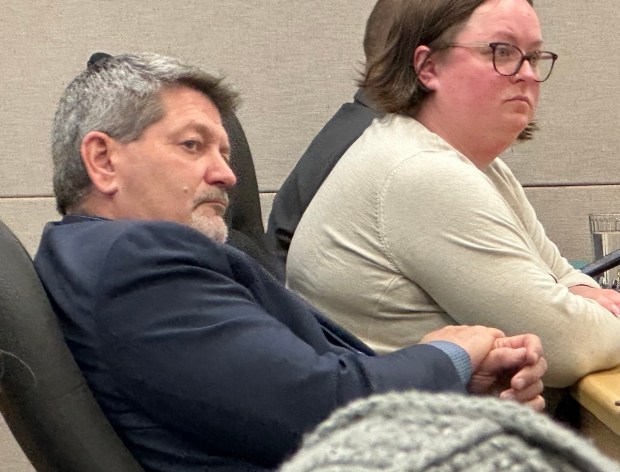
Byron McCorkell (left). (Image: Mel Rothenburger.)
Part 4 in a series on some of the issues raised in the civic election campaign.
By MEL ROTHENBURGER
Publisher, ArmchairMayor.ca
TRANSPARENCY has long been a key issue in civic politics in Kamloops. Elections have even been fought on it.
A big part of transparency in local government has to do with open versus closed meetings. The latter are unavoidable but there are strict rules around when they can and should be held.
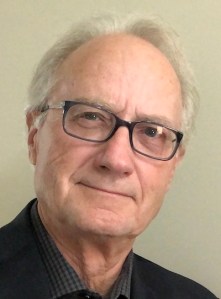
Mel Rothenburger.
I recently examined, in a column, what those rules entail.
There’s one specific kind of meeting, though, that’s been challenged during the election campaign. Incumbent Mayor Reid Hamer-Jackson, a steadfast opponent of closed meetings, has raised questions about what are known as “Coffee with Byron” sessions between City CAO Byron McCorkell and councillors.
Hamer-Jackson doesn’t attend those meetings but challenges their existence on suspicion that they’re illegal under B.C.’s Community Charter.
“You always express how important these meetings are yet when I asked in an open meeting what happens in a Byron/council coffee meeting most of you just held your coffee cups in the air,” Hamer-Jackson quizzed Coun. Kelly Hall, who was deputy mayor at the time. “… I don’t believe you all can be discussing coffee are you?”
On another occasion, he asked Coun. Stephen Karpuk, “Do you know how many brands of coffee you have discussed and has there been any discussion or decisions made? Can you please explain what section of the community charter must be in closed?”
Let’s be clear on what we’re talking about. City council has all kinds of different meetings of the full council as well as committees. Some are in camera if they discuss “land, labour or legal.” Otherwise they’re supposed to be held in public. But…
“Byron/ Council Coffee Meetings,” as they’re officially called, are scheduled meetings. They’re set to be a half hour long in the executive boardroom of City Hall. Council members are messaged about the date, time and place. Attendance isn’t mandatory. Sometimes other staff members are there too. The media and public aren’t on the invite list.
I asked some questions to clear up the status of these coffees with the CAO. McCorkell responded, rejecting the notion that they are in any way contrary to the rules around going behind closed doors.
“The CAO coffee sessions are not meetings of Council. They provide an opportunity for individual members of Council to drop in and receive information from the CAO regarding various matters,” McCorkell wrote me in response.
“Attendance varies, there is no agenda, no minutes, no chair, no formal procedures, no voting, and no discussion aimed at reaching decisions or consensus about municipal business.
“Council decisions are made only at duly convened Council meetings in accordance with the Community Charter and the City’s procedures bylaw.”
OK, I said, but what about the matter of quorums? If a majority of the council is present, doesn’t that make it a meeting of council, and therefore must fall under the usual rules that apply to closed meetings?
So McCorkell passed it on to Denise McCabe of Fulton & Co., who handles legal work for the City. Here’s what she said:
“Hello Mr. Rothenburger,
“CAO McCorkell has asked that I respond to your questions, as they raise legal issues. The following is provided for general information purposes only and is not intended to waive, and should not be construed as waiving, any solicitor-client privilege that may apply to communications between the City and its legal counsel.
“The law does not treat quorum as a bright-line test. Quorum is relevant, and it’s one of the factors the courts will consider, but it’s not determinative on its own. The analysis is broader and looks at the overall ‘indicia’ of a meeting, including whether a quorum is present, whether the gathering takes place in council’s usual meeting place, whether it’s regularly scheduled, whether formal procedures are followed, whether votes are taken, and whether the discussion relates to matters within council’s jurisdiction.
“Most importantly, the courts look at the substance of what is happening. The key question is not simply whether a quorum happens to be in the same room, but whether council business is being advanced in a way that forms part of the decision-making process. In particular, the concern is whether members are making decisions, materially advancing a matter toward decision, laying the groundwork for a later vote, discussing voting intentions, or otherwise depriving the public of the opportunity to observe a meaningful part of council’s decision-making process.
“We understand that CAO coffee meetings are not conducted in this manner. These are simply open office hours: informal opportunities for individual members of Council to drop in and receive updates from CAO McCorkell. While CAO McCorkell is regularly present during set hours, Council members are free to drop in as they wish, and attendance is neither mandatory nor expected. This does not take place in Council Chambers but in the meeting room nearest CAO McCorkell’s office. The drop-ins are very informal and do not have the features of a Council meeting. There is no agenda, no chair, no speaker’s list, no minutes, no formal procedures, and no voting. CAO McCorkell simply provides information and updates to individual members.
“Most importantly, we understand that any members who happen to be in attendance do not use the coffee meetings to make decisions, give direction, debate options, discuss voting intentions, or move matters toward a later Council decision. These are informational drop-ins only, and all substantive Council business occurs through the proper Council process in accordance with the Community Charter, the open-meeting rules, and the guidance from the courts.”
So, it comes down to this: a meeting isn’t always a meeting. Regardless of all the other things that govern a gathering of councillors, whether or not it’s a meeting depends on if decisions are made, or whether discussions move toward future decisions.
A meeting is defined by Merriam-Webster as “a gathering of people for a common purpose, such as to discuss business.” Unless it’s coffee with Byron.
Mel Rothenburger is a former regular contributor to CFJC-TV and CBC radio, publishes the ArmchairMayor.ca opinion website, writes for the Kamloops Chronicle and is a recipient of the Jack Webster Foundation Lifetime Achievement Award, and was a Webster Foundation Commentator of the Year finalist. He has served as mayor of Kamloops, school board chair and TNRD director, and is a retired daily newspaper editor. He can be reached at mrothenburger@armchairmayor.ca.


Leave a comment