
CHARBONNEAU – Who owns copyright for AI generated works?
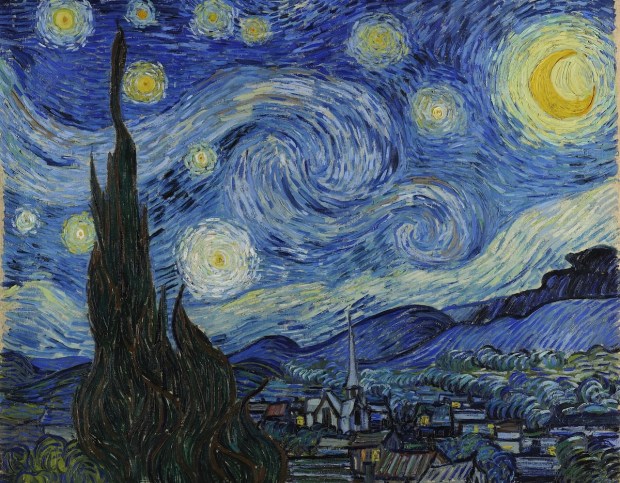
Who thought Van Gogh’s Starry Night painting from 1889 would become the centre of an AI controversy in 2024?
AFTER AN AI program generated a song for me, I asked a friend who happens to be lawyer who owned copyright of the song,
His answer: nobody.
 I can understand that. I don’t own the copyright. I didn’t write the song. All I did was to enter a few prompts and AI did the rest.
It’s clear to me that I can’t claim copyright for something generated by a machine; any more than I can claim clean clothes after they come out of the washer.
And AI couldn’t claim copyright. Or could it?
This premise is being tested by Ankit Sahni, a lawyer in New Delhi.
Sahni took a photo of a sunset from his terrace and used an AI image generator to create a picture from the photo. The photo is nothing great in the first place and the AI generated picture is not much better. It uses the dreamy swirls from van Gogh’s painting, Starry Night.
The issue is not the copyright infringement of Van Gogh’s painting. That copyright expired 70 years after his death.
Audaciously, Sahni has challenged copyright law by listing the AI image generator as the owner of the picture. He applied for copyright in India, the United States and Canada.
The U.S. copyright office rejected the application outright. They allow protection of original works that contain AI generated elements. For example, in 2023 the copyright office recognized limited protection of a graphic novel consisting of AI generated images. The human-authored text and the arrangement of the images were granted protection – but not the images themselves.
After some hesitation, India granted protection of the image with the AI generator listed as the copyright holder.
Registration for copyright in Canada is easy but registration is not significant unless there is a court challenge. All it took to register Sahni’s AI generated picture was for him to complete an online form and pay a fee of $63.
The Canadian copyright database shows registration for the picture, as of Dec. 1, 2021, with two authors: Ankit Sahni and the Artificial Intelligence Painting App that created the picture.
Not so fast, says the Canadian Internet Policy and Public Interest Clinic (CIPPIC) at the University of Ottawa. They have filed an application with the Federal Court seeking to expunge the registration for the image. A non-human, according to CIPPIC, simply cannot be an author under law.
A lawyer for CIPPIC raised its concerns about the registration. He says: “You can list an author. You can’t list a washing machine or a box of rocks.”
Canada’s copyright laws would be a lot clearer if the feds had updated the Copyright Act to rule out AI as a copyright holder. But no, updating has been delayed.
The case raised by CIPPIC before the Federal Court will undoubtedly influence future cases.
If the feds can get their act together, the absurdity of an AI image generating program being listed as an author can be avoided.
David Charbonneau is a retired TRU electronics instructor who hosts a blog at http://www.eyeviewkamloops.wordpress.com.


Leave a comment