
Fire, fear and more lessons learned
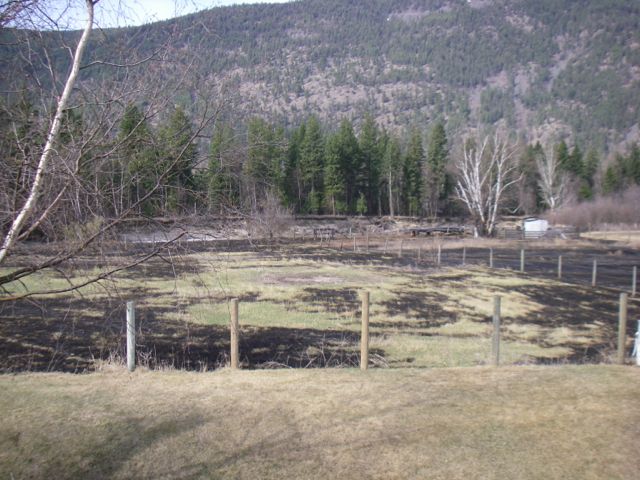
Burning cleans up the land but it an be scary. (Dan Spark)
COLUMN — Nearly eight years had passed since the wildfires of 2003 devastated the region and our move to McLure in 2011.
 Time may have passed, but there were still plenty of visual reminders of that hot, hot summer. A look out our window to the north still reveals the starting point of the blaze just past the McLure restaurant, which served as home base in the firefight.
A deep, ugly scar still runs across the top left corner of the hillside across the Yellowhead Highway and opens up into a wide, gaping wound the farther one drives toward Barriere. There are signs of regrowth, but the creep of regeneration is proof of the dangers of fire in the Interior and how quickly things can get out of control.
With reminders of that summer just up the road, you’d think I would have kept those dangers in mind when I decided to play with fire in the spring of 2012. Risks be damned, I thought; I know what I’m doing.
The idea of burning my pastures of dead grass only dawned on me the year before when, just weeks before we moved into our house, the previous owner burned the pasture, leaving much of our property black and crispy throughout much of April. Eventually, the black gave way to bright green, but the whole exercise was confusing to someone new to the rural life. Along the highway from Kamloops to McLure, property after property were covered in charcoal-coloured patches.
Burning overgrown farmland, it seemed, was just another chore to do in the spring.
My confusion over the practice turned to clarity in March 2012 when my pastures were overgrown with brown field grass and weeds up to my hips. With no horse or cow to keep the grass to the length of a golf course fairway, our property suddenly became a fire trap. It was ugly and there was no way I’d be able to mow it all down with my troublesome lawn tractor.
A few weeks later, I joined the rural tradition of burning my land.
My first experiment with the practice was on my southernmost plot. It was windy, but not too bad; I grabbed some newspaper and a lighter and gave it a shot. The wind was coming from the north, so I took my pyrotechnic materials to that side of the plot (a mistake, I later learned) and started sparking my lighter. It wasn’t long before flames licked up into the sky and started moving south where my plot came to a point bordered by a road and the river. If things got out of control, at least the fire had nowhere to go. Pretty smart thinking, I thought.
The wind picked up and so did the flames. My heart started thumping as the fire ate up the dead grass and weeds and soared high over my head. I was worried. Really worried. The whole process only took minutes but it was scary. The road and river did prevent the flames from travelling south but the blackened bottoms of my fence posts showed I was an amateur. Despite many warning signs that I, in fact, didn’t know what I was doing, I felt confident in taking on the bulk of my pasture the following week.
Again, the wind was blowing from the north and so I started on the north side of my land. (It was only later that I was told I should have back-burned from the south side to create a barrier that would starve the fire of fuel, even though I did mow the perimeter of what I planned to burn.) With rake in hand, I stood back as flames made their slow journey to the west and south. Minutes later, things picked up.
The fire started moving faster, the flames started getting higher and my heart starting beating so loud that I could hear it in my ears. Suddenly, it was out of control.
I scrambled to rake the ground to prevent the flames from spreading to the west and to a small shed and trees, but I had no chance. As the fire raced, I had visions of trees crashing down and my shed erupting into a ball of fire. This was bad.
My family came to my rescue with shovels and buckets of water, but it was hopeless. The fire, thankfully, was burning so hot and so fast, that it raced past the trees and shed, blackening the bottoms of the trees but hardly darkening the small building. The blaze eventually fizzled as it hit the river bank, but it was still heading south.
My wife and two oldest kids were stamping out flames near the well house and doing their best to stop it from taking deep bites into the trees. My very experienced, very knowledgeable neighbour also came onto the scene with a shovel and helped with the hot spots near my shed. The flames died a quick death after reaching the prior week’s burned-up land and it seemed that just minutes after it all started, it was over.
With our faces and boots blackened and our hearts thumping through our chests, we surveyed the damage. It looked like a war zone. I was getting I-told-you-so looks from my wife and my kids’ eyes were wide with fear. Everything was OK. There was no permanent damage and our mistakes would be used as lessons.
I have not burned my land since — I have not had reason to thanks to the appetite of our animals — and after that experience, I hope never to do so again.
Dan and Jody Spark are in their fourth year of living their back-to-the-land dream on their small acreage at McLure and they are having the time of their life.


Leave a Reply