
CHARBONNEAU – Data centres are the embodiment of our AI fears
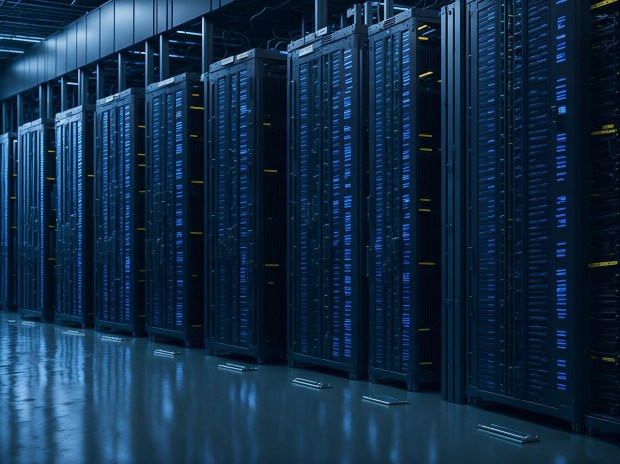
(Image: Pixabay.com)
IN AN IPSOS AI Monitor survey, two thirds of Canadians view AI as a direct threat to jobs, personal privacy, and overall stability of society. Of 32 countries surveyed, Canadians are the most anxious and least trusting in AI.
 It’s not surprising that data centres have become the tangible focus for public anxiety. If we can’t halt software development, then maybe we can prevent local data centres from being built. They have emerged as a proxy war to exert control over AI’s rapid expansion.
Protests against the building of data centres have taken place across Canada. A group of Kamloops students took to a busy street corner near Thompson Rivers University to protest the university’s planned AI data centre.
While the data centre was ostensibly the reason for the protest, the signs they held were concerned with AI: “Use your brain,” “This is a v-AI-olation of our trust,” and “F*** AI slop.”
Echo Hill, one of the protest organizers, told Castanet news: “We are mostly concerned about its effects on the climate, as well as the effects it has on young kids’ minds.”
Protesters objected to the amount of water that data centres use but TRU’s will use a closed-loop liquid-cooled design that will reduce water use.
If water use is the issue, why not focus on golf courses? A golf course in Kamloops uses about the same amount of water as a data centre.
Protesters object to the amount of electricity that data centres use.
BC Hydro regulates the amount of electricity allocated to data centres, ensuring that customers won’t do without. And if our public utility is in the business of selling electricity, data centres make good sense.
Protestors claim that data centres contribute to “AI slop” but most centres are for relatively mundane purposes.
What’s euphemistically called “the cloud” is actually a huge concrete bunker surrounded by razor wire. It stores all the cute pictures of cats you see on social media, pictures of your visit to Disneyland, emails from Aunt Mildred, massive libraries of videos on YouTube, and much more.
For sure, AI computation centres are growing and they use much more electricity than a pure data centre. But if Canada wants to stop relying on U.S. data giants, we need our own AI computation centres.
Trust is our biggest handicap.
In a study of 47 nations by KPMG and the University of Melbourne, Canada ranked 42nd out of 47 countries for public trust in AI. We trust politicians more, so that says a lot.
Ironically, those very politicians want to increase our trust in AI. The feds’ plan emphasizes literacy, work-force development, skills training and the acceleration of AI adoption across Canadian sectors.
This strategy to build trust is backwards, says Helen Hayes, PhD candidate at McGill University. It “treats trust as a prerequisite for adoption rather than an outcome of governance.” Safeguards need to come before technology can be trusted:
“People are far more likely to accept technological transformation when they believe robust safeguards exist, risks are being managed, and institutions can be held accountable. For Canadians, that trust does not exist, and the strategy’s approach to building it might very well backfire.”
David Charbonneau is a retired TRU electronics instructor who hosts a blog at http://www.eyeviewkamloops.wordpress.com.


Remember the panic over radiation from Hydro meters. The panic ended, and water and gas meters went on to be installed with hardly a peep.
Something stirs up mass hysteria (social media) and everyone panics with no thought to finding out facts.
Data and AI computing centers: two different things.
LikeLike
“In a rare joint statement published on Monday, cyber security leaders from Australia, the US, the UK, Canada, and New Zealand said frontier AI models are developing faster than expected and are “anticipated to exceed current industry expectations, fundamentally transforming both offensive and defensive cyber capabilities.” Advanced artificial intelligence models could soon give hackers the ability to cripple governments, businesses, and critical systems, cyber agencies from the Five Eyes intelligence group have warned.”
LikeLike