
CHARBONNEAU – New Zealand creates a natural sanctuary
(Image: Pieterneloriginals, Pixabay.com)
IT TOOK DECADES of planning, thousands of volunteers, millions of traps, and three years to build a rodent-proof fence. But New Zealand finally has a little slice of what the islands were like before the invaders wrecked the place.
Only 700 years ago, New Zealand was safe from the mammals (rats, humans, rabbits and weasels).
 Long before that, New Zealand blissfully floated away from the rest of the world before the evolution of land mammals. No nasty primates, rodents, hyenas, raccoons, foxes, bears or snakes.
The islands drifted off from the ancient supercontinent, Australis, 80 million years ago. That supercontinent included Australia, Antarctica and South America.
A raft in the vastness of the South Pacific, the islands developed their own peculiar life forms.
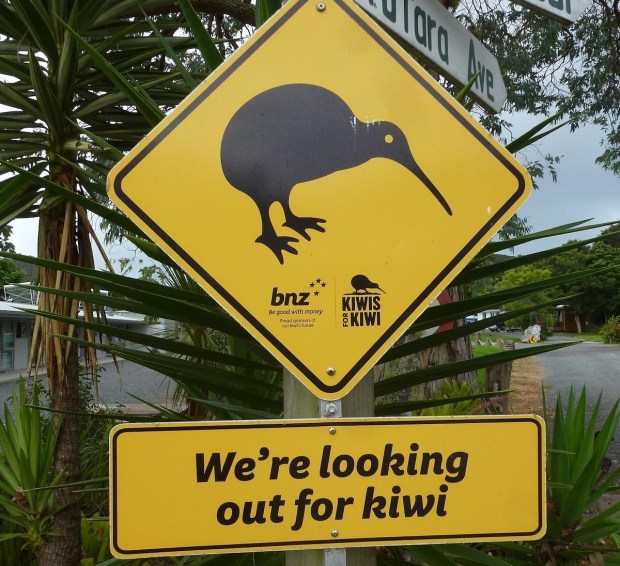
With the ground being a safe place to lay eggs, some birds such as the iconic Kiwi became flightless. Bats hunted on the ground instead of in the air, walking around on folded wings. The tuatara made its home on the islands: the only surviving member of a reptile species that flourished 200 million years ago alongside dinosaurs.
Then came the two-legged mammals, the humans, with their destructive ways. The Maori from Polynesia were first to the islands in the 1300s.
They did what humans do, treating the land as a resource rather than a home to be preserved.
The Maori burned one third of New Zealand’s forestlands to flush out the game. All nine species of the ostrich-like moa were hunted to extinction, including some that weighed as much as 250 kilograms and stood twice the height of a human.
The European settlers, arriving in the 1800s, carried on with the destruction. They killed an estimated 150,000 keas, an alpine parrot, because they thought the omnivorous birds were attacking their sheep.
Settlers brought ship rats and Norway rats, deer, goats and rabbits. They brought cats who made quick work of the birds.
By the 1980s, more than 50 New Zealand bird species were gone, one of the highest rates of extinction anywhere.
The Maori followed the pattern of North America’s first humans, the Indigenous peoples.
Arriving 15,000 years ago, the Indigenous humans of North America left a bloody trail. In a relatively short time large mammals, some that had been around for millions of years, were extinct.
Having never seen humans before, the mammals were vulnerable. Gone from North America were three species of mammoths, the sabre-toothed cat, Dire wolves, a species of camel, a giant sloth, an armadillo-like creature, and a giant beaver as large as a black bear.
Then came the Europeans.
They killed off the Passenger pigeon that once numbered in the billions. They did in the Great auk, a flightless seabird of the North Atlantic. Settlers finished off the Steller’s sea cow, a massive marine mammal that weighed up to 10 tonnes in just 27 years — one of the fastest human-caused extinctions ever.
New Zealand’s plans to build a fence is one way to preserve native species.
Another way would be to build a fence around humans and their vermin and allow them out into the natural environment for tours under strict controls.
David Charbonneau is a retired TRU electronics instructor who hosts a blog at http://www.eyeviewkamloops.wordpress.com.


Leave a Reply