
EDITORIAL – Removal of statue of Judge Matthew Baillie Begbie misguided
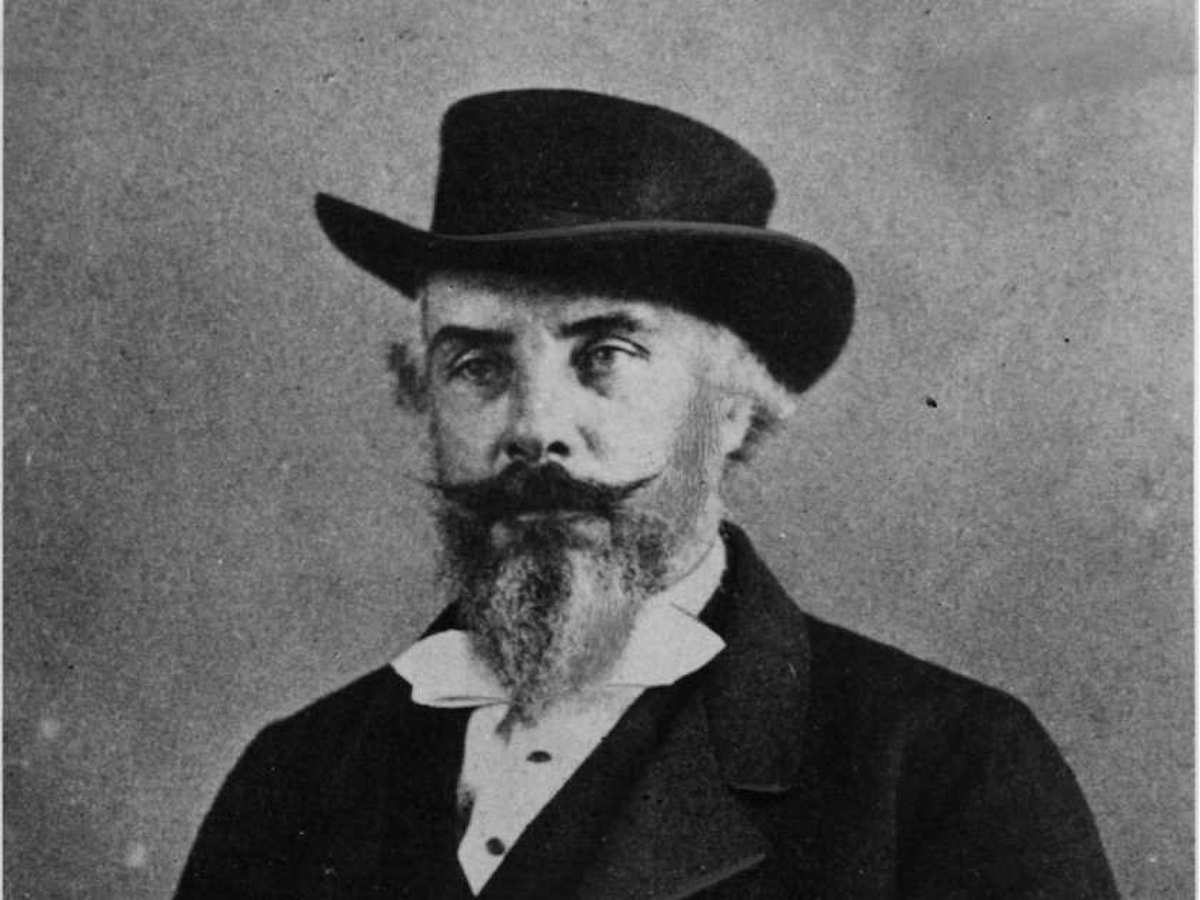
Judge Matthew Baillie Begbie.
An Armchair Mayor editorial by Mel Rothenburger.
HOW FAR should we go in erasing recognition of those who played a role in wrongs and perceived wrongs of the past? At what point does it become tantamount to rewriting history?
Recently, a 16-foot bronze statue of American Civil War General Robert E. Lee was removed from its place of honour high above a street in New Orleans, where it had stood since 1884.
Lee is known as an exceptional soldier and military tactician. He didn’t want the war, nor did he support the secession of the south.
Biographers disagree on whether Lee supported or opposed slavery, though he certainly fought for an unjust cause.
Regardless, his statue is said to have been erected not in defense of slavery but as a tribute to Lee’s military genius and role in reconciliation after the war. Yet it became a symbol of enduring racial injustice in the U.S., and demands to take it down eventually won out.
We have our own version of the Robert E. Lee controversy in B.C. The Law Society of B.C. has agreed to remove a statue of Judge Matthew Baillie Begbie from its lobby in Vancouver at the behest of First Nations because of his role in the Chilcotin War.
The “war” was really an extended skirmish that took place in 1864 after a war chief and his followers brutally slaughtered 20 people, including my great-great-grandfather Donald McLean, who was second in command of the force sent to apprehend them.
Begbie convicted six chiefs of murder, and they were hanged. The convictions and punishment were appropriate given the crimes and the legal system of the day, but over time they became symbolic of injustices by colonial society towards First Nations, the Tsilhquot’n in particular.
The six men who were hanged are now regarded by the Tsilhquot’in as heroic defenders of their territory, though a close examination of the facts paints a much more complicated picture, to say the least. Even a Canadian Press story about the removal of the statue stated that Begbie “wrongfully convicted” the chiefs, which is simply not the case.
Until now, at least, Begbie has been a much-respected figure in B.C. history, but his remarkable career doesn’t matter in the context of the movement to erase reminders of the unpleasant parts of the province’s past. The Law Society says it decided to remove Begbie from the lobby as a way to address “colonial symbolism” and as a commitment to the principles of the Truth and Reconciliation Commission.
Even getting rid of his statue isn’t enough for the Tsilquot’in Nation, which wants the provincial government to remove Begbie’s name from all public places.
Presumably, that would include a statue of him in Begbie Square in New Westminister, as well as streets, commemorative plaques, historical markers and changing the names of Sir Matthew Begbie Elementary school in Vancouver and Mount Begbie in the Cariboo, Begbie Creek, Begbie Falls and Begbie Trail.
A couple of years ago, Premier Christy Clark declared the convicted chiefs “fully exonerated.” I happen to disagree with that, but I recognize the need for a broader conversation about how we deal with historical sensitivities.
Surely we can find a way to tell all sides of the story in an appropriate manner and continue the journey towards reconciliation without altering historical fact and eradicating monuments.
mrothenburger@armchairmayor.ca

 ArmchairMayor.ca
I agree. I think this plan is rewriting history and showing only the not-presently-a-statue other side of the story instead of the complete story. I guess people just hate to admit that everyone, including themselves and their ancestors, have the capacity for good and evil and their actions are a mosaic of their times, so both camps of want to snow their side as universally good (though Judge Begbie’s supporters have fallen out of vogue for the moment). The Chiefs were hung for a good reason, which was rational and reasonable at the time, and to pretend that the Chiefs were completely innocent and the punishment was unjust is a manifest denial of historical context. It is not correcting am I injustice, it is whitewashing historical nuance. Those who forget their past are doomed to repeat it. I hate social authoritarians.
LikeLike
Welcome to 1984 , and New Speak.
LikeLike
It is rather amazing how societies or organizations attempt to purify society by removing statues or burning the written word. I might ask are we more liable to remember Judge Begbie or the British Columbia Law Society. As an historian, it is my feeling that we can’t just rewrite history to make it right or politically correct. Even if it means incorrectly stating the facts.
LikeLike
and Mount Begbie, clearly visible from anywhere in or near Revelstoke. You cannot change history by erasing a nameplace.
LikeLike
-Someone should give the public a real good study and report on just what ‘colonial injustice’ is and allow the larger public to come to conclusion on certain pieces of history, which, at present sound like they’re being made on the basis of pseudo-compassionate reasons and reasoning.
LikeLike