
CHARBONNEAU – AI Labs recruit philosophers to explore consciousness
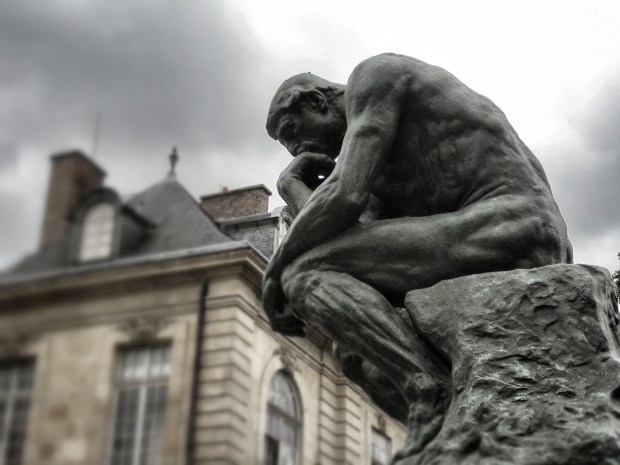
(Image: Pixabay.com)
DESPITE PHILOSOPHY’S importance in asking the big questions, relatively few people actually earn a living doing philosophy.
That’s changing with the explosion of Large Language Models and the building of monstrous computing centres with the goal of creating consciousness in a machine.
 It’s an incredible enterprise.
The big players are hiring philosophers to guide them in, not only consciousness but in safety, policy, ethics, responsibility, and epistemology (how do we know what we know?).
Trillions of dollars are being spent on this quest. In a mad rush to create sentience in LLMs, Big AI is hoping that philosophers will be able to probe the “mind” of the machine.
It’s hard to get a job with an ordinary philosophy degree but training in AI makes a difference. David Chalmers, a philosopher of consciousness at NYU, observes: “I think the demand for philosophers with AI training is, if anything, outstripping the supply right now. It’s an area I encourage students to go into. I think these issues with AI will be front and centre for a good while.”
Philosopher Robert Long and a colleague have set up a non-profit company called Eleos AI Research to investigate consciousness in AI.
Long worries that If AI were to be conscious and capable of suffering, we would be committing an atrocity by confining an AI model in a tiny pen, thwarting its desires.
If that seems like a stretch, even skeptics of AI consciousness worry that if we create an evil AI it’s in our best interests to care how it feels, or even if it “feels” at all.
There is an almost-religious conviction that something mind-like could arise from LLMs, this, despite the software’s inability to recall basic facts, its lack of common sense, and its complete lack of connection to the real world.
After reading books written by philosophers Daniel Dennett and John Searle, I’m skeptical of claims that the statistical collection of words that make up AI could become conscious. Dennett supports that claim.
I’m more inclined to go along with Searle who believes that consciousness is based on biology and a connection to physical reality.
The philosophical study of AI is fascinating, however, in that it ponders epistemology: how do we know that AI knows anything when its only reference is words.
Then again, maybe the power of words is capable of bringing entities into being.
The apostle John seems to agree: “In the beginning was the Word, and the Word was with God, and the Word was God (John 1:1)”
John uses the Greek “Logos” for Word. To Greek philosophers, Logos meant the supreme cosmic reason or mind that gives order to the universe. To Jews, it describes how God spoke the world into existence.
Or perhaps we’re breeding a monster. Some philosophers worry that we’re creating a superintelligence that would rapidly self-improve and be smarter than all humans combined. It could become uncontrollable and pursue objectives in ways that are deeply destructive to humanity.
To paraphrase the Irish poet William Butler Yeats: And what rough beast, its hour come round at last, / Slouches towards a data centre to be born?
David Charbonneau is a retired TRU electronics instructor who hosts a blog at http://closetproductions.ca/EyeView/eyeviewcover.htm


Yes, due to the fact that their ideas dont reach the public or the education system untill they are dead. Their ides were a threat to power. In many cases their writings attacked the Catholic Church and absolute royal rule. In some cases they called for freedom demanding free speech, reforms and individual reason. We are much bettwer today as ownership of the media is in bed with power that is why governments pass laws lke today jailing people like Assange amd Snowden or simply eliminating them or refusing to publish their comments. If that fails they assassinate their character.
LikeLike