
RECONCILIATION – Indigenous title ruling puts property rights at risk
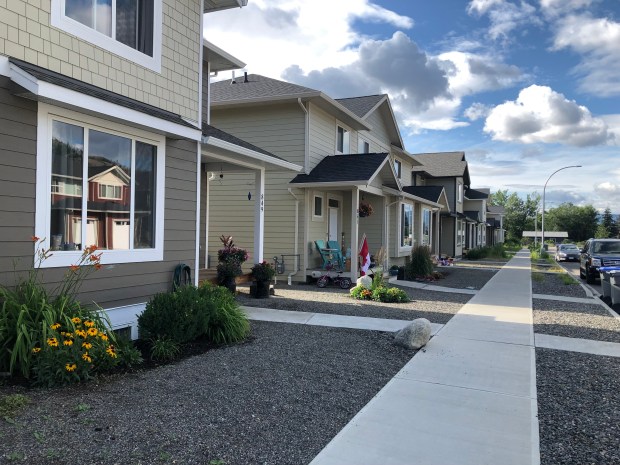
(Image: Mel Rothenburger)
B.C. court decision raises new questions about what happens when Indigenous rights and private ownership collide
By JOSEPH QUESNEL
Troy Media
A B.C. SUPREME COURT ruling has upended what many Canadians assumed was rock-solid: the security of their private property.
Joseph Quesnel.
The court ruled that the Cowichan Tribes hold title to parts of Richmond. That finding casts doubt on some long-standing Crown grants and the private land titles derived from them. The ruling, released on Aug. 7, directly affects existing ownership in the area and raises new questions about how Indigenous title interacts with private property.
Cowichan argued that the Lands of Tl’uqtinus were theirs through long occupation, and the court agreed. Because Indigenous title is a constitutional right, the decision immediately raised concerns about whether other long-standing titles in the region are as secure as landowners believed.
For many British Columbians, this was the first time they had seen Indigenous title directly affect private property. It exposed a problem Canada still has not solved: how to respect historic Indigenous rights while giving homeowners and businesses confidence their land titles will stand.
That tension sits at the heart of the Cowichan ruling.
Canada needs land title rules people can count on, but it must also honour Indigenous claims grounded in law and history. That only works if the rules are clear and stable.
Property rights in Canada are never absolute. The Crown holds underlying ownership of all land and grants interests to individuals and groups. Even fee simple, the strongest form of private ownership, has limits. Land can be lost for unpaid taxes, and governments can take title in certain situations, usually with compensation. Canada also has no constitutional protection for property. These weak spots matter even more when Indigenous rights, which are constitutionally protected, are involved.
Cowichan shows that long-standing titles can still be affected when historic Indigenous claims resurface. It is a reminder that Canada operates two legitimate land-ownership systems at the same time, and the rules for how they intersect remain unsettled.
Nowhere is this more obvious than in British Columbia.
Much of the province is not covered by historic treaties, which means Indigenous title claims can arise across wide areas. In Cowichan, private landowners held title through a chain of Crown and municipal grants the court found invalid. It was a reminder that litigation over historic occupation can spill into present-day ownership.
For many residents, it was a clear sign that B.C.’s unsettled legal history still shapes today’s land-title landscape.
The impact goes well beyond this one case.
The ruling questions two fundamentals of the land-title system: that registered titles are secure, and that good-faith buyers can rely on them. Torrens, the current land-title system, replaced the old deeds process, which forced buyers to trace long chains of ownership and often led to disputes. Under Torrens, the provincial land-title office guarantees the accuracy of registered titles. Homeowners, banks and municipalities rely on that certainty. If that confidence weakens, the effects will be felt by buyers, lenders, developers and local governments.
The protection for good-faith buyers normally prevents new claims from disturbing what appears to be a valid title. Cowichan found that this protection does not apply if the Crown’s first grant of the land was flawed. In practical terms, a standard title search may no longer offer the level of certainty people expect.
Put simply, Cowichan raises questions about the gap between what Canadians believe their land titles guarantee and what courts may now enforce.
Without legislative action, Canadians may face increasing uncertainty about the strength of their titles, the limits of Crown grants and the future of the land-title system. Governments now have to find a way to respect Indigenous rights while keeping public confidence in land titles, a balance that can no longer be avoided.
Joseph Quesnel is a policy commentator based in Nova Scotia. He writes on Indigenous rights, property rights and natural resources.

 ArmchairMayor.ca
Is there any particular reason the notes don’t mention that Mr. Quesnel is from the Fraser Institute?
LikeLike
It also doesn’t mention that his resume includes the fact he is Quebec Metis with a Master’s degree who has worked for more than 15 years in print journalism and has written extensively on indigenous issues, in particular effective governance and economic development. He led a major study on the self-governing Nisga’a Nation in 2010 and produced the first Property Rights Index, which measures property rights protections in all 10 provinces and three territories. He has worked with the Frontier Centre for Public Policy, Atlantic Institute for Market Studies and, yes, the Fraser Institute.
LikeLike
This is timely and it clarifies. Many of us hope that emotionaly laden voices will respond to this with a critical, in the sense of careful and objective thinking, approach.
LikeLike
i am not a lawyer, however, if underlaying land rights are given to indigenous peoples, it only becomes a problem if, they register a lien against a fee simple title.
So, this could be weaponized. if, they don’t like you for speaking out, your title could be challenged. Who would purchase or mortgage your property. It would result in all fee simple holders living in fear and not expressing any future concerns.
Not probable until it is.
LikeLiked by 1 person