
CHARBONNEAU – ‘Indigenous’ identity is a vague status
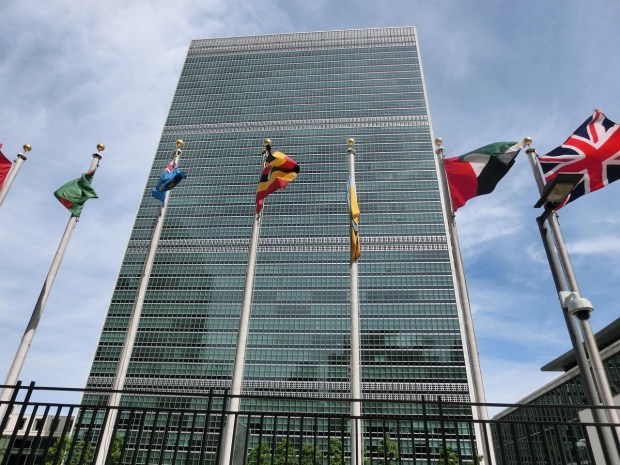
United Nations building. (Image: Pixabay)
BEING ‘INDIGENOUS’ can mean almost anything.
Celebrated author Thomas King made it clear. The author of The Inconvenient Indian had always thought that he was Indigenous. He had been told as a child that he had Cherokee blood in his family.
 He was accepted as Indigenous because he thought he was. As soon as he became aware that he had no Cherokee linage, suddenly he was not Indigenous,
What kind of identity is that: if I believe I am something then I am?
If the status of “Indigenous” is claimed, surely it must be based on something more substantial than a thought.
You would think that the United Nations Declaration on the Rights of Indigenous Peoples (UNDRIP) would be a good source of definitions. If rights are going to be conferred on a people, it would be a good thing to know who those people are.
Yet, no. UNDRIP does not provide a single, fixed definition of “Indigenous peoples.”
This was intentional: the UN chose not to impose a universal definition because Indigenous identity varies across cultures, histories, and legal systems. The people referred to objected because they didn’t want some state agency defining who they are.
Also, Indigenous definitions could come in conflict with UN member states’ legal definitions.
Canada does not define Indigenous peoples even though we incorporated UNDRIP into federal law.
Since the definition of Indigenous is so slippery, why has the word come into popular use? Especially when the term it replaced, Aboriginal, was well defined.
Aboriginal is defined in our Constitution as including Indians (First Nations), Inuit, and Métis. It is a status conferred on groups, not individuals.
Aboriginal has fallen out of favour for a number of reasons. For one, individuals can’t be Aboriginal. That rules out me declaring myself Aboriginal.
First Nations also objected to the use of Aboriginal because they didn’t want the state to define who they are – they wanted to self-indentify.
And some First Nations people in the 1970s–1990s incorrectly believed that the “ab-” in Aboriginal meant “not,” as in abnormal. They believed that Aboriginal meant “not original” or “not from here.”
This was incorrect linguistically but the belief circulated widely and contributed to a feeling that it was disrespectful or colonial.
The correct source of Aboriginal comes from the Latin: ab = “from, out of” and origo/originalis = “origin, beginning” So aboriginalis means “from the beginning” or “original inhabitants.”
In Australia, Aboriginal (called “Aborigine”) was a racial slur, something like “drunken Indian” in Canada. I still remember that being the case when I lived in Australia in 1966. The original people of Australia were often called “abos.”
The slur was grammatically incorrect – Aboriginal refers to groups, not individuals — but they didn’t seem to worry about grammar.
I propose an expansion of the vague notion of Indigenous peoples: make it to mean all the people of the world. We are all Indigenous, every man woman and child on the planet.
At the heart of the matter is the fact that we are all Africans. Modern humans walked out of Africa 100,000 years ago and occupied every corner of the Earth.
Now we are all defined by where we currently live.
David Charbonneau is a retired TRU electronics instructor who hosts a blog at http://www.eyeviewkamloops.wordpress.com.

 ArmchairMayor.ca
Here’s an easy rule of thumb: A person whose mother or father is Indigenous is Indigenous, whereas a person who denies the cultural horrors Indigenous people suffered through colonialism in Canada and thinks we’re all the same is not Indigenous.
LikeLike