
EDITORIAL – Casimir’s reassurances on land rights aren’t very reassuring
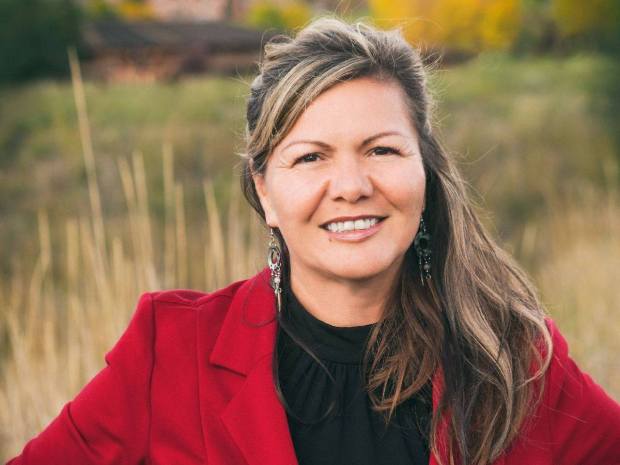
Chief Rosanne Casimir.
An editorial by Mel Rothenburger.
IT SHOULD HAVE BEEN reassuring, when Kúkwpi7 Chief Rosanne Casimir talked about the Tk’emlúps te Secwe̓pemc lawsuit claiming aboriginal rights over all of Kamloops and Sun Peaks and a huge piece of land in between, but somehow it wasn’t.
She stated, “It is not about taking land away from others but about asserting our rightful role as caretakers and decision makers within our own territory. The goal is to restore balance, advance recognition of Secwépemc jurisdiction, and strengthen collaboration with all those who share our lands and communities.”
Casimir has also talked about “stewardship” of the land, and “correcting a historical wrong.”
What does any of that mean? What does asserting a rightful role imply? What authority would TteS “caretakers” and “decision makers” have within their “own territory”? And what sort of “balance” is required when it comes to property rights? What “jurisdiction” is being sought?
Maybe Casimir doesn’t actually know, or doesn’t wish to say, but her description of the Band’s intentions leave things no clearer than they were. Which means, confusing and fuzzy.
The big question remains, how can aboriginal land rights and fee simple property rights co-exist?
And, by the way, she also hasn’t been clear on the Band’s intentions with regard to providing forensic evidence — that is excavation — of the claimed burials of children in more than 200 gravesites at the residential school. In an interview with CBC Daybreak, she was asked about it and would say only that “much work has been done and that information will be shared when it’s closer to completion.”
How about sharing what work has been done so far in the past four years?
So far, Casimir’s reassurances that all is as it should be aren’t very reassuring.
Mel Rothenburger is a former regular contributor to CFJC-TV and CBC radio, publishes the ArmchairMayor.ca opinion website, and is a recipient of the Jack Webster Foundation Lifetime Achievement Award, and a Webster Foundation Commentator of the Year finalist. He has served as mayor of Kamloops, school board chair and TNRD director, and is a retired daily newspaper editor. He can be reached at mrothenburger@armchairmayor.ca.

 ArmchairMayor.ca
I don’t see how this will be settled without it going to the Supreme Court of Canada regardless of who wins the provincial appeal. This, like the graves will hang over us for several more yrs and I’m afraid it will cause significant damage to the reconciliation progress that has been made.
LikeLike
This isn’t about creating new rights but recognizing pre-existing ones that were disrupted by colonial policies, such as the confinement of First Nations to small reserves while surrounding lands were allocated to settlers. It implies a push for self-determination, where the SSN can participate in decisions affecting their territory, rather than being sidelined. Casimir has described it as “reaffirming our responsibilities,” framing it as a positive step toward shared stewardship rather than adversarial takeover.
In BC, where Aboriginal title often underlies private lands due to unceded status, this means title holders like the SSN can’t unilaterally revoke private ownership, but private rights may be subject to Indigenous jurisdiction on matters like land use or environmental impacts.
For example:
The Tsilhqot’in decision clarified that title trumps provincial laws on Crown lands but requires justification for infringements elsewhere.
However, entirely new practices that only became significant post-contact (e.g., due to European influence) do not qualify as Aboriginal rights.
LikeLike
What do those things mean for the Tsilhqot’in Nation? It’s not like we don’t have an established example to look at when we have these questions.
LikeLike
so true. I like her and want to trust her however some of the language is concerning
LikeLike