
ROTHENBURGER – 8-year RCMP probe tests claims about residential schools
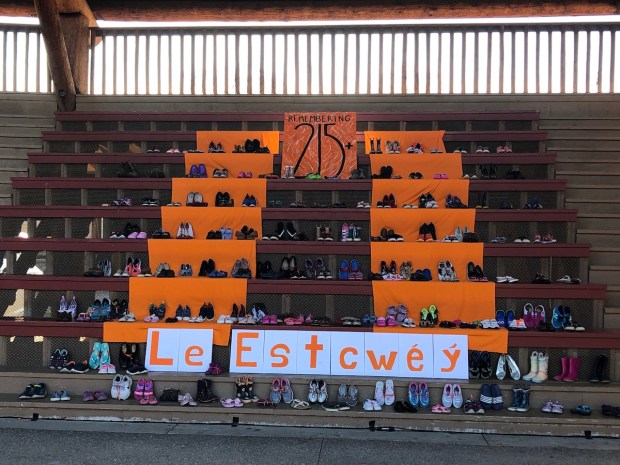
(Image: Mel Rothenburger)
AN IMPORTANT E-MAIL was sent to B.C. MLAs and MPs this week. It remains to be seen how many will read it and how many respond to it but it’s a significant development in the residential schools issue.
 The e-mail, sent by independent researcher Nina Green, responds to the news that an eight-year RCMP investigation into claims of abuses and murders at residential schools had belatedly been released.
It took years to get access to it, finally gained by the Investigative Journalism Foundation and released on Tuesday.
Though it resulted in a large number charges being laid, it found no evidence of murders or clandestine burials. It must be noted that the investigation wasn’t specifically aimed at finding unmarked graves — it pre-dated the current focus on that — but it was so thorough that it’s remarkable it found no evidence of their existence.
The purpose of the task force was “to investigate every allegation of physical and sexual abuse that occurred at each of the 15 residential schools that operated within the province of British Columbia.”
The nature of complaints received and investigated, however, also included loss of culture and language, general neglect, cover-up or lack of action, and unlawful or suspicious deaths.
With respect to unlawful or suspicious deaths, the report states, “These ranged from outright allegations of murder to deaths caused by negligence, and even included allegations that babies were being killed and buried on the school grounds. Each of these allegations were thoroughly investigated by both the Task Force and the applicable Sub-Division Major Crime Unit. Not one of these allegations has ever been substantiated, much less proven, and in many cases, investigation has established that the death was due to either disease or some other natural cause: in some cases, the alleged victim was found to be alive several years after his supposed death.”
The Kamloops Indian Residential School was among those investigated. “This was one of the largest residential schools in B.C, with a student enrollment of over 400 pupils between 1952 and the late 1960s,” the report states. “Despite the size of the student body, the number of complaints received was relatively small; only 79 complainants came forward throughout the entire eight year investigation. Of these, a large number were referred to the Task Force via their civil lawyers.”
As Green points out in her email to the politicians, another section of the 122-page report states: “One allegation mentioned at a few of the schools involved infant deaths. These complaints usually took the form of nuns or students giving birth to stillborn babies which were subsequently buried in unmarked graves located somewhere on the school property. One such allegation was more involved: in this case, the complainant stated that a baby was deliberately killed minutes after a nun gave birth, and that this baby was subsequently buried in the school basement. One of the more bizarre allegations even included claims that a baby was sacrificed in the woods at yet another school late at night as part of a satanic ritual. No evidence was found to substantiate either of these allegations.
“Rumours of dead babies being buried at the Kuper Island Residential School have been circulating for years and had generated considerable discussion. The Task Force decided to put this matter to rest and traveled to Kuper Island on February 24, 1999, where, with the band’s permission, they dug up a small portion of the island which had been identified as one of the burial grounds. The contractors dug down to a depth of approximately four feet at which time they encountered undisturbed soil. No evidence that would support any of these allegations was found. However, it must be pointed out that the soil in this area was very wet and forensic experts have all agreed that this type of soil would have destroyed any infant human remains years ago.”
Yet, the report is very sympathetic to survivors. “For the Aboriginal community, the investigation was a validation of their experiences,” it says of the 148 sexual-assault charges and 11 for physical assault that were laid against 14 individuals.
“The criminal charges, and subsequent convictions, established once and for all that the abuse they had complained of for years did indeed happen, despite the claims of the nay-sayers.”
In addition to the important results of the investigation, the challenges it encountered are instructive: lack of resources, difficulty in getting access to documents, loss of evidence due to the passage of time, identifying and locating suspects, and civil suits that caused delays. Any future such investigations will, no doubt, face similar barriers.
This report is an important piece in the reconciliation puzzle, including residential schools. It reinforces the need for Bands, especially Tk’emlúps te Secwe̓pemc, to put an end to delays in excavating claimed sites of unmarked graves.
And the politicians need to pay attention.
Mel Rothenburger is a former regular contributor to CFJC-TV and CBC radio, publishes the ArmchairMayor.ca opinion website, and is a recipient of the Jack Webster Foundation Lifetime Achievement Award, and a Webster Foundation Commentator of the Year finalist. He has served as mayor of Kamloops, school board chair and TNRD director, and is a retired daily newspaper editor. He can be reached at mrothenburger@armchairmayor.ca.

 ArmchairMayor.ca
We went from bodies, to anomalies, back to bodies, to silence, to anomalies… In every example I can think of, when mass graves were discovered or alleged, great efforts were made to exhume and uncover evidence so that these abhorrent crimes could be brought to light and the process of justice could begin.
First Nations made considerable efforts to dig up a Winnipeg landfill to find a body alleged to be there. But these alleged mass graves? There doesn’t seem to be the same kind of desire for truth.
This serves no one, and at worst makes it seem like it’s about grift rather than using the considerable funding to find out what really happened. First Nations should be very cautious of their next steps, as this issue, along with the recent UNDRIP cases resulting in private property being tossed to the wind, has a chance to become incindiary.
We are living in a country that now practices apartheid. Where your race is what determines if you’re able to go to a specific piece of land. Where public parks and crown land are closed to non- indigenous people, while indigenous are able to remain. Where the government in power is told by an ethnic group which public parks to close for the exclusive use of one ethic group, for how long, and the government obeys.
Post-nationalism will be this county’s undoing.
LikeLike
Did the investigating body of officials include any Indigenous investigators? An Indigenous person would have a greater sense of ownership in how well the investigations were done and whether there were any irregularities encountered.
LikeLike
Yes, it did. And other investigators received training from First Nations facilitators.
LikeLiked by 1 person
I see this report as a “whitewash” reflecting my concerns about its scope and findings, particularly given the absence of Catholic Church documents from Rome and the fact that many former students are deceased, limiting firsthand accounts.
The report’s sympathetic tone toward survivors acknowledges abuses, but it’s insufficient to me, who is expecting evidence of graver crimes.
Challenges like missing documents, time passage, and resource constraints highlight investigative limitations, the report does not fully address all questions. The report is significant for documenting abuses and laying charges but leaves unresolved issues, especially around unmarked graves, which bands like Tk’emlúps te Secwe̓pemc are urged to excavate further.
Politicians’ attention to these findings is crucial for advancing reconciliation, but the report’s gaps, due to time, evidence loss, or withheld records, is an incomplete effort representing the church narrative of “good intentions that went off the rails.”
LikeLike
Whitewash? To whitewash something means to deliberately conceal damaging information and to prevent people from finding out the truth. Or, do you mean ‘whitewash’ in some slang sense meaning it was racist? Where is your evidence for either assertion? The investigation took pains to include indigenous perspectives on the task force, to interview survivors and to encourage them to come forward, and to thoroughly investigate allegations. Again, it took eight years to complete. Once again, you criticize something based on your claim that it’s incomplete but you acknowledge your own bias when you say you were “expecting evidence of graver concerns.” In other words, the report doesn’t measure up to your own assumptions. Did you even read the report? The investigation wasn’t targeted at unmarked-graves claims; it was completed long before the 215 but it discovered some important material important to the unmarked-graves debate. It is certainly not the last word on the serious issues surrounding residential schools and doesn’t claim to be, but it’s an important addition to the file.
LikeLike
Mel, yes, I read the report, and I stand by my use of “whitewash” to mean a superficial treatment that omits critical truths. The report acknowledges its own limitations: missing Catholic Church documents, deceased witnesses, and time constraint, but your article glosses over these gaps.
Most residential school survivors are gone, their firsthand accounts lost forever. This scarcity of evidence weakens the report’s ability to fully address the scale of abuses, which a rigorous investigation should confront head-on.
You claim I’m biased for expecting evidence of “graver crimes,” but the report’s sympathetic tone toward survivors doesn’t go far enough when it fails to tackle unresolved issues like unmarked graves. The Tk’emlúps te Secwe̓pemc case, for instance, demands further excavation and transparency.
The report may not have targeted unmarked graves, but its findings are incomplete without addressing this critical issue, especially given its timing before the 2015 discoveries.
The broader issue is narrative control. Historically, the Indian Act and colonial policies silenced Indigenous voices, written by colonizers to serve their interests. Today, First Nations communities are reclaiming their narrative, demanding restitution and truth. Yet, media outlets shape public perception by what they choose to report, or omit.
Your article’s failure to highlight the report’s limitations risks perpetuating a narrative that downplays systemic atrocities as “good intentions gone wrong.” This isn’t just about Canada.
The colonial legacy of Britain and other European powers, responsible for millions of Indigenous deaths globally, as historians like Howard Zinn document, demands accountability.
In British Columbia, racist laws and curricula dehumanized First Nations and Asian communities, glorifying British superiority while marginalizing others. This history shaped who “owned” the narrative, and we must question who controls it today.
Hannah Arendt warned of “banal” people committing atrocities by following orders without questioning. The residential school system, rooted in Britain’s mandate to “wash the Indian out of the child,” reflects this.
We must reject excuses of “good intentions” and demand media and governments confront uncomfortable truths. Articles that sidestep these issues risk enabling a collective amnesia about Canada’s past and present responsibilities.
I urge you to publish critiques like mine to foster honest dialogue. Reconciliation requires acknowledging not just what’s in the report but what’s missing, and who gets to tell the story.
LikeLike
Somehow I knew you’d want the last word. However, the fact remains that you have applied an inappropriate term to the Final Report of the Native Indian Residential School Task Force and are now trying to create your own definition. To use a common dictionary definition, a ‘whitewash’ is a “deliberate attempt to conceal unpleasant and incriminating facts about someone or something.” I see none of that in the report, as challenged as it was by obstacles put in front of it. In fact, I see the opposite — an intensive, conscientious effort to live up to its mandate, which was established in response to, and in cooperation with, indigenous leaders concerned about allegations of sexual and physical abuse at B.C.’s residential schools. The report itself acknowledges both its successes and its failures. It’s a mistake to discount every conversation about the sad experience of residential schools unless it litigates the entire history of those schools according to the biased assumptions of each participant, and to reject every step forward unless it provides perfect answers. I ask only that we approach the issue with openness to the possibility that each of us might not have all of those answers, and with a commitment to a sincere search for the truth. The RCMP report is important as much for what it doesn’t purport to have found as it is for what it does — it does not confirm the existence of unmarked graves containing murdered children. Indeed, its findings suggest we must continue the search for the truth, and I’m therefore glad that you and I can at least agree on the imperative for the excavation of suspected sites. By the way, since you choose to quote the flawed analysis of Howard Zinn, you might wish to expand your reading list by including Jeff Flynn-Paul and Nigel Biggar.
LikeLiked by 1 person
Petty vindictiveness is not a healthy position conducive to lasting peace and prosperity. Multiple apologies and billions of dollar later (and ongoing) are not going to rewrite history. Tell that to the CBC brass and your NDP brethren and their supporters.
LikeLike
Thanks for sharing this very important information.
Not only should politicians read but the First Nations Leadership should read it.
cooper
LikeLike
But reading articles on the CBC news site they seemingly consider allegations factual…
Moreover a position of victim hood has ongoing benefits but hopefully soon that will be coming to an end.
LikeLike