
NATIONAL PULSE – Two-thirds want more evidence before accepting ‘unmarked graves’ claims at KIRS
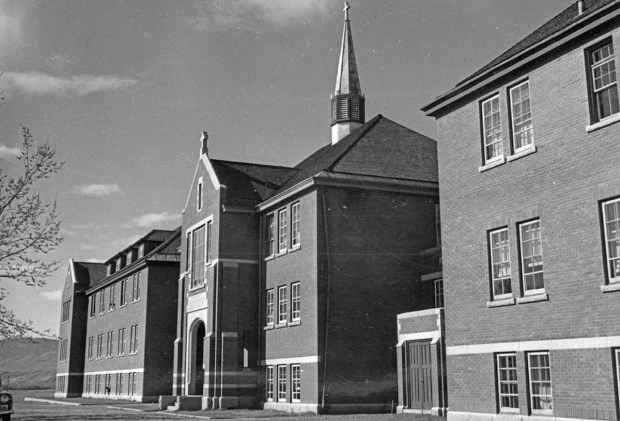
Kamloops Indian Residential School in 1970. (Image: Archives Canada)
By ANGUS REID INSTITUTE
August 14, 2025 – In the wake of the Truth and Reconciliation Commission report in 2015, many Canadians have been grappling with the nation’s treatment of Indigenous Peoples.
One of the key conversations has centred around Indian Residential schools (IRS), and the discovery of soil “anomalies” through ground-penetrating radar, initially referred to as the graves of children at what was once the largest residential school in the nation in Kamloops.
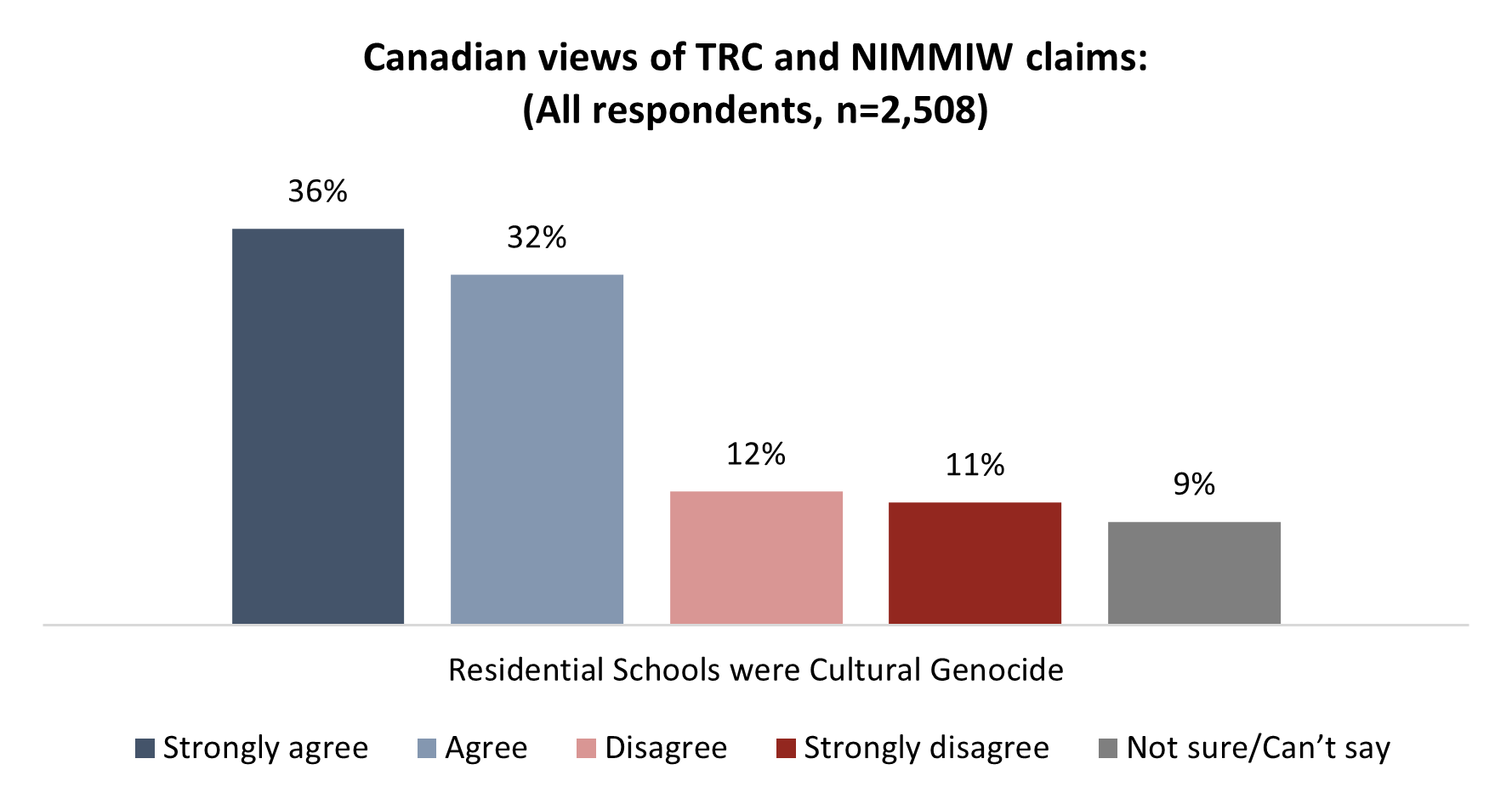
New data from the non-profit Angus Reid Institute finds Canadians sympathetic to the harmful legacy of these schools. Indeed, two-thirds (68%) say that IRS were a form of cultural genocide. Half (54%) also say that Canada needs to continue to address the legacy left by these schools on Indigenous people. More than 150,000 children attended these schools, representing approximately one-third of Indigenous children.
For full questionnaire text, click here.
As the four-year anniversary of the discovery passed in May, there is, however, widespread hesitancy to accept claims made by the Tkʼemlúps te Secwépem First Nation without additional evidence.
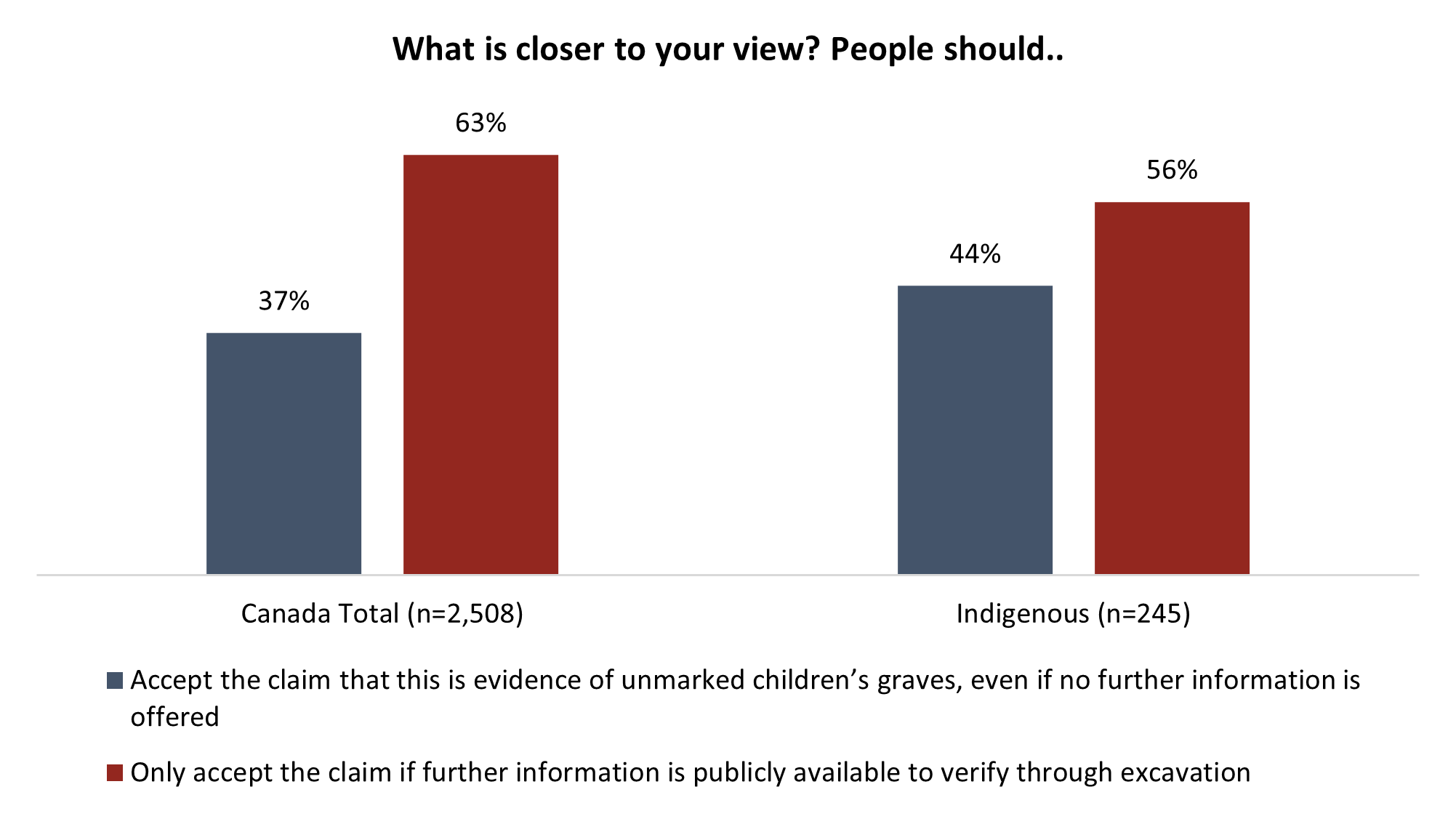
To date, no human remains have been confirmed or exhumed and suspected anomalies remain unverified. The federal government has provided more than $12 million to assist in the investigation, but disturbance of the sites has not been agreed upon. A majority of Canadians (63%) and Indigenous people (56%) hold the view that further evidence through exhumation is necessary to accept that the remains of children are buried at the site.
Over the past four years, there have been several cases where professors, high school teachers, lawyers and politicians have been fired or forced to resign after questioning the conclusions of the Truth and Reconciliation Commission. Asked whether they feel that job loss is a fair or unfair way of treating people who raise questions about the TRC report, by a significant margin Canadians say that such action is unfair.
Fewer than three-in-10 would force the resignation or ask for the firing of professors, high school teachers, or lawyers who raise questions. Approximately half say that is unfair.
There is a divide, however, among Canadians over how politicians who engage in this should be handled. Equal numbers say it is fair or unfair to hold those individuals accountable through firing or resignation. Here the results rest starkly on party lines, with Conservatives much more likely to feel this is unfair.
A majority also draw a line at the idea of criminalizing this type of public statement, as has been proposed by some. This includes Kimberly Murray, appointed as Independent Special Interlocutor for Missing Children and Unmarked Graves and Burial Sites associated with Indian Residential Schools in 2022. Her report called for “urgent consideration” of legal mechanisms — both civil and criminal sanctions — against residential school denialism.
By a wide margin (63% to 24%) Canadians oppose the criminalization of public statements of denialism. Indigenous respondents were split on this issue with 45 per cent opposing this, and 42 per cent saying that such denialism should be a criminal offense.

 ArmchairMayor.ca
Shouldn’t we strive to confirm this tragedy occured, or is it more important to protect a narrative and irrationale arguments that say objective facts shouldn’t matter? If kids were murdered, this is a crime that demands justice.
Mass graves are excavated all over the world to ensure prosecution of the heinous acts that led to them. This can be done with respect and as little disturbance to the site as possible. Let’s remove the doubt and clarify what this is so we can support the spirit of truth and reconciliation. This ambiguity is not helping our collective society move forward. If these are children, justice needs to happen. But that won’t happen if all there is is speculation. Seeking the truth is not denialism. It is supporting the first part of truth and reconciliation.
LikeLike
Of all the things we have lost in the west, the ability to handle the truth, is seemingly the most damaging. No one believes anything anymore even when they are dying from it. An accusation that something is unclear does not mean true or untrue. Job loss is real and to cause it before the facts are in is wrong.
LikeLike