
EDITORIAL – The tax is gone; what do we do about the environment now?
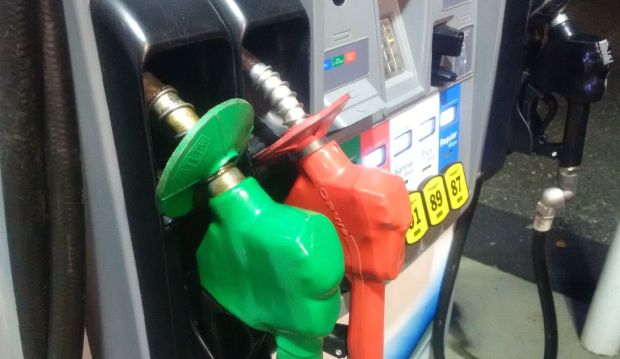
(Image: Mel Rothenburger)
An editorial by Mel Rothenburger.
THE QUESTION ARISES, now that we’re all enjoying a substantial cut in costs at the pump, what do we do about the environment?
The elimination of the consumer carbon tax as of today (April 1, 2025) will prove to be popular with most drivers, of that there’s no doubt. The tax has never been popular, despite the fact experts insist it was the best way of addressing greenhouse gas emissions by discouraging heavy consumption of fossil fuels.
Canadians never did accept the fact that they were, by and large, getting more back in rebates than the tax was costing them. Its days were always limited.
While Pierre Pollievre and the Conservatives will insist the tax be removed from industrial as well as consumers, it’s basically now a non-issue in the federal election. David Eby and the NDP promised quite some time ago that if the federal tax was removed, the B.C. tax would be removed as well. Eby’s methodology, with his last-minute dramatics in getting the appropriate legislation passed late yesterday, was questionable but he did, nevertheless, keep that promise.
The environment is an uncomfortable fit for governments. When they have a strong mandate, and when the public demands action on the environment, they go along with it. But when the winds change, measures such as the carbon tax become expendable.
BC Conservative leader John Rustad calls the removal of the consumer carbon tax “a win for every British Columbian.” He says Eby scrapped it not because he wanted to but “because he was forced to. Public pressure worked.”
The BC Green Party, on the other hand, describes it as “a flip-flop not based on principle and evidence.” Eby, says Green interim leader Jeremy Valeriote, allowed the tax to become politicized.
Both parties warn that other, less visible taxes, are in the works to replace the consumer carbon tax. They may be right, but any substitutes will be less effective than the carbon tax because if consumers don’t see a tax, it’s not going to motivate them to change behaviour.
The environment will be left off the political agenda. Axing the tax is unlikely to prove much a victory in the long run.
Mel Rothenburger is a former regular contributor to CFJC-TV and CBC radio, publishes the ArmchairMayor.ca opinion website, and is a recipient of the Jack Webster Foundation Lifetime Achievement Award, and a Webster Foundation Commentator of the Year finalist. He has served as mayor of Kamloops, school board chair and TNRD director, and is a retired daily newspaper editor. He can be reached at mrothenburger@armchairmayor.ca.

 ArmchairMayor.ca
“What do we do about the environment?”
Go back to square one, and fix the narrative for starters.
Start with the simple premise that climate change is NOT the world ending doomsday scenario that environmentalists want you to think it is. Yes, it’s a concern, but if the entire world isn’t playing along, then why is it ONLY Canadians that need to be oppressed with taxes…?
And if the environment is such a grave issue that Trudeau’s Liberals wanted you to believe. Then why take down the tax in the first place? If they were that absolute about these things then the tax would’ve stayed. Not that I would want the Carbon Tax. But what I’m asking about is their conviction… Where is it?… why flip-flop on something that was sold as an absolute necessity… oh right,… it’s campaign season….
…it’s quite obvious from logic alone that this tax served no purpose other than for the Liberal’s own gains. “The Environment” was nothing more than a cudgel to take more money from the people (and possibly line their pockets with).
If people want to take the environment seriously then stop relying on imported goods made in countries that do in fact ruin the environment to produce those goods. If this “Elbow’s Up” rhetoric is to mean anything, then we should be producing these goods in our own country, using our own environmental standards… That’s how you protect the environment, not hand over our production to countries that are truly the main offenders to the environment
Otherwise, any talk from the Liberals about the environment is pure crap.
LikeLike
This editorial raises an intriguing question, “what do we do about the environment? Why do you then sidestep any real engagement with it, and then provide a shallow rundown of political posturing. You are gesturing at a big issue without bothering to wrestle with its substance, and than you recap who’s saying what. This is flimsy. Why don’t you skewer the politicians and highlight the real-world costs of ignoring climate policies and there are many examples just in this valley.
Yes, cheaper gas is great for wallets, but what about the planet? We know the play-by-play of political reactions. Why don’t you just drive around town and see for yourself the visual, broken fences, weed overgrown boulevards, drive to Red Lake or Scotch Creek and see the remnants of forest fires, the smell the air that keeps people bunkered down in their homes, ask how long before the water in the Thompson is gone or maybe go to the hospital and see people on respirators, and others suffering from cancer. The environment, supposedly the heart of your piece, gets relegated to a vague afterthought by the end
You give the carbon tax itself a lukewarm autopsy. What about the public perception versus economic reality. You don’t care to dig in, settling for “its days were always limited” like it’s a self-evident truth. No evidence, no reasoning, just a shrug.
The kicker is the limp conclusion: with any exploration of what “less visible taxes” might mean for emissions, no challenge to the idea that only in-your-face taxes change behavior (is that even true?), and no hint of what could actually work instead.
This editorial isn’t an argument it’s a weather report on political winds, with no forecast for what’s next. The editorial is useless not because it’s wrong, but because it’s inert. It doesn’t inform, provoke, or even take a stand. It just sits there, cataloging opinions without bothering to make sense of them. If the goal was to highlight a tough choice between cost and climate, it’s a swing and a miss—readers are left with nothing to think about except how little they learned. Bring home the reality of heatwaves, flooding, droughts, biodiversity loss, air pollution and cognitive decline
In 2021, the Pacific Northwest heat dome led to over 600 deaths in a region unprepared for such temperatures. Why don’t you press the politicians why they downplay these preventable losses.
Agricultural collapse: droughts and shifting weather patterns devastate crops, driving up food prices and threatening livelihoods. Why not ask the politicians who see pollution only when it’s dumped on their head from a bucket, why do their policies lag behind these economic realities?
Do you not see flooding and infrastructure damage, Fraser valley and the Coquihalla recently, rising sea levels and intense storms like Hurricane Ida’s remnants flooding New York subways in 2021 and wrecked homes, roads, and businesses. The repair costs often fall on taxpayers, yet the link to carbon emissions you glossed over. Why don’t you grill your contributors Forseth and others you quote from the Hansard who defend eliminating the carbon tax like Rustad on why they dodge this fiscal burden.
Coral bleaching in the Great Barrier Reef or disappearing pollinators like bees, affect food chains and human survival. These aren’t just “nature lover” “mosquito huggers” issues; they’re economic and security risks. Mel why isn’t this weaponized in debates? Let’s go beyond respirators, fine particulate matter (PM2.5) from fossil fuels is linked to dementia and reduced childhood IQs. Studies in cities like Delhi or Los Angeles show measurable brain health impacts. Why not confront leaders with the human cost of dirty air?
Displacement and climate refugees, storms, droughts, and rising seas force millions to move like Louisiana’s Isle de Jean Charles residents, some of the first U.S. climate refugees. Why do we build walls to keep people out from Africa, Central America Middle East. They are not only running from our bombs but from what we have done to climate. This strains social systems and sparks political tension. Why do editors or politicians sidestep this growing crisis? These examples are concrete, not abstract, people even in Kamloops can smell, or feel them, and see them, but you ignore it. Politicians, meanwhile, often dodge specifics to avoid accountability or alienating donors.
LikeLike
Carbon tax was effectively useless at the macro level. Canada emits what, 1% of global emissions? While serious polluters like China and India continue to dump huge amounts of carbon into the atmosphere. Our neighbour is now oil friendly. And we think taxing Canadians does anything other than place an unwanted and unneeded financial burden on taxpayers already stretched thin?
If the carbon tax was effective, we should see a fairly serious decline in air quality now that it’s gone.
I think we’re going to see hardly anything change. People were driving cars with this useless tax, and people will continue to drive them without.
LikeLike
It is beyond the scope of the Canadian government (beside diplomatic efforts) to interfere with the internal policies of sovereign nations. Besides the fact that Canadians are, per capital, the biggest polluter there is (because of their generally wasteful lifestyle) a tax that can actually be mitigated with lifestyle changes is not entirely a bad policy.
LikeLike
At this point we can only hope AI will analytically supplant human selfish stupidity.
LikeLike