
IN THE SHADOW OF THE HILLS – The cost of waiting for healthcare
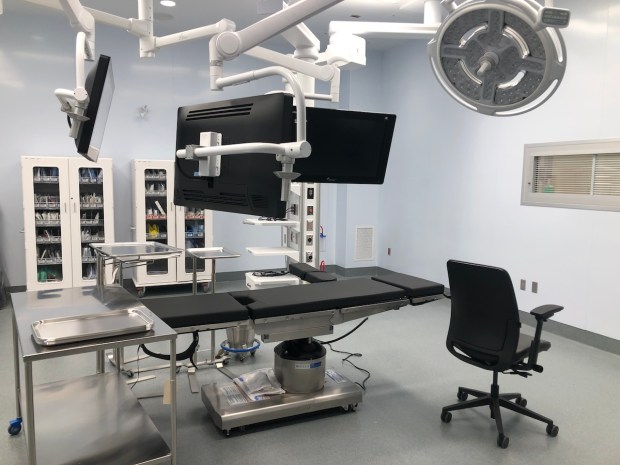
Operating room at Royal Inland Hospital. (Image: Mel Rothenburger)
PRELUDE: This editorial is part of a book series I co-authored with my senior undergraduate students last year, titled In the Shadow of the Hills: Socioeconomic Struggles in Kamloops, TRU Open Press. One of the research topics explored the cost of waiting times for surgeries in Kamloops, conducted by Ashley Thomson and featured in Chapter 9: The Price of Patience: Examining Healthcare Waiting Times in Kamloops. Below, I summarize her research and key findings. For full details, visit the chapter. — Dr. Peter Tsigaris
The Cost of Waiting: Addressing Healthcare Delays in Kamloops
Across Canada, healthcare delays are widespread. In British Columbia, 27% of adults lack a family doctor, while nationwide, 6.5 million people are in the same situation. Healthcare access is a critical issue in Kamloops, where nearly 20% of residents are on wait lists for family doctors. Furthermore, long surgical wait times can cause significant economic and health problems. This commentary highlights the research undertaken by Ashley Thomson, a recent graduate from TRU, about surgical delays at the Royal Inland Hospital and explores potential solutions.

Ashley Thomson.
Costs of Healthcare Delays
Waiting for treatment results in economic losses, worsened medical conditions, and adds to psychological distress. Surgery delays also lead to higher costs due to complications and extended recovery times. Using data from the BC Ministry of Health’s Surgery Wait Times database, Statistics Canada’s 2021 Census Profile, and some studies, Ashley estimated the cost of wait times based on the cost of lost productivity. She found that the economic burden in Kamloops and elsewhere in British Columbia is substantial:
• The cost of waiting for 50% of surgery cases to be completed at Royal Inland Hospital (RIH), representing the median wait time, is estimated at $3.9 million per year.
• For 90% of cases to be completed, meaning the wait time for nearly all procedures, the cost escalates to $10.9 million per year.
• Province-wide, these costs reach $89.2 million for 50% and $336.4 million for 90% of cases.
Wait Times by Procedure
Ashley found that surgical wait times at Royal Inland Hospital (RIH) varied significantly by procedure. Nerve surgery had the longest waiting period (29.4 weeks) and the highest cost per case ($4,168). Nasal surgery (23.3 weeks), neck/throat surgery (14.95 weeks), and breast surgery (12.9 weeks) also had some of the longest wait times, most likely due to high demand and a shortage of specialists. These findings are in line with another study who report that “43% of Canadian spine surgeons have noted a wait of over six months for surgery”.
Joint/Muscle/Bone surgeries (1,074 cases) have the highest number of patients waiting, contributing to a total cost of $1.31 million. Eye surgeries (590 cases) also have a significant backlog, with a total waiting cost of at ~$310,000, despite a relatively short 3.7-week wait time. Other procedures with extended delays included head and gastrointestinal surgeries, both exceeding 10 weeks.

Figure 1: Longest surgical wait times, Image created with Napkin AI
In contrast, some surgeries had much shorter wait times, such as biopsy in operating rooms (1.4 weeks), wound/laceration care (1.0 weeks), and vascular system surgery (1.18 weeks), suggesting more efficient scheduling and/or lower demand.
Potential solutions for Kamloops
There was a campaign initiative from The Thompson Region Division of Family Practice in the Fall 2022 to recruit more family doctors to Kamloops. “Champions for Family Medicine” was funded by local businesses. The program was forced to end earlier than planned due to a lack of support.
Perhaps it is time to re-ignite the Champions? Addressing this shortage should be a priority in improving overall healthcare outcomes including wait times for surgery. Ashley offers several potential solutions. Attracting more medical professionals through either financial incentive, loan forgiveness, and promoting a work-life balance in Kamloops.
Secondly, Artificial Intelligence can assist in the early detection and diagnosis of various diseases, improving treatment outcomes and patient care. The evolving robotic technology can enhance surgeons’ productivity and precision resulting in time savings. Finally, public-private partnerships and digital healthcare solutions could alleviate pressures, but equity and accessibility must be ensured.

Figure 2: Potential solutions to improve healthcare services, Image created with Napkin AI
Conclusion
Long healthcare waits times in Kamloops impose severe economic, health and psychological costs. AI and robotic technology, combined with recruitment and policy reforms, can improve efficiency. Addressing these challenges is essential for better healthcare access in Kamloops. I invite you to express your experience with wait times in the comment section of this editorial. Your input is invaluable, and we can make a difference with collective action.
References
British Columbia Ministry of Health. (n.d.). Surgical wait times: Procedures a-z. Government of British Columbia. https://swt.hlth.gov.bc.ca/swt/ProceduresAToZ.xhtml
Chen, H., Qian, Q., & Zhang, A. (2015). Would allowing privately funded health care reduce public waiting time? Theory and empirical evidence from Canadian joint replacement surgery data. Production and Operations Management, 24(4), 605–618. https://doi.org/10.1111/poms.12260
Dandurand, C., Mashayekhi, M. S., McIntosh, G., Singh, S., Paquet, J., Chaudhry, H., Abraham, E., Bailey, C. S., Weber, M. H., Johnson, M. G., Nataraj, A., Attabib, N., Kelly, A., Hall, H., Rampersaud, Y. R., Manson, N., Phan, P., Thomas, K., Fisher, C., … & Dea, N. (2023). Cost consequence analysis of waiting for lumbar disc herniation surgery. Scientific Reports, 13, Article No. 4519. https://doi.org/10.1038/s41598-023-31029-5
Mineer, B. (2021, August 23). More than 200 elective surgeries reportedly cancelled at Royal Inland Hospital due staff shortages. Radio NL. https://www.radionl.com/2021/08/23/more-than-200-elective-surgeries-reportedly-cancelled-at-royal-inland-hospital-due-staff-shortages/
Moir, M., & Barua, B. (2023). The private cost of public queues for medically necessary care, 2023. Fraser Institute. https://www.fraserinstitute.org/sites/default/files/2023-private-cost-of-public-queues.pdf
Munro, R. (2023, December 19). Almost half of those in Interior Health waiting for a family doctor are in Kamloops. INFOnews. https://infotel.ca/newsitem/almost-half-of-those-in-interior-health-waiting-for-a-family-doctor-are-in-kamloops/it102198
OurCare. (2024). Primary care needs OurCare: The final report of the largest pan-Canadian conversation about primary care. MAP Centre for Urban Health Solutions. https://issuu.com/dfcm/docs/primary_care_needs_ourcare_the_final_report_of_the?fr=xKAE9_zU1NQ
Reeve, M. (2023, January 25). Kamloops family doctor recruitment campaign comes to an early end. CFJC Today. https://cfjctoday.com/2023/01/25/kamloops-family-doctor-recruitment-campaign-comes-to-an-early-end/
Statistics Canada. (2023). Census profile, 2021 census of population (No. 98-316-X2021001) [Table]. https://www12.statcan.gc.ca/census-recensement/2021/dp-pd/prof/index.cfm?Lang=E
Tsigaris, P., Awad, A., Forbes, C., Izett, P., Kadaleevanam, U., Mehta, G., Noor, S., Simms, O., & Thomson A. (2024), In the Shadow of the Hills: Socioeconomic Struggles in Kamloops, TRU Open Press, https://shadowofthehills.pressbooks.tru.ca/

 ArmchairMayor.ca
The solution to this problem is clearly the PAC. Everyone needs to get on board with the PAC because of all the doctors it will attract.
Once the PAC is built, the health care problems in Kamloops will improve dramatically.
LikeLiked by 1 person
I love the sarcasm!
LikeLike
Financial incentives are already in place. Anyone working in healthcare is well paid and especially so for physicians. We could work in making the city of Kamloops more attractive to live in but that would entail a brand new management and a council who truly understands what quality of life really means. Despite the 100,000 inhabitants we truly are quite parochial here and with a terrible food scene to boot. And with both higher level of government already running very high deficits and inundated with thick layers of bureaucracy the solutions to our woes are further and further unobtainable.
I am overall disappointed in reading this first instalment of the series “In the shadow of the hills”.
LikeLiked by 1 person
Did this study consider educating people to adopt healthier lifestyles as a way to reduce pressure on Canada’s strained healthcare system by preventing chronic diseases, which drive up economic costs like lost productivity. It’s not a complete fix but systemic issues like doctor shortages and aging populations persist, and changing habits is tough. We are not going to yoga our way out of a car accident or eliminate heart attack by saying fat is beautiful.
Lifestyle change, better diet, regular exercise, stress management, and avoiding harmful habits like smoking, drinking, driver education and so on can prevent or manage many chronic conditions like heart disease, diabetes, or obesity-related issues, that clog up the system.
Effective health policies need incentives and infrastructure, not just education, i.e. diabetes education and even shaming smokers had positive effects, but more is needed like subsidies for gym memberships, tax breaks for healthy behaviors, or urban planning that encourages walking over driving. A policy pushing prevention could see economic payoffs over time, not overnight. Meanwhile, Canada’s still needs to train more doctors and streamline hospital ops. It’s not either/or; it’s both.
LikeLiked by 1 person
We have been educating forever and we now know it doesn’t work unless a massive campaign is launched by all three level of government. But no new bureaucrats need to be hired, do it with the existing workforce. The other thing is more disincentives need to be introduced to combat the opposite of “healthy lifestyle”.
LikeLiked by 1 person
Pierre it took over 35 years for the three R’s to sink in and you know you are right it also took disincentives for people to Undersatand the need to reduice, Reuse and Recycle. Education is GIGO (garbage in garbage out) unless one understands.
LikeLiked by 1 person
Thank you for the insightful comments, Pierre and Walter.
Ashley’s research focused exclusively on the economic cost of waiting times for surgeries, and exploring the broader factors influencing healthcare access was beyond the scope of her study. Her recommendations primarily addressed strategies to reduce surgical wait times, including the adoption of new technologies such as robotic-assisted surgery, which can enhance surgeon productivity (measured as surgeries per hour). Additionally, she highlighted the need to expand the supply of surgeons, either through private-public partnerships or by increasing medical training capacity, with or without robotic assistance.
AI technology also holds promise for early disease detection and diagnosis, potentially reducing the need for surgical intervention. While financial incentives play a role in attracting surgeons, non-monetary benefits—such as Kamloops’ high quality of life, abundant outdoor activities, a vibrant performing arts scene, and lower housing costs compared to Vancouver—should be actively promoted to draw more medical professionals to the region.
Something is clearly wrong when, as of December 12, 2023, a staggering 22,376 Kamloops residents—nearly 20% of the city’s population—remain on waitlists for a family doctor. A strong policy focus on prevention is essential, and I appreciate Walter for bringing this critical perspective into the discussion.
LikeLike
Kamloops is well-known for the good and the bad. That we are still not successful in recruiting doctors means the “balance” is skewed.
Moreover Ashely wrote clearly about solutions but offered nothing substantial.
LikeLike
Canadians are generally not reducing nor reusing but always asking for more. And recycling is basically garbage in someone else’s garbage dump. See what the problem is in Canada? We are frightened to stare at reality, facts and truths.
LikeLike
The richest province in Canada is broke Walter. Heavy on bureaucracy, over-regulation, with plenty of days off and where work/life balance is really mostly about lots of play time. Wait times for healthcare are costly indeed and an increase in the public debt is no answer.
LikeLike