
FORSETH – Where is all that electric power going to come from?
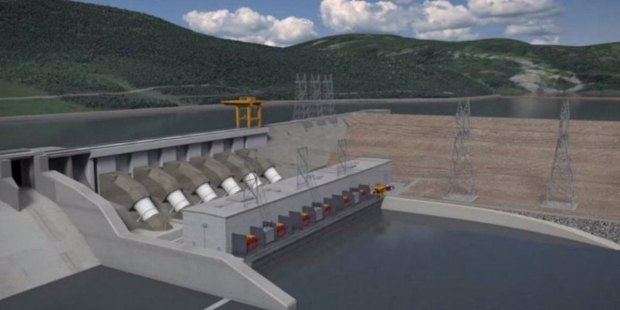
Site C. (Image: BCHydro)
ACCORDING TO a Nov. 28, 2024 Global News story, BC Hydro imported one quarter of the province’s power needs in the 12 previous months. The story stated that for the fiscal year ending March 2024, BC Hydro imported 13,600 gigawatt hours of electricity at a cost of nearly $1.4 billion.
 Still, Clean Energy Canada (a climate and clean energy program within the Morris J. Wosk Centre for Dialogue at Simon Fraser University) wants us to believe that:
B.C.’s electricity grid can handle increased demand from EVs, heat pumps and extreme weather events … AND THAT … Recent claims to the contrary are not based in reality
Here’s the thing though, according to the Government of BC the recent call, for new renewable energy projects, will provide less than 5,000 gigawatts of power per year (just over a third of what we imported in fiscal year 2024). That power of course flowing only once construction is completed, and starts flowing into BC Hydro’s system.
The fact is, BC Hydro has been a NET importer of millions of megawatts of power, and will continue to do so for the foreseeable future.
How much you ask? Let’s look to Stats-Can.
In 2020, BC Hydro purchased 7.08 million megawatts of power – mostly produced by coal powered plants in Alberta and Washington State.
In 2021 that figure jumped to 7,530,000 million megawatts … then to 8.81 million megawatts in 2022.
In 2023 imported power to British Columbia nearly doubled to 16.81 million, while last year, in the 8-month period of January to August, BC imported 11.25 million megawatts. Averaging that figure over a full 12 months would take that number up to 16.875 million – which would be another record year for power imports. (NOTE, the conversion formula is: 1,000 megawatts = 1 gigawatt)
While the provincial government continues to push British Columbians to convert from economical (and plentiful) natural gas to power hungry heat pumps, and from gas to electric vehicles (which will also consume ever increasing volumes of electricity), where is that power going to come from?
Even the provincial government itself has publicly stated that the demand for electricity is expected to increase by 15%, or more, between now and 2030.
Where is that power going to come from?
Make no mistake, we ARE going to need power from sources other than what is bring generated here in B.C., and that includes what will be coming online in the coming years, over and above the latest announced wind projects
Where is that power going to come from?
As I already mentioned, the shortfall required for B.C. comes, for the most part, from coal fired power plants in Alberta and Washington State.
And as that Global News story mentioned, the power we imported last year is more than two-and-a-half times what will be produced by the Site C Dam.
YES, you read that right. The power we imported was more than two and a half times more what Site C is going to produce. So much for all that bluster and bravado about Clean BC, as we continue importing coal-fired power from outside our province.
Clean Energy Canada says don’t worry there’s more than enough electricity available.
The provincial government says don’t worry there’s more than enough electricity available.
Stats-Can figures for the past several years, however, say otherwise — as does the amount of new power which will be coming online.
So who’s telling the truth?
I’m going to have to say the numbers don’t lie. We don’t, and won’t, have enough to meet the needs of British Columbians … especially with the government mandate that 26 percent of all vehicles sold must be zero-emission by the end of next year … and with that number climbing to 100% by 2035 – just 10 short years away.
UNLESS the provincial government takes a serious look at nuclear power generation, or power generated by natural gas, we’re going to continue requiring high levels of imported – coal-fired – power from Washington State and Alberta.
The numbers just don’t lie.
In Kamloops, I’m Alan Forseth. Please feel free to share your thoughts on this, in the Comments section below.
Alan Forseth is a Kamloops resident. For 40 years he has been active, in a number of capacities, in local, provincial and federal politics, including running as a candidate for the BC Reform Party in the 1996 provincial election. He is secretary of the Conservative Party of B.C.

 ArmchairMayor.ca
This is an important issue which isn’t aided by this disingenuous one sided claptrap, there’s no mention of how much we export annually which kinda changes the narrative. We belong to a mutually beneficial interconnected energy grid with Alberta and the pacific states, one in which we both export and import energy. Prof. Werner Antweiler, Ph.D. writes “It is again useful to express net exports as a percentage of total load to gauge the magnitude of trade. During 2023 BC had net imports of 16.6% of its total load—a number far higher than the previous eleven years for which I have data”. (https://wernerantweiler.ca/blog.php?item=2023-12-21). In fact 9 of the 12 yrs of data he’s researched BC had a net surplus.
BC is not going backwards to nuclear power generators, why you and Rustad continue to push for yesterday’s solutions just shows that neither of you understand the future.
LikeLike
Too bad Canada signed away its rights last year to a third of the power we formerly got through the Columbia River Treaty.
LikeLike
But really Allan, electrical energy will need to cost more to spur conservation. That’s the way of our forefathers any they survived!
LikeLike
Please show in detail and with specific comparisons where Canada signed away its rights last year to a third of the power we formerly got through the Columbia River Treaty?
Cooper
LikeLike
Mr. Forseth…what did BCHydro say the reason is we are importing electricity?
Cooper
LikeLike
Because we needed it? Why would they import it otherwise?
LikeLike
Mr. Forseth.
Thanks for your article. Based on your information B.C. is importing electricity. However few specific questions must be asked as follows:
Your article states B.C. is importing electricity but specifically why are we?
What time is electricity being imported? Is it during peak times where the demand is highest such as breakfast and dinner time Can B.C. meet that demand?
Is electricity being purchased during non peak times when we use less such as 1:00 am to 5:00 am? Importing cheap electricity?
Is it more efficient to import electricity during non peaks times and store water to be used during peak times?
Electricity in B.C. uses storage of water to generate electricity ie reservoirs. Water can be stored and used when needed.
Is it more effective and efficient to store water?
What is the value to store water?
Your information and research is great, however, the electrical system seems complicated and more specific information is required. Your article would have been more credible if you asked B.C. Hydro for comment.
Thanks for your input.
Continue be kind.
Cooper
LikeLike
Allan couple of items to clarify. One Alberta no longer produces electricity through coal generation, as it has all now been converted to natural gas. An initiative started by the former NDP government. In Washington State, there is one coal fired plant generating 3.1% of Washington State power, with the largest share coming from hydroelectric.
In BC we rely to a large degree on hydroelectric which has been impacted by our ongoing drought conditions. While you worry about the electrification, I see the transition as a great opportunity for communities and First Nations to participate in a tremendous wealth creating opportunity in BC. Already First Nations will have an ownership stake in the new wind power projects and we can do more to include the many ideas and projects emerging within our municipalities.
LikeLike
Communities and First Nations power generation will likely be financed by non-other-than the the public purse…
LikeLike
There are loan guarantees for First Nations in current wind power, in the past communities have developed their own projects. Check out what is going on in Vancouver.
LikeLike
is it cheaper to import the electricity than produce at certain times?
so many questions?
cooper
LikeLike
The solution to electrical generation shortfalls can be met by steam power. As the conservatives are so concerned they could support Lodge 359 Boilermakers and not push their parties’ anti union,anti apprenticeship policies.
LikeLike
Thanks, Alan. You’ve opened up a topic that should be part of a larger conversation as well. How is all this power going to be delivered?
Our subdivision was built some time in the early 1970s. The overhead power lines, transformers and individual service lines to houses are not large enough to support the demand by electric vehicles. How many other areas of Kamloops are similar to ours?
In the not too distant future, is the delivery infrastructure going to face changes that will result in hydro rates skyrocketing?
Is Tesla going to be a name for which Canadians will be proud to have on their vehicle(s)? Is Tesla going to be the supplier of a multi-million dollar contract for military vehicles?
More questions than answers, Alan. We should do coffee at Timmy’s North Shore some time; I can walk there LoL.
LikeLike
I think we just have to wait until the CBC does an article on this subject then we will know who is telling the truth.
LikeLike