
CHARBONNEAU – Anti-greenwashing laws should apply to forestry industry
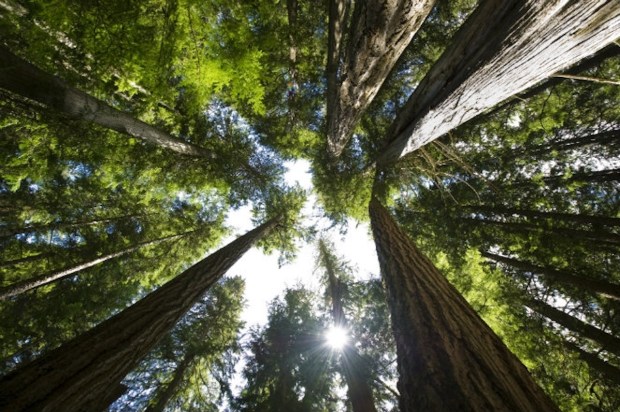
IF AN OLD-GROWTH TREE falls in the forest and is turned into sawdust, does anyone one care?
Not if the tree is in the B.C interior.
 If the old-tree was on the coast, there would be howls of protests.
Yet, here in the interior, our trees are being ground up into pellets and sent to the UK where they are burned to produce electricity. The plant owners claim they are “sustainable and legally harvested.”
Burning trees is supposed to be carbon neutral but not when it takes minutes to burn and decades to grow. And they will probably never store the amount of carbon that the old trees did.
The UK plant emits 12 million tonnes of carbon dioxide a year but doesn’t have to add it to their emissions total. International carbon accounting rules state that greenhouse gas emissions from burning wood are counted in the country where the trees are felled as opposed to where they are burned.
B.C. allows the illegal plunder of our forests and Canada has to add the CO2 emissions to our total. Doesn’t sound sustainable to me.
The pellets are supposed to come from sawdust and sawmill residues, with the rest coming from forestry residues and low-grade logs.
In fact, good logs are being cut from old-growth forests and turned into pellets.
A BBC crew filmed logs being taken from what owners of the UK plant call, in a stroke of deception, “primary forests.”
Let’s not kid ourselves. There’s no mistaking them as old-growth. The trees fit the definition of old-growth as: “unique habitats, structures and ecological functions”.
Of course, the label of “old-growth” is usually reserved for the grand old trees on the coast where environmentalists chain themselves to trees in order to protect them.
But no one even seems to notice the levelling of old-growth forests around Prince George.
One example is an 87-hectare cut block called EM807M 300, kilometres west of Prince George. Although a timber company held the licence for the site, logging records show that owners of the UK plant took 26 per cent of the harvested wood.
The BBC investigative team found that the UK company took more than 40,000 tonnes of wood from old-growth forests in 2023.
Ninety per cent of that cut block had the even higher classification of “priority deferral area”. This category is for old-growth forests that are “rare, at risk and irreplaceable”, according to an independent panel of experts in British Columbia.
The experts have recommended that logging should be paused in priority deferral areas. The British Columbia government says it is working to ensure more old growth is deferred and protected.
All talk, no action.
What could address this travesty are new federal laws to combat greenwashing — claims that do not stand up to scrutiny such as vague and misleading language like “clean energy solutions” or “low-carbon future.”
The forestry sector is greenwashing in its claim that burning wood reduces carbon emissions anytime soon. By the time the trees grow to the point where they suck up the CO2 released in their burning, the trees will likely be consumed by wildfires created by our climate emergency.
David Charbonneau is a retired TRU electronics instructor who hosts a blog at http://www.eyeviewkamloops.wordpress.com.

 ArmchairMayor.ca
Greenwashing has been going on in forestry activities for decades. Removing timber utilization specifications lead to two things- exceedingly high levels of post harvesting waste and over 20 years has left unaccounted (why the salvage program never took off- evidence of underreporting through salvage scaling) on the coast close to 20 million meters of wood from its inventory and the need for the creation of the BC Forest Enhancement Society – a subsidy to pay to remove this high waste at the taxpayers cost. 20 years later under the idea is lowers fire risk and is somehow the taxpayers responsibility and not the government who created this policy or the industry that was cavalier and left huge fuel loading throughout the entire landscape of BC. Of course since I live in a forest dependent community, my tires will once again be slashed for speaking out against greenwashing or telling the simple truth. Then there is Wildfire Branch- another arm of the BC gov that blackballs government employees if they attempt to speak out on any issues its senior executive don’t like to see the light of day such as “why are BC fires increasing in size, intensity and frequency”: its the fuel dummys and where does that come from?
LikeLike
“B.C. allows the illegal plunder of our forests”. Since when all permits require a plan for a reforestation program when allowed to cut timber. I think this is part of the sustainable program.
Also if we keep all the old growth timber which will die over time then big wildfires will continually plague us with all this dry timber (bug kill, root rot etc.) It would be better to use this low value timber for wood pellets vs a wildfire creating no value and have the same carbon effect if carbon is a real problem.
Who are the forest experts you are referring too are any of them professional foresters of British Columbia.
LikeLike
Another example where there isn’t a heartfelt need to avert the worst of climate change, namely human intervention motivated by greed.
LikeLike