
LETTER – Calls for a balanced approach to drug issues are growing louder
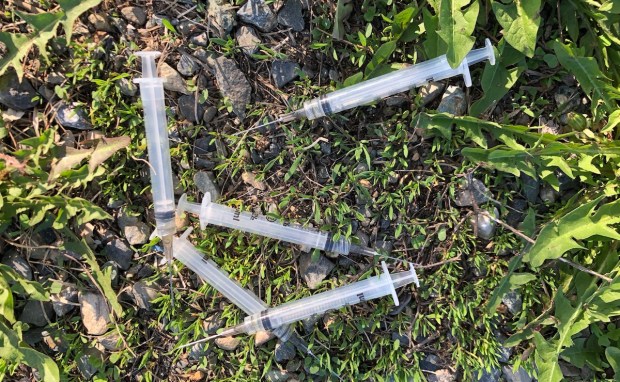
(Image: Mel Rothenburger)
While harm reduction strategies play a critical role in preventing deaths and managing public health, they should be part of a broader, more holistic strategy.
The debate around British Columbia’s approach to drug addiction treatment, particularly its reliance on harm reduction, is increasingly contentious. Proponents of harm reduction argue that it focuses on minimizing the negative consequences of drug use without necessarily requiring abstinence. This includes measures like safe injection sites, needle exchanges, and the provision of safe supply drugs such as prescription heroin.
However, I argue that this strategy has failed to curb the opioid crisis and may even exacerbate it. The statistics are alarming: overdose deaths in B.C. have surged from around 200 per year in the early 2000s to over 2,511 in 2023 (as reported by the Ministry of Public Safety and Solicitor General January 24, 2024).
This upward trajectory indicates that harm reduction alone is insufficient to address the growing crisis. Critics assert that the continued rise in overdose deaths, despite extensive harm reduction efforts, suggests that these policies do not adequately address the root causes of addiction and fail to offer a path to recovery.
Furthermore, some argue that harm reduction strategies, while preventing some immediate harms, might inadvertently perpetuate addiction by not emphasizing treatment and recovery sufficiently. The call for a balanced approach that integrates harm reduction with robust addiction treatment services, including rehabilitation and mental health support, is growing louder.
Such a comprehensive approach might better address both the immediate risks of drug use and the long-term goal of helping individuals achieve sobriety and reintegration into society.
In summary, while harm reduction strategies play a critical role in preventing deaths and managing public health, they should be part of a broader, more holistic strategy that includes prevention, treatment, and recovery services. Without this balance, B.C. risks continuing the cycle of addiction and overdose deaths.
DENNIS GIESBRECHT
Editor’s Note: Dennis Giesbrecht is the Conservative Party of BC candidate for Kamloops – Centre.

 ArmchairMayor.ca
As my bride has said in the past, “There is no such thing as a recreational drug.”
I get tired of some folks who preach this message using the media.
Supply chain is an ongoing concern as well.
A proverbial ‘slap on the wrist’ is no sentence at all for homicide.
LikeLike
Interesting figure (10 billions of dollars) Pierre. Can you add some detail as to what this amount includes. Just curious.
LikeLike
According to certain statistical numbers there are over 200,000 people in B.C. deems “at risk”. Using a conservative figure of $ 50,000 annually for each one of them there you have it, 10 billions.
LikeLike
One truism is that a more “holistic” approach would add upwards of 10 billions dollars to the provincial budget. Where is the money coming from?
LikeLike