
EDITORIAL – Early praise for firefighting efforts often turns to criticism
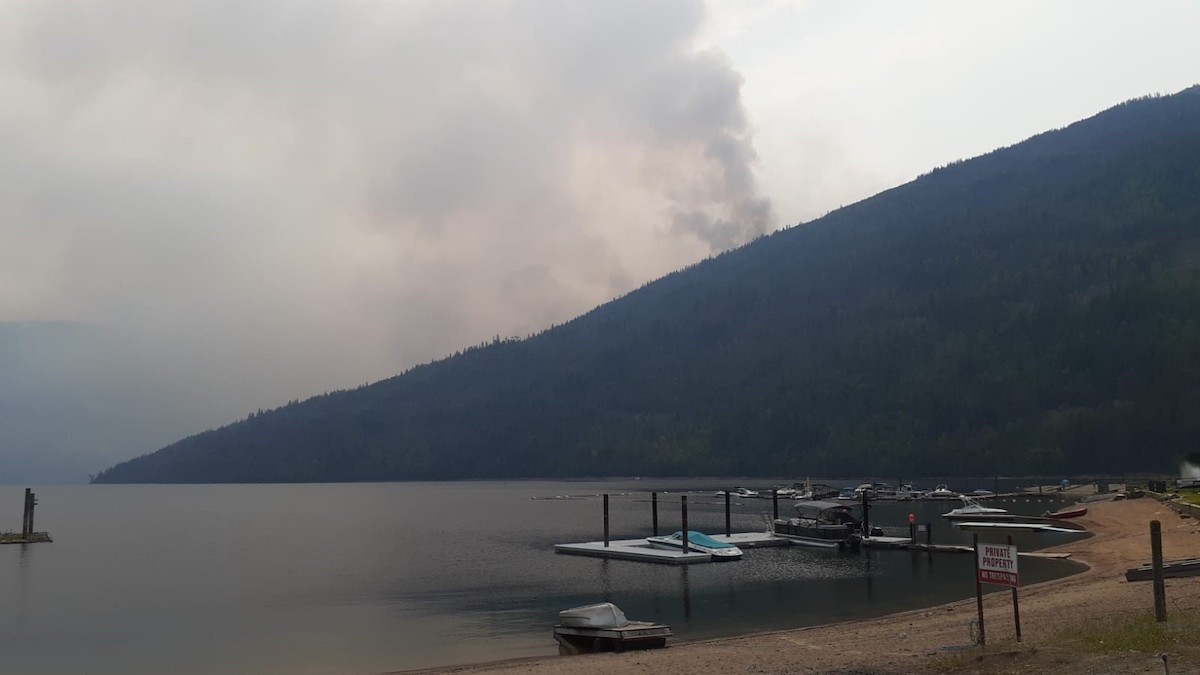
(Image: BC Wildfire Service)
An editorial by Mel Rothenburger.
THE EARLY DAYS of a wildfire crisis always bring praise and gratitude for the people who put themselves in harm’s way saving lives, land and property.
They are our annual heroes. But, within a few days, some people’s attitudes change dramatically.
In their stress and desperation, they want to place blame, so they start finger pointing — the fire wasn’t attacked fast enough or hard enough. The evacuation order didn’t come quickly enough. Governments aren’t providing enough resources. Not enough information is being shared.
Some, who may or may not be directly affected by the wildfires, become instant experts on them.
One ignition point for controversy, if you’ll excuse the pun, is the strategy of controlled backburning to create a buffer of expended fuel in front of the advancing wildfire. Small fires are purposely set along a human-made or natural fire break.
It’s effective but it requires careful planning and the right weather conditions. And it’s always open to accusations that it has done more harm than good.
This year, claims are being made that the Bush Creek East fire, formed by a merger of two fires at Adams Lake and which then overtook the Shuswap, was made worse by a bungled backburn that should never have been attempted due to windy conditions.
The other side of the story, from BC Wildfire Service, is that the same backburn actually saved land and property and had no effect on the convergence of the two fires, which skirted the backburn.
As usual, it’s the leadership of the Wildfire Service that’s being blamed rather than the frontline firefighters but imagine how those who make the decisions feel when their best efforts are met with scorn.
Certainly, there are always lessons to be learned. In past years, some glaring errors have been made, and maybe some are being made now. But until there’s something more convincing than speculation, I’ll put my faith in the experts.
I’m Mel Rothenburger, the Armchair Mayor.
Mel Rothenburger is a regular contributor to CFJC Today, publishes the ArmchairMayor.ca opinion website, and is a recipient of the Jack Webster Foundation Lifetime Achievement Award. He has served as mayor of Kamloops, school board chair and TNRD director, and is a retired daily newspaper editor. He can be reached at mrothenburger@armchairmayor.ca.

 ArmchairMayor.ca
Sadly, ‘‘twas ever thus”. I cannot imagine how the people who are fighting these fires must feel when they hear the bitching about how they are not doing enough. How disheartening.
LikeLike
It’s be expected, people are grieving. Below was borrowed from Mr. Google. I suspect “feelings of guilt” will weight heavily on many. Why did I built in the middle of a forest, why did I leave those trees so close to my home, etc..
That’s not to say my heart doesn’t goes out to those who’re suffering. But in this neck of the woods if you don’t fire proof your property you are rolling there dice.
Grief is universal. People often describe grief as passing through 5 or 7 stages. The 5 stages are denial, anger, bargaining, depression, and acceptance. The 7 stages elaborate on these and aim to address the complexities of grief more effectively. They include feelings of guilt.
LikeLike
I’m not a believer in the “stages” of grief, whether it be five or seven. Certainly, most of the so-called stages are elements of grief, but they aren’t orderly. Any of them can back to hit you like a ton of bricks at any time, and without warning. Acceptance? The grief never goes away. It just goes into a corner, waiting to re-emerge. We move on with life, certainly, but the grief is always there in degrees.
LikeLike