
BEPPLE – ‘Managing to Zero’ will drive Mountain Caribou herds to extinction
I FIRST HEARD the term “Managing to Zero” in 2017 at a presentation by the British Columbia Wildlife Federation (BCTF). The premise of the talk and the term, is that, in face of declining wildlife, dividing an ever smaller pie drives species to extinction. At some point, we cannot continue to divide an ever diminishing pie.
 For example, in 2017, the Steelhead fisheries saw only 145 fish in the spawning population on the Thompson and 45 in the Chilcotin. That is less than 10 per cent of the pre-2000 average according to Canadian Department of Fisheries and Oceans.
Both populations have been in decline for over 40 years.
Yet year after year, there are fishers who ask for an opening to fish. And, despite the Steelhead being in danger of extinction, there is still a possibility of a catch and release fishery listed on the DFO website depending on sampled numbers of return rates.
And year after year, there are politicians who support openings as well. I know firsthand. Five years ago, as a member of the TNRD board, I listened to other board members pleading for support for openings of the Steelhead fishery because of the impacts it had on the local economy between Cache Creek and Lytton.
Again, last year, in August 2018, Steve Rice, the TNRD director for Spences Bridge, lamented the closure of the Steelhead fishery last fall, when less than 100 fish returned to the Thompson.
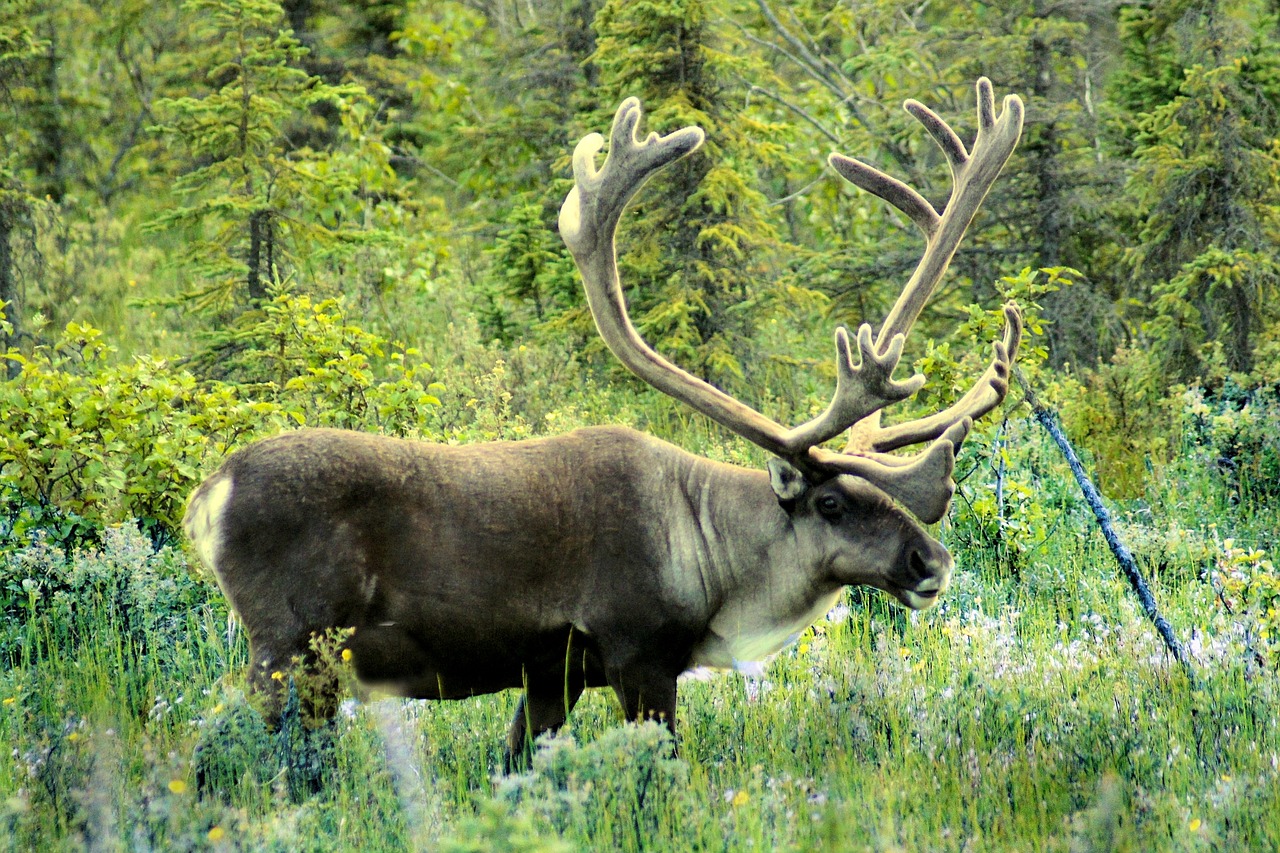
A few weeks back, “Managing to Zero” came up again when residents in northern B.C. came out to provincial government meetings to protest possible closures of backcountry areas to help preserve the threatened Northern Mountain Caribou.
Under the proposed plan, over one million hectares of habitat will be closed to snowmobilers in northern B.C. to help preserve the caribou.
The plight of the Northern Caribou is on the same downward trend as their Steelhead brethren. The caribou population in Tweedsmuir is 165, in Takla 70, and in Telkwa 16. The largest herd, in the Chilcotin, is 1,350. Six of the nine regions in northern B.C. have seen decreasing numbers of caribou, with one other being decreasing or steady, and one unknown. Only one region, Wolverine with 375 caribou, has seen an increase.
Meanwhile, five caribou herds in central and southern B.C. are already extinct. Herds in Purcells Central in Southeast Kootenay, George Mountain in Upper Fraser, Banff in Jasper-Banff, Monashee in South Monashee, and Burnt Pine in Pine River are all extinct.
So we have already watched caribou populations get smaller and smaller, to the point of extinction in other parts of the province. We’ve managed to zero.
Now, the province is trying to take the bold step of not dividing the pie. Instead of saying that snowmobiling and caribou herds can co-exist, the province has proposed a closure to snowmobilers of one million hectares of caribou habitat.
And people in northern B.C. are in an uproar in the proposed closures.
Managing to zero says that no matter what size of population of caribou, some snowmobiling should be allowed. Managing to zero’s philosophy is that no matter the size of a wildlife population, it can absorb some pressure. These pressures could be hunting, fishing, or snowmobiling. It could be forestry, road building, pipelines, or water extraction.
Managing to zero has been the default management strategy for fisheries and wildlife for decades. And, again and again, it ends up the same.
We keep taking our piece out of the ever smaller pie, until, in the end, there is no pie left.
Here’s hoping the province sticks to its plan of protecting the threatened caribou by imposing closures to snowmobiling. Here’s hoping the Tweedsmuir, Takla, and Telkwa herds don’t join the extinct list along with the ones already there in Purcells Central, George Mountain, Banff, Monashee, and Burnt Pine.
Nancy Bepple is a former City councillor of Kamloops with a strong interest in community building projects.

 ArmchairMayor.ca
Actually no, it doesn’t end up the same. Wildlife management has brought back all the large mammals from severe decline to abundance, like elk and white tail deer and black bear and grizzly and cougar and pronghorn. So no, critters aren’t managed down to zero.
Wildlife management is based on science. If a decision is made to ignore the science, as with steelhead, that’s not the fault of the science. Roads and snowmobile trails provide easy access to caribou by wolves, ending snowmobiling might well not be enough in and of itself, a severe wolf cull combined with severe limitations on all roadless winter sports might help.
LikeLike
Sorry mr Samsai You simply have to catch up.We are managing the Orca to death. The musk ox and the polar bear and the barren ground caribou as well as mountian caribou.The wolf /carbou balance is self regulating but only if MAN/hunter /killer stays out of the equation.The numbers always have and always will ebb and flow the way they should if we stop trying to manage nature.Culls don’t work and never have .Sometimes as a very short termimpact caribou can be put into “birther ” pens so that the young can mature insafety. This is now being done in parts of BC but is a stop gap measure only.
LikeLike
Predator culls almost never work and virtually always do more harm than good.Please do some research.Ask a naturalist.The re introduction of the wolf to Yellowstone park re established the ecological biodiversity and brought the area back into balance.. You woueld do 100 times more to protect the Caribou by banning the snowmobile and ATV than culling a single wolf or wolf pack. I refere you to Frank Ritcey a person who knows more about the ecolgy than any ten of us.
LikeLike
Tony
Scientists who are actually working with these threatened populations and who have had some success increasing the numbers agree that targetted wolf culls are a critical part of a plan that also includes maternal planning, reduction in deer and moose in caribou habitat and habitat restoration. They say all approaches are required for success and they seem to have the data to back that up.
LikeLike
In order to control declining herd numbers ‘ , there has to be management of predators. Between wolves and Grizzlies bans the population is most at risk from predators
I give you the fact that snowmobiles create trails for wolves to allow easier access to caribou. But a cull on wolf populations is a huge step to the recovery of the herds
LikeLike
Thank you for a great article telling the truth in a compelling way!
LikeLike
Nancy that would be the bcWf not bcTf.There is a significant differance. (LOL) Thank you for the article it’s an important issue that government doesn’t seem to understand or care.The population of mountain caribou in Wells Gray park are almost gone and the G/D government is
still issuing logging cut blocks in Wells gray pk.
If the pipeline gets built just watch them manage the Orca and Coho populations to zero The Wells Grey caribou protection society is doing its best to counter this virtually criminal behavior by the logging companies and the the gov’t.
And they still expect US to vote for them .The Horgan government has betrayed us and the environment and first nations. No wonder voter appathy is rife in BC.
LikeLike
An excellent article, Nancy, but not so excellent for any of the living resources on this pale blue dot, including caribou and man. I have never heard the term “managing to zero” but it’s a great descriptive of what man is doing.to all earth’s resources. The word “managing” has become a detestable term in the hands of governmental corporatocracies who pretend that we can have our cake and eat it too. Until we accept the obvious truth that our tiny planet is exhaustable and therefore requires that if we don’t get a solution to overpopulation we are all going to have to take off the blinders and willingly accept that all our behaviours have to be hemmed in and limited by governmental edict. If that means we must immediately accept a lower standard of living, change our jobs, get retrained, and/or demand a basic income of government so be it. Without that willing acceptance we’ll be a short-lived species on the road to social suicide. We will continue “Exploiting to zero” leaving nothing for our increasing dependents. We pay now, or pay later.
LikeLike