
EDITORIAL – New impaired-driving laws will test our civil freedoms
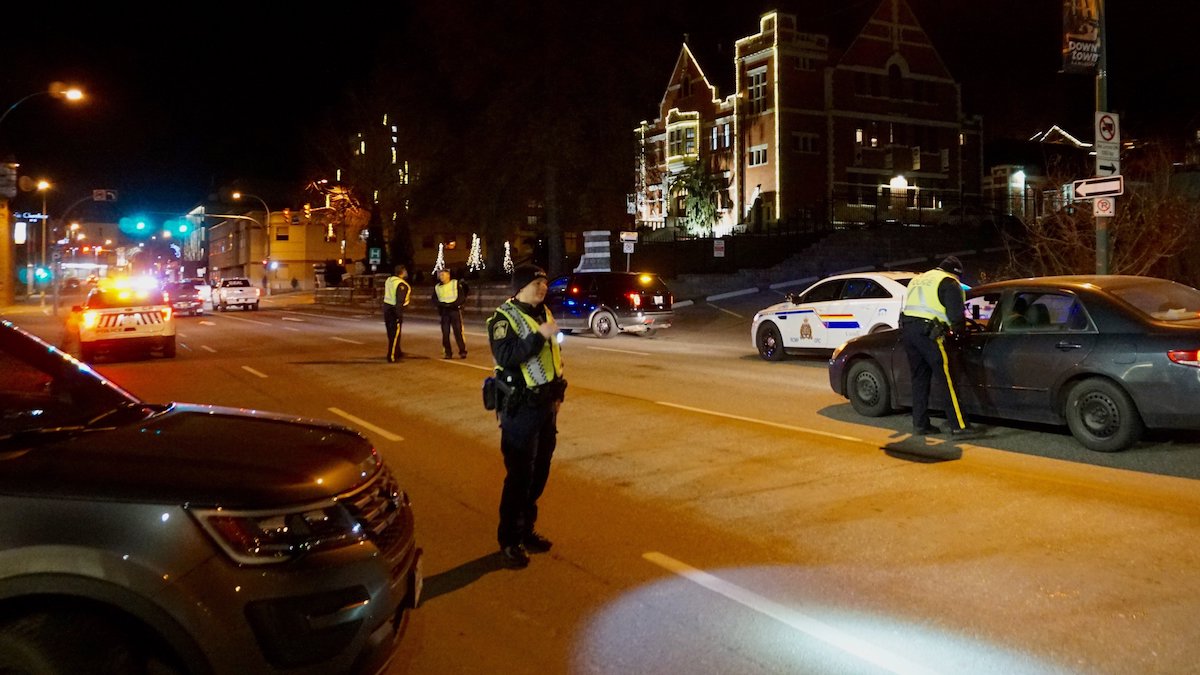
(Image: CFJC)
An editorial by Mel Rothenburger.
ARE WE BECOMING a police state?
Not yet, but the new impaired-driving laws that came into effect this week certainly give police a lot more power than they had before.
Under the provisions of Bill C-46, peace officers can now demand that any driver they pull over take a breathalyzer test. No obvious indication of drunk driving is needed, whereas under the old law they had to have a reasonable suspicion that the person was impaired.
And if you refuse the test, you could get slammed with a $2,000 fine.
As Bill C-46 states, impaired driving injures or kills thousands of people in Canada every year. About four Canadians per day are killed due to drunk driving. Doing something about that is important, and many believe the new law is just the ticket.
But the basis of the old law was that police should have to have a good reason for ordering citizens to do something. They should have to have reasonable suspicion that the person has done something wrong.
For example, police can’t walk up to a front door and simply barge into a house and start searching the place. They have to have a warrant that says they have good grounds to want to do it.
Opponents of the new impaired-driving laws call them tantamount to a “warrantless search.” The new law lowers the bar, and they promise to fight it in court.
Remember the recently implemented Inadmissible Patrons Program that gives police the authority to remove customers from businesses if they fit a certain description?
Giving police more and more power may or may not make for effective enforcement but does it really make us safer in the long run?
I’m Mel Rothenburger, the Armchair Mayor.
Mel Rothenburger is a former mayor of Kamloops and newspaper editor. He publishes the ArmchairMayor.ca opinion website, and is a director on the Thompson-Nicola Regional District board. He can be reached at mrothenburger@armchairmayor.ca.

 ArmchairMayor.ca
While I applaud efforts to get drunks off the road, this new law goes way too far. I hope that there is a charter challenge sooner than later.
LikeLike
If this allowed to stand, then it will not be long before warrantless searches become law also, just because they can.
LikeLike
I have not consumed alcoholic drinks for over 40 years.
I suppose if I was stopped and asked to take a breathalyzer test and told this to the police officer who had stopped me, who is to say that I was or was not refusing to take the test?
Provided it wasn’t someone who did drink, I wouldn’t consider the request was given by a hypocrite.
Nevertheless, you have posed a chilling question, Mel.
LikeLike
There’s a difference between searching a house and stopping a driver. Nobody sitting in their own home is going to be a threat to other people, drunk or not.
LikeLike
You missed the point.
LikeLike
Civil liberties are not to be confused with driving, IMHO. I welcome any crack down on drivers and as far as I am concern I welcome more and more restrictions on this particular aspect of our daily lives.
LikeLike
First they came for the socialists, and I did not speak out—because I was not a socialist.
Then they came for the trade unionists, and I did not speak out— because I was not a trade unionist.
Then they came for the Jews, and I did not speak out—because I was not a Jew.
Then they came for me—and there was no one left to speak for me.
LikeLike