
ENERGY – Fireplace bans endanger lives during emergency situations
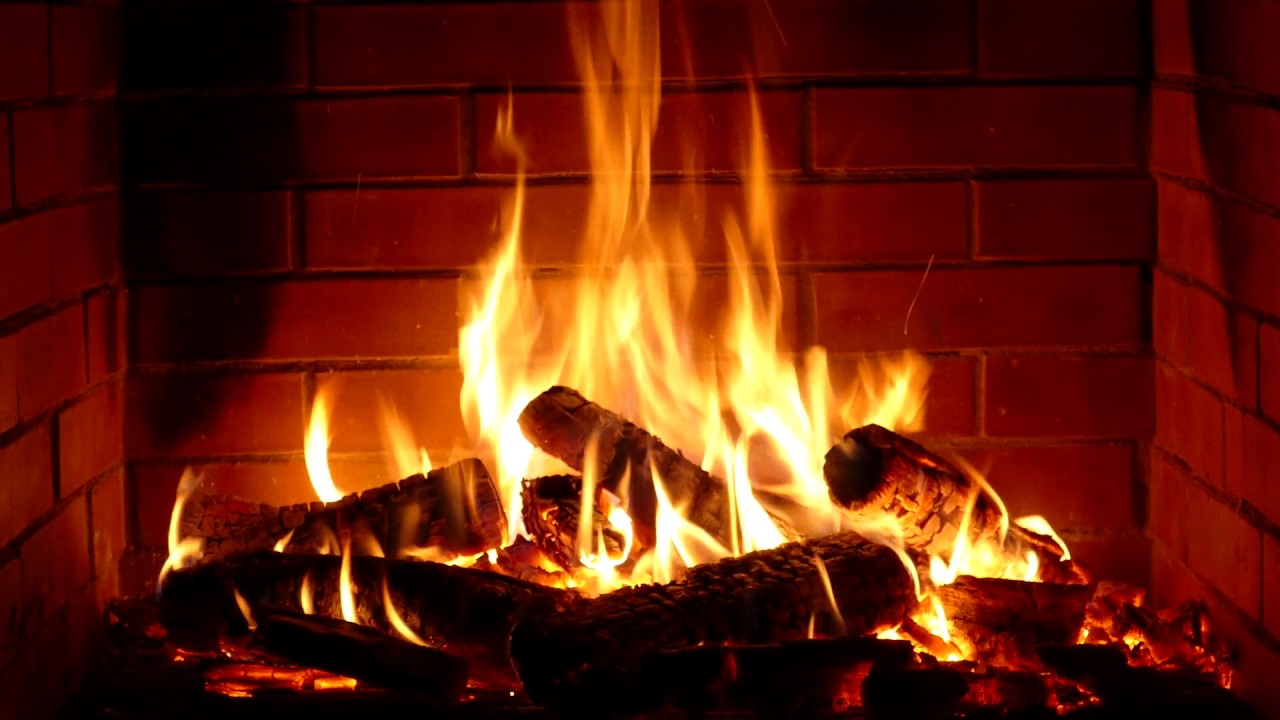
(Image: YouTube)
By PETER SHAWN TAYLOR
Contributor
Canadians for Affordable Energy
Oh the weather outside is frightful,
But the fire is so delightful.
Since we’ve no place to go,
Let it snow, let it snow, let it – ZAP!
THE POWER has suddenly gone out. Are you ready for such an emergency?
According to the federal government’s Get Prepared website, “you need to be able to take care of your family for at least 72 hours” if the grid goes down and official help is unavailable. Could you survive at home alone without electricity, gas, cell service and water for three days?
Stockpiling water, non-perishable food, batteries, medications and a first-aid kit are all necessities, of course. But what if there’s a blizzard − how will you stay warm? Then your only option, says Ottawa, is to use a “non-electric stove or heater, or a wood-burning fireplace.”
It’s apparently more important to protect the environment than it is to allow humans the tools to survive in a crisis
How strange, then, that some of Canada’s biggest cities are doing everything in their power to remove this option. By planning to ban fireplaces and wood stoves, Montreal and Vancouver are denying citizens the means to keep warm during a catastrophic ice storm or similar emergency. It’s apparently more important to protect the environment than it is to allow humans the tools to save themselves in a crisis.
In Montreal, beginning in October 2018, no traditional fireplace or wood stove “may be used or left to be used” by any resident, according to a new city bylaw. Only rigorously certified devices − properly registered with the authorities, of course − will be permitted.
Similarly, Vancouver is in the midst of a public consultation regarding its proposed ban on fireplaces and wood stoves. If approved, Vancouver residents would be required to register all wood-burning devices by 2022 and, as in Montreal, traditional-style fireplaces and stoves would be ineligible for registration. In 2025, it would become illegal to use any unregistered wood-burning system for warmth, cooking or aesthetics.
Both pending bylaws claim to make exceptions for lengthy power outages, but the broader implication of these policies is clear. They will remove from existence the vast majority of legacy fireplaces and wood stoves and, given a hefty application of red tape, strongly discourage all new installations. The Vancouver proposal actually contemplates an annual fireplace registration renewal process, like a driver’s licence.
And it’s a trend that may be spreading. The Canadian Council of Ministers of the Environment has distributed a draft bylaw that can be used by municipalities looking to ban fireplaces or wood stoves.
What does all this mean?
The next time a devastating winter storm hits Montreal or something similar is visited upon Vancouver, many homeowners won’t be able to heat their houses off-grid. In cases where official help is unavailable or misdirected, families will thus be deprived of this means of fending for themselves – this despite the explicit recommendation of Ottawa’s emergency preparedness program.
And an exemption during a power outage is of no value if your fireplace or wood stove has already been removed or rendered inoperable, as required by law.
The usefulness of fireplaces in an emergency remains real, even in big, modern cities. “My own house was without power for most of three days,” Ontario Premier Kathleen Wynne said in January 2014 following a dramatic ice storm in Toronto, “but we have a working fireplace and could still cook on our gas stove.” By relying on heritage technology, Wynne was able to eat and her pipes didn’t freeze. (Vancouver, by the way, is also planning to eliminate gas stoves and furnaces.)
Bans on fireplaces and wood stoves are driven by concerns over global warming, and the notion that heat from wood is inefficient and dirty. While it’s true that burning wood or other biomass such as plant matter can release a range of pollutants, “biomass is generally considered carbon neutral because the carbon dioxide (CO₂) released from either burning or decomposing biomass approximately equals the CO₂ that trees and plants take in from the atmosphere during their lives,” says the National Energy Board’s review of various energy sources. In other words, there’s no difference between burning a tree and letting it rot on the forest floor. This is why biomass can be considered an environmentally friendly, cost-effective and renewable energy source.
Further, the emissions released by wood stoves and fireplaces stay in the atmosphere for a very short time. Whereas CO₂ can linger for decades or longer, the particulates released by a burning log disappear in days or weeks. And while this is still an issue, a balanced assessment of all available facts suggests an outright ban is the wrong policy solution.
Given the proven usefulness of wood heat in emergencies, it would be better to declare no-burn days when air pollution is a factor, as is already the case in some North American jurisdictions, and let fireplaces and wood stoves remain as a necessary backup in big cities.
For most of Canada’s history, wood has been an important, affordable and practical source of heat and fuel. This remains true in many rural parts of the country. And in urban Canada, wood heat can still be very useful in a crisis.
Canadians shouldn’t be denied the right to help themselves in an emergency. Or, for that matter, the right to a pleasant source of warmth and ambiance any time the mood might strike them.
Peter Shawn Taylor is a journalist, policy research analyst and contributing writer to Canadians for Affordable Energy.


One more comment and then I’l quit.
If the gov’t says to use nonelectric stoves in the event of a power outage do they want us to use CO2 emitting propane stoves ?These devices used inside must have exhaust fans ( Electric ) or the gases emitted can kill .
Secondly: the main difference between burning wood and letting it rot is TIME.It can take several hundred years for a tree to disappear in the forest.This time factor gives natural processes time to absorb or recycle those emissions into natural forest regeneration. ie Nurse treees and breakdown nutrients) If we burn it the release of the gases is immediate and the emissions will not be recycled for many years.
LikeLike
Stop the forestry companies from slash burning then come and talk to me.
LikeLike
Wood smoke is cardiotoxic and carcinogenic so burning wood is not good for 99% of the time when it isn’t an emergency. As cleaner alternatives exist. There are also cleaner alternatives than wood during emergencies. Banning wood stoves is actually good policy. Laissez-faire burning equals unacceptable levels of air pollution. Ban wood burning.
LikeLike
This is a fairly typical example of burocracy running amok and people in positions on power who have probably never had or used a wood stove putting their cart before my horse.Wood stoves have always been and will continue to be an important source of warmth and inner peace.The ascthetic use of fire is second to none when it comes to enjoying some aspects of quality of life.A quality that many politicians don’t understand.Burning a small quantity of hardwood (not punky soft half rotted denim pine ) produces vitrually no threat to our local environment.It is of course not carbon neutral (and I’d be happy to demonstrate) but if you use the definition “They” use we can burn all the biomass we want without impact.Incidentally coal is biomass.Mr Mheta would have us believe that any amount of wood smoke will kill us all .Of course he wants us to use his solar power units to offset any carbon footprint.Even if the sun don’t shine.And lets not forget the unconscionable use of turbo generators at Domtar. Talk about carbon footprint.
Many politicians wish to be seen doing whats right without actually knowing whats right.Our city hall has been particularly hypocritical when on the very day they stopped back yard camp fires they allowed forestry companies to torch 25 major slash piles on the the south side of the city.They and the provincial gov’t continue to allow vast amounts of slash to be torched each year.This is definetly detrimental to our health because the volumes of wood burned are staggering in size .My little wood stove wouldn’t burn that much wood in my entire lifetime.When government stops slash burning then we can talk .
Don’t bother me until then.
LikeLike