
Editorial — The way we treat animals isn’t just about numbers
EDITORIAL — The issue of dogs on tethers brought to the table a fundamental philosophical difference in the role of local government this week.
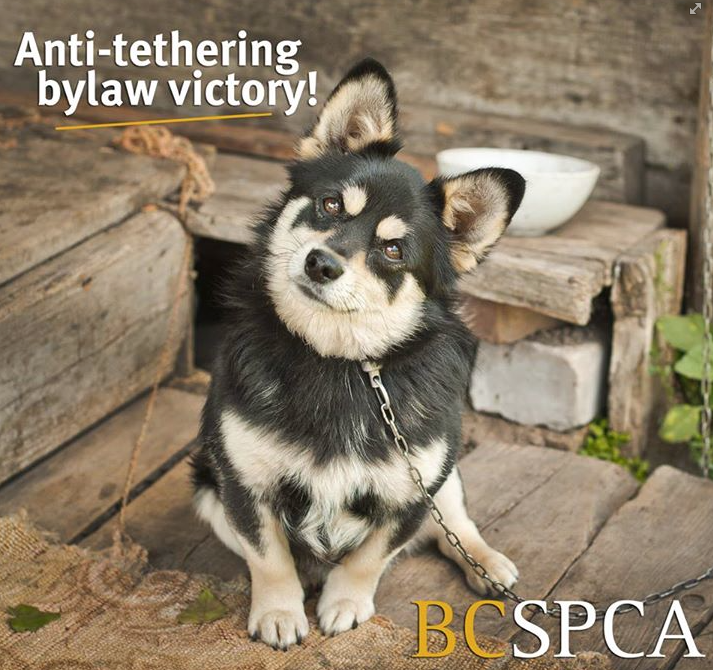
Kamloops resident Claudine Sleik asked Kamloops City council to amend its animal control bylaw to put limits on the length of time owners are allowed to keep their dogs chained. Several other B.C. cities have done it, though they vary as to how many hours are deemed acceptable.
 Some councillors were sympathetic to the notion of at least discussing the matter, but they were in the minority. Most of them took the view that — as one councillor phrased it — “if it ain’t broke don’t fix it.”
The “if it ain’t broke” model of decision-making is certainly appropriate in some situations. If a change in policy involves, say, changing a street to one-way traffic when two-way traffic is working fine, then don’t fix it. It might seem like a good idea because it would reduce the time it takes to get from A to B, but if there’s no public demand, then why change it?
The same thing, by the way, might be said about parking meters.
However, when dealing with the treatment of sentient beings, a different test must be applied. Dogs — you know, the ones we like to call man’s best friend — deserve our consideration and protection. Whether putting a dog on the end of a chain or rope is mistreatment is open for debate, but the B.C. SPCA believes it is. According to the SPCA, prolonged and consistent tethering can be both physically and psychologically damaging.
The members of council who opposed getting into the tethering issue based their position at least to some degree on the fact the City hasn’t received many complaints about it. The public hasn’t been demanding change.
Not to over-simplify it, because there were also comments about the potential costs of enforcement, and about the nuances of tethering. For example, a very short chain is not the same as a tether attached to a clothes line that gives the dog more freedom, and an hour is not the same as 12 hours, and so on.
Dog trainers will tell you that tethering is OK for training purposes but that’s not what we’re talking about. Fact is, some dogs live their lives on a chain. It’s pretty hard to argue that such a life amounts to anything more than a life sentence of boredom.
If you don’t happen to believe that, well, fine, but it’s worth discussing, especially given that quite a few other jurisdictions have studied it and decided some controls are needed. The issue is whether or not tethering is acceptable treatment of an animal and under what circumstances. That’s what the council should have been willing to give serious consideration to via some staff research and a workshop discussion.
What the issue isn’t about is the number of phone calls City Hall receives. If tethering is a negative treatment of a pet, then local government has a role in fixing the situation whether it applies to hundreds of dogs or just one, whether elected representatives have received many phone calls and letters, or just one.

 ArmchairMayor.ca
I’d like to see a bylaw tha ALL cats must be licensed and if they are not kept inside, then they must be on leash. I am sick of my neighbours’ cats on my fence, in my yard, gping into my car when the door is left open, or going into my house when door is open.
While I don’t agree with dogs being left on a leash outside with no one about, all animals should be under the owners’ control and NOT in their neighbors’ places.
Dogs must be controlled and licensed and so should cats!
LikeLike
Disappointing but not surprising. It seems the only policy changes that are effected come about through High pressure, from pressure groups. A few years back I actually did phone to report a dog being left on about a 6-8′ chain all day and got the reply that if it has water and food they could not respond as there was no law stopping it. I think the peaceful majority really needs to join forces and speak out. It’s the only way to initiate change. Get those bylaw phones ringing folks!
LikeLike
People are kind and when they see dogs suffering they want action to be taken. One large problem with tethered dogs is that they are often out of sight and therefore there are not complaints from citizens. We should listen to the SPCA because they specialize in animal needs and protection. Our council can get copies of bylaws in other cities – they don’t have to reinvent the wheel.
LikeLike
ONE complaint about a man feeding birds is enough to get bylaw issuing fines?…..and NOT MANY complaints about dogs on chains amounts to a shrug?……….Easy pickins” I guess………
LikeLike
Very disappointing!
LikeLike