
Looking for Pvt. George McLean — and honoring a hero of Vimy
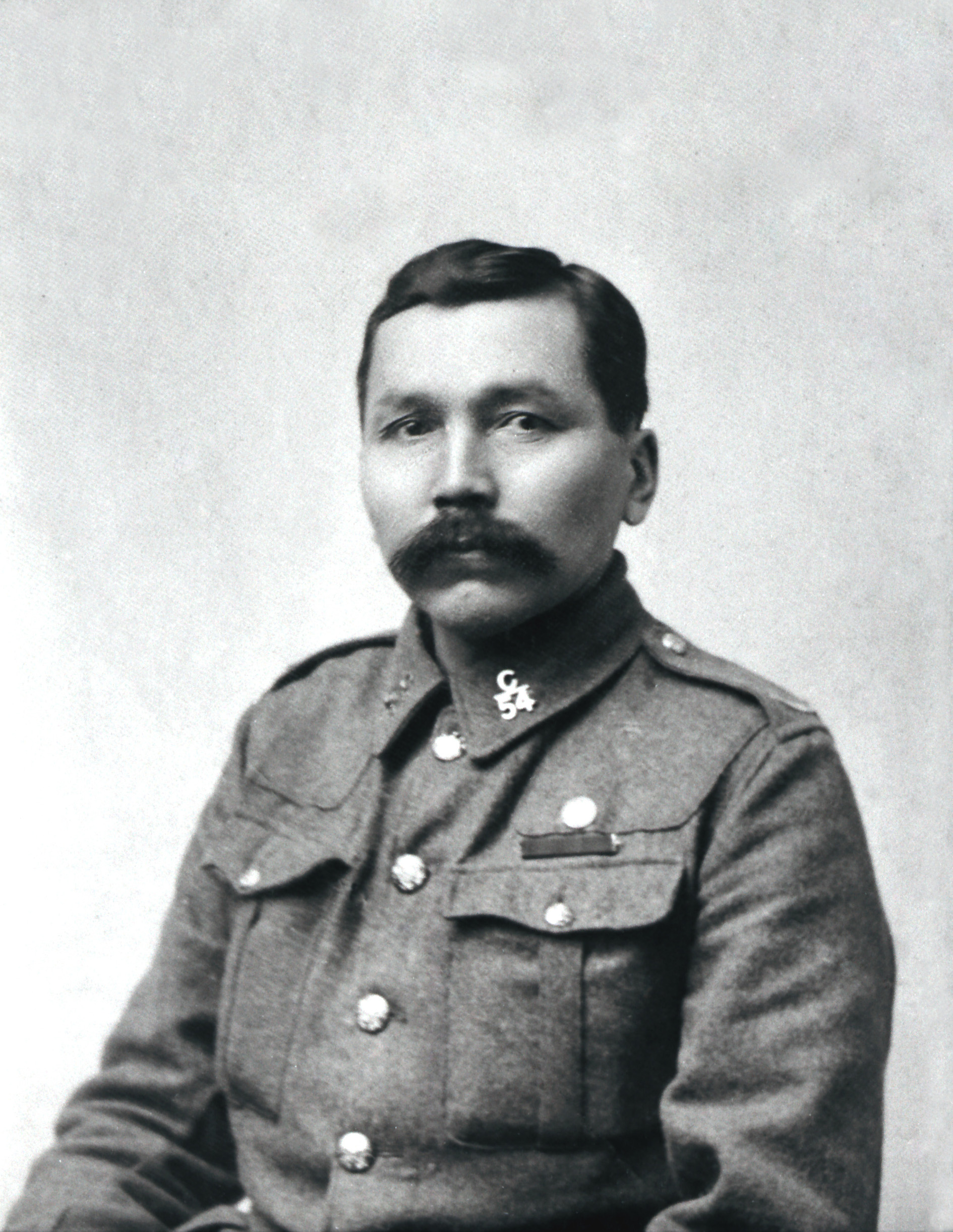
Pvt. George McLean.
A little over a year ago, Kamloops Daily News reporter Jason Hewlett called me to ask about Pvt. George McLean. I’d included a chapter about him in my 1993 book The Wild McLeans, so Jason knew George McLean was an ancestor of mine, and he was looking for some background information. Local resident Dean McLean (no relation) had met Merritt resident Hector Stewart, who told him a little about George, who was a hero of the First World War. Dean thought George, who died in 1934 and whose gravesite was unknown, deserved a proper military burial. As I was the closest living descendant anyone knew of, I accepted the task of trying to find him and to make arrangements with Veterans Affairs, but it required the cooperation of the Upper Nicola Indian Band, since George was known to be buried in one of its cemeteries. That’s where Lynne Jorgesen, the cultural historian for the Band, came in. In July of this year, thanks to Lynne’s research, we were ready to go looking for Pvt. George McLean.
By MEL ROTHENBURGER
“Down here,” says Hector Stewart in the seat beside me, directing me along a narrow dirt road.
“This one?”
“This little one here, yeah.”
It’s July 25, 2014, and we’re on a back road on the Upper Nicola Reserve, looking for a cemetery. Hector figures Pvt. George McLean, First World War hero, one of my ancestors, is buried there.
In the back seat of my pickup is Lynne Jorgesen, the band’s cultural historian. She’s found an old plot map of the cemetery that shows George’s burial site but the exact location was forgotten decades ago.
I figure the chances are pretty slim it will still be recognizable — time is not kind to wooden grave markers, and George died in 1934.
• • •
April 9, 1917, 5:29 a.m.
Vimy Ridge, France
Twenty thousand Canadian soldiers sat silently in their rat-infested, urine-soaked trenches, stretched out for four miles along the so-called Vimy Sector. Across No Man’s Land, a cratered sea of mud and bones, were the Germans, behind rows of barbed wire, in their ditches, tunnels and pill boxes, facing the Canadians with rifles, machine guns, and heavy artillery.
On the left flank of the Canadian front line, the men of the Fifty-fourth Battalion, Fourth Division, awaited the signal to fix bayonets.
Waiting in the trench with the other soldiers of the Fifty-fourth was Private George McLean, aged 44, loaded own with his rifle, ammunition, rations, gas mask, water bottle, shovel, and Mills hand grenades. This was a much different sort of war from the one against the Boers. In that one, George McLean had enlisted in the Canadian Mounted Rifles. Though he hadn’t seen much excitement, riding a horse on the open veld easily beat waiting in a stinking trench to see whether a sniper, mustard gas or trench mouth got you first.
Since October, 1916, when he’d joined the 172d Battalion being recruited in the Okanagan and then been transferred to the Fifty-fourth in France, he’d been just another foot soldier in the great European stalemate between Fritz and the Allies.
All along the trenches the order finally came to fix bayonets.
— Excerpt, The Wild McLeans, by Mel Rothenburger, Orca Book Publishers, 1993.
• • •
“Did you ever see the cabin where the McLean boys were?” asks Hector Stewart.
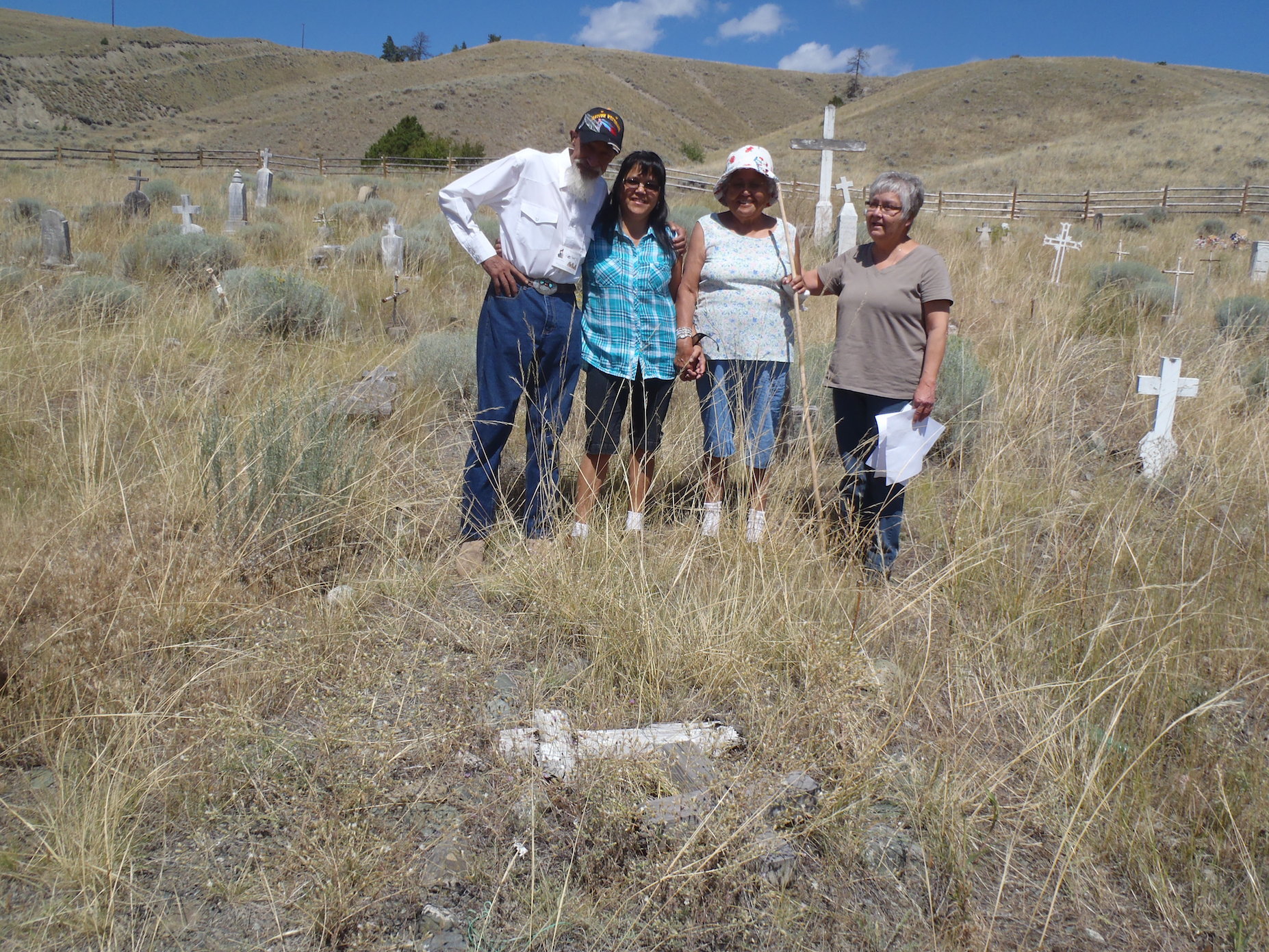
Search party (left to right), Hector Stewart, Christine Saddleman, Sarah McLeod, Lynn Jorgesen.
The cottonwood-log cabin he was talking about still sits on the Nicola River not far from the Band office, though it’s now in poor condition. In December 1879, George’s father Allen, his brothers Charlie and Archie, and their pal Alex Hare holed up there for three days.
When they ran out of bullets, they surrendered to the posse. They were found guilty of murdering B.C. Provincial Police Const. Johnny Ussher, who’d tried to arrest them for horse stealing, and a sheep herder named James Kelly.
When they were hanged at the New Westminster Prison in January, 1881, Archie was barely 16.
George’s mother, Angele, was the daughter of Chief Chillihitzia of the Douglas Lake Band.
Hector directs me to bear right onto a cowpath of a road at the base of a hillside. Soon, we can see the cemetery, ringed with a rail fence.
“This is the graveyard here,” Hector says.
• • •
October 5, 1917
Kamloops
George McLean was an unlikely hero. At 44 years of age, he was also an unlikely soldier. He was barely five feet, seven inches tall, just over 150 pounds, with dark skin, jet-black hair, and soft brown eyes. Age and physical stature had had nothing do with heroism when he won the Distinguished Conduct Medal “for conspicuous gallantry and devotion when dealing with enemy snipers. Single-handed, he captured 19 prisoners, and later, when attacked by five more prisoners, who attempted to reach a machine gun, he was able, although wounded, to dispose of them unaided, thus saving a large number of casualties.”
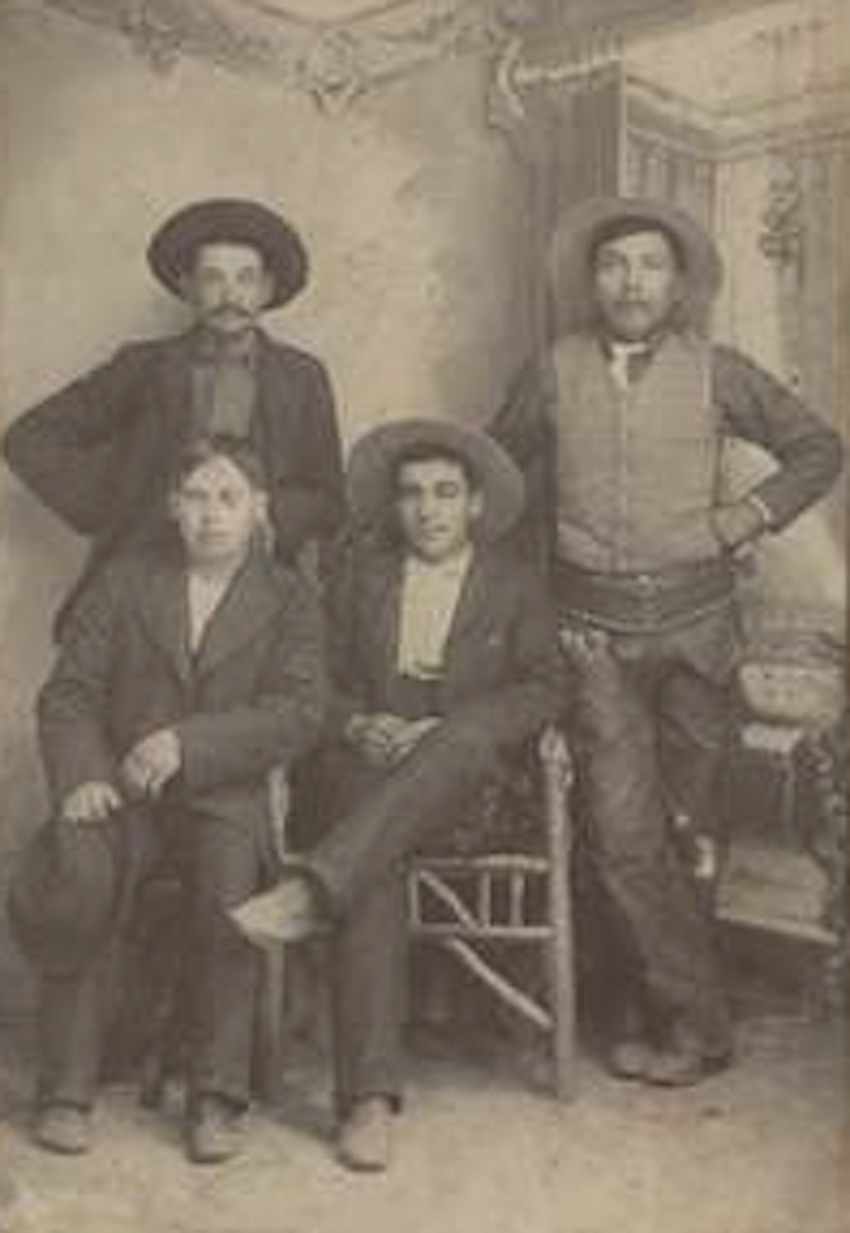
George McLean (on right) and friends. (Kamloops Museum and Archives)
That’s what the official London Gazette citation said.
Later, the newspapers dubbed him The German Killer. When he arrived back in Kamloops after being discharged due to his wounds, he stood on the platform of the CPR station in Kamloops describing what happened at Vimy.
“There were two machine guns playing on us and one of our officers got hit. I pulled him out of the mess, and at the time I was close to the Germans’ dugouts. I knew there were about 60 of the enemy there and I got hold of my bombs and just as I was in the act of pulling the pin my partner, who was close to me, got it in the head. Then I bombed them. And I bombed them again and again. I used nine bombs altogether and they ran like rabbits into their dugouts. After they ran into the dugout I kept bombing them until their sergeant-major threw up his hands shouting, ‘Don’t throw the bomb’ and I didn’t. He came out of the hole and handed me his automatic pistol and asked me how many there were of us and I said there were 150.”
— Excerpt from The Wild McLeans
• • •
The cemetery looks quite a bit the worse for wear. Many of the grave markers have been destroyed or knocked over, and the graves are overgrown with range grass and knapweed.
Christine Saddleman, a band employee, pulls up in her own truck. With her is Sarah McLeod, a band elder and mother of the Upper Nicola Band chief, Harvey McLeod.
Sarah explains that a flash flood roared down from the hillside above the cemetery a few years ago and swept away many of the old wooden crosses. The band tried to recover them and re-unite them with their gravesites but lots of them couldn’t be identified.
“Are any of the ones around George identified, to kind of get our bearings?” I ask Lynne as we pass through the gate.
She pulls out her map and starts checking the names close to George’s plot, number 73. “Johnny Moon, Adeline McLeod…” she says.
“Well, we don’t have far to go by the looks of the map,” I say.
THURSDAY, PART 2 — Does Pvt. George McLean want to be found?
https://twitter.com/jackknox/status/512249301201059840

 ArmchairMayor.ca
Contact the museum and they will put you in touch with our local military historian, my husband, Jeff Lodge. He may be able to help. He is working on local military history and has done a lot of research. He definitely knows how to find information.
LikeLike
Thank you, I will do that! I’m assuming this is a museum in kelowna . I am on Vancouver island. I will look it up. I’m realizing I may not be able to get far without at least a name though.
LikeLike
Sorry, I meant kamloops!
LikeLike
Yes…
LikeLike
Just wondering if you have any more information on aboriginal solders. I saw an article on George mcLean just today in a heritage newspaper. My curiosity comes from my own lost heritage. My great grandmother had an affair with an aboriginal Canadian soldier in England just before he was sent home to Canada. My grandmother was the result. My great grandmother never gave his name. So that history was unfortunately lost with her death. I have always wondered how to look for it. Just a shot in the dark. Skye
LikeLike
My research has been specific to George McLean, but maybe others out there have some ideas.
LikeLike
Thanks for replying, I will keep looking.
LikeLike
Very happy you found him!!
LikeLike
Nice to see this story lives on MRock :)
LikeLike
And it all started with a phone call from you, J-Dog.
LikeLike