
Letter — Depression makes people treat you differently
Editor’s note: In the wake of comedian Robin Williams’ death earlier this week, the subject of depression is receiving much discussion in the media, and the situation was the subject of an Armchair Mayor News editorial Aug. 13 headlined “Public discussion of depression helpful but…” The following letter was received in response to that editorial. While I know who the writer of the letter is, I’m waiving the usual policy of requiring that a name be attached to it in view of the writer’s reluctance to be identified.
LETTER — I quite often enjoy reading your editorials, not only because I often agree with the stance/argument being taken, but because I feel the content is always relevant and something worthwhile for people to give thought to. I don’t think I’ve ever replied to an article of any kind with my own personal response, but, wanted to offer you my two cents if you’re interested.
As someone who has experienced depression/anxiety in my life (and can safely say that it is almost a thing of my past now), I disagree with some of your editorial, “Public discussion of depression helpful but…” While I generally don’t give much attention to celebrity news as a topic anyway, I understand why so many have gravitated to this event as a vehicle to speak about depression.
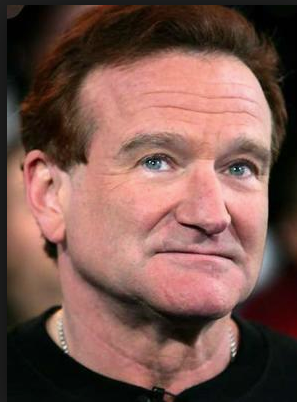
Robin Williams.
You mention that there really isn’t much of a stigma around depression anymore — that might be true, however, I strongly believe there is a misunderstanding about it. I think the reason people want to talk about depression so much as a response to Robin Williams’ death is to attempt to vividly illustrate how someone so successful and seemingly happy (because of how funny he was) can experience depression.
I think people who want to educate and inform about depression believe if they can refer to a well-known celebrity who projected happiness in an overwhelming way as example of how ANYONE (no matter how happy/positive they seem), then they will use him for that.
While I am certainly not sparking up conversations with friends, or posting thoughts/opinions on the matter in blogs or on my facebook wall, I actually get why the publicity is on depression in this case. I think it resonated with me because I loosely see some similarities to some aspects of my life and my experience with depression. I am a fairly outgoing person. People often describe me as very social, happy, energetic etc. I am very community involved.
A while after I realized I had depression and sought help for it, I disclosed to a colleague that I had been diagnosed with the mental illness. They truly did not believe me. The same thing also happened with another very close, well-educated, friend of mine. It was strange.
While both people I respect a lot, I was perplexed that they did not believe me. Both have stated as respectfully as they could that they just didn’t “get it” and it didn’t really add up to them (these two people don’t know each other, but their responses to me were almost the same) because I am very outgoing, talkative, and seemingly happy.
It was a bit frustrating, for sure, once I realized that if I chose to tell someone I had depression, they likely wouldn’t think that could possibly be something I experienced. The other response I would get from people is them suddenly treating me more gently, as if they might say something to me that would make me crumble up and whither away in the blink of an eye!
While no one was rude to me about it (because, after all, they are my friends!), I could strongly feel the disbelief. Their disbelief is because they just don’t understand what depression is. For these reasons, I really don’t speak out about depression. Truly, most people don’t get it and when they don’t get it, their response to the news is usually quite awkward and they are unsure how to react.
So, hopefully I am making sense here (a bit!)… I think when people want to refer to Robin Williams as a launching pad for discussion about depression it’s not necessarily to combat the stigma surrounding depression, but it’s a strong example of a well-known individual who had it, who others wouldn’t otherwise have thought of to experience it. It seems to be the strongest example one could refer to to illustrate just how common it is and how it’s so silently hidden in our society.
I certainly agree that publicizing the details of his death are completely unnecessary. I was appalled when it was revealed, in detail, on TV… sadly, this isn’t something I can UNhear!
I notice that when people often respond to editorials, they are angry/offended about some aspect of what is written. To be clear, I am not angry, offended, or upset. I just thought I might offer my perspective as someone who has dealt with mental illness, if you were interested. I quite enjoy reading your news and will continue to do so.
NAME WITHHELD

 ArmchairMayor.ca
I think that when we can get to the point where we treat depression as an illness, just like any other illness, and don’t categorize it as a mental illness, we will be much better off. W
e don’t separate and stigmatize other diseases. The brain is part of our body. It is not detachable. So, why do we detach ourselves from these diseases?
LikeLike
The author is very articulate, and his/her discussion of how “every day ” occurrence that depression is amongst all of us is very revealing. I hope that you can reply to this article yourself Mel, I found it personally meaningful because of my sister. It is astounding the huge R.W. affect that’s come of this, ….sure hope it lasts longer than norm.
LikeLike