
Kamloops should put three-cents-per-litre municipal tax on gasoline, and tax diesel too
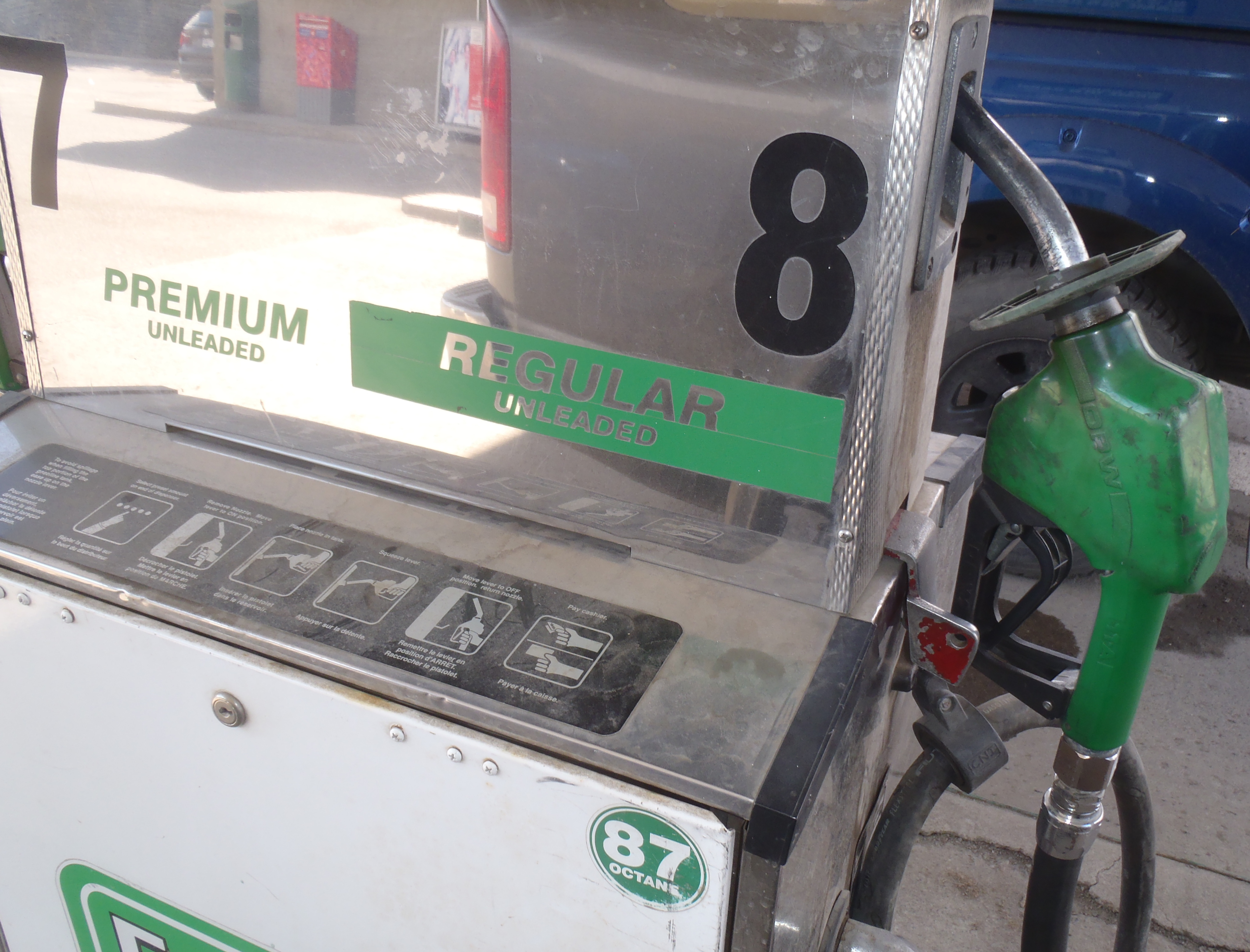
Municipal fuel taxes aren’t very common.
EDITOR’S NOTE — Dr. Peter Tsigaris, an economics professor at Thompson Rivers University, write for The Armchair Mayor News on important current issues and ideas.
By Dr. PETER TSIGARIS
In the early 1900s, internal combustion, steam and electric technologies were used to power automobiles (Anderson, J., and C.D., Anderson, 2005). These three technologies were competing just about equally in the North American market. In fact, electric vehicles were ahead of internal combustion technology at one point in time.

Dr. Peter Tsigaris.
But a “historical accident” put society on the internal-combustion path. The internal combustion engine took over and the system (society) got ‘locked-in.’ Displacing the existing technology with another incompatible one is very difficult, even if the alternative technology is cleaner.
Once a particular technology takes off, “network and price effects” form around it. Consumers benefit from the services and support networks developed for internal combustion, which in turn depends on the number of users of this technology.
Internal combustion is supported by a complete network of services for convenient re-fuelling, maintenance and repair. Also, a larger number of users results in lower manufacturing unit costs, which translates to lower prices for traditional cars as compared to the alternatives.
Combustion engines continue to be used simply because it is very costly for the market to break the pattern (Tsigaris, 2006).
However, combustion engine technology is harmful to the environment, locally and globally. A strong network of alternative fuelling needs to be formed. Maintenance and repair stations are needed to build consumer confidence and motivate industry to start major production of alternative vehicles.
To get this rolling, government needs to play a big role. For example, it can mandate a percentage of production to be electric powered vehicles; provide subsidies to consumers who buy the clean vehicles; and help entrepreneurs’ production by subsidizing costs.
Yet another part of a potential solution is for governments to invest in public transportation.
In order to support a transition towards cleaner technologies, fuel taxes need to increase. These taxes can put a price on the social costs produced by internal combustion, some of which are local such as smog, and some of which are global such as climate change.
Furthermore, these taxes would raise significant amounts of revenue for governments. In my recent public talk, on March 9, 2014 at Thompson Rivers University, I recommended that the City of Kamloops consider a municipal gasoline tax.
This kind of tax is not very common among Canadian municipalities. Vancouver has a 17 cents per litre tax, Victoria has a 3.5 cents and Montreal has a 3 cents per litre tax. The municipal tax is in addition to the federal and provincial excise taxes on gasoline.
The federal excise tax on gasoline is currently 10 cents a litre. Additionally, the province of British Columbia has a 14.5 cents a litre excise tax and a 6.67 cents per litre carbon tax.
How much extra tax revenue can the City of Kamloops generate with, say, a 3 cents per litre tax on gasoline, like those in Victoria and Montreal?
A “back of the envelope” calculation indicates that this level of taxation could generate an additional $2.1 million from local residents. To arrive at this figure, I assumed that each vehicle on average consumes 1,400 litres of gasoline every year (Natural Resource Canada, 2011) and that there are conservatively 50,000 vehicles in Kamloops (a 2008 study by Synovate found that there are 1.9 vehicles per household).
The local owner of one vehicle would be charged on average an additional $42 per year in municipal taxes. The more gasoline consumed by the vehicle, the more tax would be paid.
If the tax is set to 10 cents per litre, then the city can generate an additional $7 million per year in revenue from local residents if the quantity demanded does not decrease.
The actual tax revenue will most likely be less, as some people would switch to alternative cleaner technologies or drive less and use public transportation or even move to one less car. The purpose of the tax is also to reduce harmful emissions.
In addition, the City of Kamloops receives a refund from the federal Gas Tax Fund. According to the Infrastructure Canada website this refund is “available for the benefit of all municipalities across the country in accordance with Keeping Canada’s Economy and Jobs Growing Act.”
This Gas Tax Fund is allocated on a per-capita basis for provinces, territories and First Nations to distribute to municipalities. The province of British Columbia received $250.7 million in 2013 (Infrastructure Canada, 2013). The City of Kamloops received $3 million this year from the fund to allocate to infrastructure projects (Young, 2013).
Does the province re-allocate the $250.7 million to municipalities according to the size of their respective populations, just like the federal government? If this is the case, then the City of Kamloops should be getting around $5.2 million per year given our population of approximately 90,000. Why is it only $3 million?
Finally, municipal gas tax revenue will not only come from local residents, but also from vehicles stopping from the highway to refuel, from tourists who stay overnight or longer as well as from participants of our major sports tournaments. Revenue from these external sources is very significant. I have yet to get an estimated value of this revenue, but the plan is to explore this in the future and report back.
My recommendation is for the City to seriously consider a 3 cents municipal gasoline tax. Furthermore, a municipal diesel tax should be considered. Diesel trucks are big contributors towards deteriorating the ambient air quality of Kamloops.
The City of Kamloops should consider increasing taxes on goods that are harmful to the environment and our health instead of focusing solely on property tax increases.
What can the City of Kamloops do with such revenue? It can be used to provide local public goods or……..I will leave this for the community to debate.
References:
Anderson, J. and C.D. Anderson, “Electric and Hybrid Cars: A History,” 2005, McFarland
& Company.
Infrastructure Canada, The Gas Tax Fund Allocation, accessed on March 30th 2014 at: http://www.infrastructure.gc.ca/prog/gtf-fte-tab-eng.html
Infrastructure Canada, “Canada’s Gas Tax Fund Helping British Columbia Communities, access on March 30th 2014 from: http://www.infrastructure.gc.ca/media/news-nouvelles/2013/20131114bc-eng.html
Natural Resource Canada, “The 2011 Fuel Consumption Guide,” Accessed at:
https://oee.nrcan.gc.ca/publications/transportation/fuel-guide/2011/comparing-vehicles.cfm?attr=8
Tsigaris, P., “Gas Prices Should be Even Higher, Canadian Researcher Claims,” Newswise, April 30th 2006, Access at: http://www.newswise.com/articles/gas-prices-should-be-even-higher-canadian-researcher-claims
Winram, Julie, “2007 Kamloops Household Travel Survey,” Synovate Research reinvented, February 4, 2008. Access at:
http://www.bcsea.org/sites/bcsea.org/files/2007_kamloops_household_travel_survey.pdf
Young, Michelle, “City still waiting to hear news of 2014 gas tax fund” The Daily News, November 15, 2013. Access at: http://www.kamloopsnews.ca/article/20131115/KAMLOOPS0101/131119939/-1/KAMLOOPS/city-still-waiting-to-hear-news-of-2014-gas-tax-fund

 ArmchairMayor.ca
I wonder why no one has picked up on the Federal Gas Tax Fund allocation. Why is it that we got $3 million this year on $250.7 million that were allocated to the province by the federal government for re-distribution to municipalities.
The federal government allocates the funds on a per capita basis.
The province must have a different rule because if it was on the basis of population we should be getting $5 million. We represent approximately 2% of the bc population. If we do the math 2% of $250 million is $5 million. Why are we getting $3 million only?
LikeLike
It is fine to have a discussion about tax policy and possible approaches, but I think it is important to recognize that the City of Kamloops has no existing tax power that would allow it to levy a gas tax as Peter is proposing. The City of Victoria does not have a tax on fuel. In both Victoria and Vancouver, the levy on fuel is authorized by amendment to the provincial Motor Fuel Tax Act, and is a levy specifically to fund the regional transit system. The money is collected by the Province and remitted to Translink and the Victoria regional transit commission, respectively. These are in no way “municipal” taxes. They are provincial taxes remitted to specific organizations for specific purposes. Yes, these entities are regional entities controlled by appointees from local government, but the tax is levied and collected by the province.
The Community Charter and the Local Government Act do not give municipalities the power to levy what is in effect a sales tax on a commodity. In order to implement this proposal, the City would need a legislative amendment. Further, all Kamloopsians would have to do is drive across to TteS to fill up on reserve. Municipal taxes aren’t levied on reserve lands.
LikeLike
If the city needs a legislative amendment. Then the city should ask for an amendment.
As for everyone going to the reserve to avoid 3 cents a litre gas tax I would respectfully disagree.
First, If everyone went to the reserve then huge lineups would occur and time wasted waiting to fill up would materialize making it not worthwhile.
Second, I am sure there are many reserves in Victoria and I doubt what you are describing happens there.
Third, a 50 litre fill up would cost $1.5 more (if all the tax is shifted to the consumer which may not be the case). Then a consumer would have to consider this added cost relative to the cost of driving across and waiting to fill up. people have a high opportunity cost and many consider it when making such decisions. No?
Forth, if all Kamloopsians happen to go to the reserve then demand for gas in the city would fall and the gasoline stations would have to absorb some of the burden of the tax. This means that they would not shift all of the tax onto the consumers. Why? To make it attractive for consumers to fill up in the city.
Fifth, if all Kamloopsians know that the revenue will go towards local public goods then in a benefit cost analysis they should incorporate also the benefits the local public goods provide plus the benefits of a better air quality from driving less.
Finally, a big chunk of the revenue will come from non-residents who will be paying for our local public goods and services. They also contribute to air pollution.
LikeLike
Forgot to mention that if all Kamloopsians went to the reserve then the gas station, on the reserve, would increase the price of gasoline offsetting the increase in the gas price in the metro Kamloops area due to the gas tax.
In conclusion, I am not convinced with the arguments that the marginal tax increase will cause such behaviour to such extremes.
There is no scientific evidence that I am aware of that indicates that this avoidance behaviour is the norm.
The tax will generate lots of revenue to the local government and I have underestimated this in the editorial.
Furthermore, it (tax) does what it is supposed to do which is reduce air contaminants and transition us to cleaner technology.
LikeLike
Being a courier, I already fill up wherever the cheapest gas is, be it in kamloops or on the outskirts. Spending more than $1100.00 a month on fuel, I can tell you this: ANY increase in fuel costs won’t just affect me, it’ll affect EVERY customer of mine, as the fuel subsidy costs will simply increase. I won’t pay more, YOU will.
This will affect EVERY product you purchase that needs to be transported. Gas costs are already out of control, why make it worse?
LikeLike
http://www.statista.com/statistics/221368/gas-prices-around-the-world/
LikeLike
What does your link provide to the conversation? Nothing. I stated I would still fill up elsewhere if there were to be a municipal gas tax. That’s atleast $12,000 of business annually I would spend elsewhere. Using your irrelevant link, compared to our neighbors to the south, our fuel prices are already substantially higher in Canada, and even higher in British Columbia. A higher gas price in kamloops just means many outlyng stations will be reaping the benefit. All it takes is thirty seconds on a gas comparison application on a smartphone to realize you can save a few bucks by driving 5 minutes.
LikeLike
I personally would be more interested in a “living wage” then raising gas taxes. I have no personal issues with taxation however if you tax me give me something back, don’t misappropriate it like ICBC etc.
LikeLike
I am sorry, but I just do not see the sense of adding yet another tax for the ordinary worker, and giving millions of dollars of subsidies to companies like Ajax, who are the biggest polluters! By a constant increase of taxation we are creating poverty, not reducing it for the ever shrinking middle class.
It may be difficult for someone who is not in the situation to realize, but all the arts centres and all the sports facilities will not make much difference for the families that cannot afford them. Those are the ones who are hit the hardest by the ever increasing fees for everything we need to live. For the others, the ones for whom additional taxes are nothing major, if they truly want to help the environment they would live in appropriate sized homes, have one car per family, do not drive gas guzzling motor homes or atvs., live with the inconvenience of a/c, stop contributing to the terrible pollution of jet fuel by flying off on holidays, etc. etc. I doubt very much if most of us are willing to do that. And if one really cares about the environment, they would not vote in governments that fire scientists and environmentalists. Governments that refuse Canadian foreign aid to be used for aiding the poorest nations with birth control, when the biggest threat to our planet is the spiraling birth rate and overpopulation.
I wish that everyone who thinks we can reduce pollution by using “clean energy” vehicles would go up North and see the thousands of acres of irreplaceable land that will be lost to the Site C dam. See what the production of the electricity that we plug our Priuses into actually costs the environment, from the IPPs on our rivers, to the flooding of land that will be lost. It all has costs, no matter what.
LikeLike
Yep. The taxpayer is just a bottomless pit to suck money from. How about some efficiencies from governments to free up more money for a change ? Higher gas and diesel prices would just encourage travelers, and truckers to change where they fill up, and just bypass Kamloops altogether. Losing that money wouldn’t do Kamloops any good at all, in fact when you take into account all the money that these people spend besides fuel money, there would probably be a net loss to the city.
LikeLike
I don’t think it is correct to say we will lose money because some want to avoid paying 3 cents a litre tax. Lose what money ? We don’t have a municipal tax now.
The correct thing to say is that we will not gain as much as we hoped we would…
I gave a very conservative estimated tax revenue of $2.1 million from local residents and if we include non-residents it will be much higher.
Businesses are not excluded from the municipal tax as they need fuel for their vehicles.
LikeLike
Let’s see….someone needs to fill his tank with say 50-100 litres of gasoline.
She/he figures that 3 cents per litre will cost him $1.5-$3 extra.
So for $1.5-$3 extra the person will not stop to refuel and will think that he can take the chance and fill out of town to avoid paying $1.5-$3 extra.
I doubt anyone would do that but you never know.
Also saving 1.5-3 dollars and fill up in an isolated station outside the city is risky. Usually these stations charge more as they are a monopoly. All this because the person wants to save 1.5-3 dollars. Hmm
LikeLike
Actually, people do that on the coast all of the time. They drive outside the GVRD, and they cross the border regularly, so why would Kamloopsians be any different ?
LikeLike
I was replying to your comment about tourists and passing by vehicles not about Kamloopsians.
I am very doubtful that all the tourists or a vehicles passing by to refuel will run away because they don’t want to pay $1.5-$3 extra in gas tax (or even less as the burden of taxation sometimes is shared between consumers and producers.) and risk going elsewhere in remote areas to refuel.
As for Kamloopsians:
if a few Kamloopsians do not want to pay an extra $42 a year they will have to go out of town every time to refuel. Two to three times a month !
That is not a wise benefit cost choice as the benefit is $1.5-$3 each time while the cost is the gas consumed to go to the outskirts to refuel and more important the time to do it and come back. That is not a wise choice to avoid $1.5-$3 in gas tax. Is it ? The tax will be imposed in Metro Kamloops (and as I said previously it might be absorbed by the producers).
Finally, I don’t think Victoria (3.5 cents tax) or Montreal (3 cents tax) or any other city around the world is concerned with not gaining some revenue because a few want to avoid paying an extra $1.5-3 each time they refuel.
LikeLike
Great analysis. I am all for a municipal tax on gasoline and diesel especially. 10 cents per liter, with the money going into environmentally beneficial programs only and not into more bigger, smoother, larger, faster roads or pay increases for city staff. Also bring back the clean air program. Any vehicle outside factory warranty should get a yearly “green sticker” before being able to purchase insurance. Air pollution caused by careless and mindless motor vehicle usage is a serious issue and needs serious political action. Will we see any with Peter Milobar as mayor? Probably not.
LikeLike
I thought we already are paying a tax for that purpose Lyman, the carbon tax. I am not an expert in economics, but the way that I see yet another tax on gasoline and diesel is just another way of sticking it to the ordinary working stiff. Any vehicles run by companies, company cars, trucks etc. run on fuel that can be written off by business, thus reducing their taxes. This leaves the ordinary person who cannot write off anything with picking up the burden of yet more taxes. Not everyone can go out and buy a Prius either, so has to drive what he can afford.
LikeLike
Well said. As far as I’m concerned, all levels of government need open communication regarding spending and where exactly our money is going. Once we reduce the waste within government, then talk of increasing taxes will be a moot point.
LikeLike
Good point Jennifer for the carbon tax. Yes we are paying that to the provincial government.
But what about local air pollution such as smog and particulate matter? We are not paying for damages we cause on our local air.
Furthermore, the three cents tax goes to our local government which can then provide us with local public goods. We can all benefit from such collective goods.
And a big chunk of the revenue will come from passing by vehicles refueling, tourists etc and not only from us.
And the local government diversifies its revenue stream. Not dependent only on property taxes.
The 3 cents tax per litre amounts to about 42 dollars a year for an average type of driver of a one car owner. Yes it is an added burden to all of us that have cars. The $42 a year on average translates to 11.5 cents a day.
That is the cost side but there is a benefit side as well if the revenue is well spent.
Collectively if we all contribute, locals and non-residents, and if it is well spent by the local government on local public goods I am sure the benefits we get (per day) from the collective good far exceed the 11.5 cents a day cost.
What are these collective goods? Goods we can all enjoy but the market cannot provide to use. Goods such as cleaning our air, parks, soccer and other sports fields, a performing arts centre, as well as reducing poverty, and many other public goods.
My big puzzle is why we get only $3 million from the Fed Gas Tax Fund when the province got $250 million to distribute to the municipalities….If the province distributed this according to population size we should be getting $5 million. Why ? We represent 2% of the B.C. population approximately. And 2% of 250 million is $5 million.
Best, Peter
LikeLike
The “working stiff” can sure buy something smaller to drive, or walk more often, or ride a bicycle, or a small motorcycle, or take the bus. Many options. I sure will not cry one drop if “working stiff” has to make some changes to the luxurious lifestyle he/she is presently afforded.
LikeLike