
TSIGARIS – Perspectives on the economics of climate change
(Image: BC Wildfire Service)
Note: This editorial is part of the special issue Perspectives on the Economics of Climate Change in Future Earth: A Student Journal on Sustainability and Environment. It recognizes the work of the undergraduate students whose articles appear in it. The special issue can be accessed at: https://publishing.bceln.ca/index.php/future-earth/issue/view/31
By PETER TSIGARIS
Thompson Rivers University
THIS SPECIAL ISSUE, Perspectives on the Economics of Climate Change, emerges from an ongoing effort to engage undergraduate students directly in the economic analysis of climate change.

Dr. Peter Tsigaris.
The special issue is the outcome of a semester-long project in which my undergraduate students, drawn from various fields of study including economics, business, tourism, political studies, geography, and natural resource science, applied economic reasoning to one of the defining challenges of our time. The result is a collection of concise, thoughtful, and often ambitious commentaries that demonstrate how undergraduate researchers can engage seriously with contemporary climate debates.
A major theme running through the issue is the problem of collective action. Climate stability is a global public good, yet incentives to protect it remain weak, uneven, and politically motivated. Ryleigh Adams captures this clearly in Canada’s Free-Rider Problem in Mitigating Climate Change. A similar concern appears in Lily Ricle Carrera and Katherine Flores’s Why International Climate Agreements Are Hard to Enforce. These contributions highlight the collective-action problem of climate stability as a global public good: because the benefits of mitigation are non-excludable and non-rival, governments acting in their own national self-interest have an incentive to free ride. The missing link is a global institution capable of designing policies that better align incentives.
A second theme is the time dimension. Climate policy forces societies to confront the value of the future and, in doing so, exposes moral questions within economic analysis. Valentine Bulgarelli’s Why Future Generations Deserve Equal Moral Consideration states the issue directly, while Fatema Tasnim’s Intergenerational Inequality From Climate Inaction shows how governments shift the costs of climate damage onto young people and future generations when they delay action.
The time dimension also reappears in Avery Sigurdsson and Talon Zakall’s Wetlands: A Natural Defense Against Climate-Induced Flooding, which shows that protecting natural systems today can reduce climate damages borne by communities tomorrow. Together, these papers show that intergenerational responsibility is embedded in present-day choices about mitigation, adaptation, conservation, and risk reduction.
Questions of justice also animate this issue. In Climate Change as a Global Externality: Those Who Contribute Least Suffer Most, Sean Kite, Tendekai Kativhu, and Solomon Zawe emphasize the asymmetry between responsibility and harm. This concern carries over into Financing Adaptation in Vulnerable Nations: Who Pays?, where Nicolas Molina and Sofía Cartagena argue that wealthy nations should finance adaptation in vulnerable countries, not as charity, but as accountability.
Malina Willick’s The Economic Impact of Climate Lawsuits on Fossil Fuel Firms turns to the legal sphere and shows that courts are becoming an increasingly important arena for assigning responsibility and testing whether economic actors can be held accountable for the damages associated with fossil-fuel dependence.
 Another set of papers challenges us to rethink what standard economic models capture, and what they omit. Aravna Lucsama’s Underestimating the Social Cost of Carbon argues that economic models systematically omit key climate damages. Kathleen Moore raises a related challenge in The Effects of Climate Change on Biodiversity: How Anthropocentric Climate Frameworks Undervalue Animal Welfare Losses, arguing that climate policy and economic analysis are overwhelmingly centred on human welfare. Both pieces push economics beyond narrow conventions and force readers to ask what is counted, whose losses matter, and how harms that remain largely invisible to humans can shape supposedly objective policy tools.
Several contributions also focus on the non-market value of ecological systems, emphasizing that climate-relevant resources are routinely undervalued because markets fail to register their full social benefits. Micah Lowen’s Evaluating the Non-Market Value of Pacific Salmon: Why Current Water Withdrawals in the Salmon River Are Economically Unsustainable, Olivia Simms’s The Case for Greater Funding of B.C. Provincial Parks, Becca Porrier’s The Economic Role of Wetlands in Climate Change Mitigation, and Mackenzie Miller’s Investigating the Economic Impact of Climate Change on B.C.’s Freshwater Fisheries all highlight the value of ecosystem services provided by natural assets, including their cultural value.
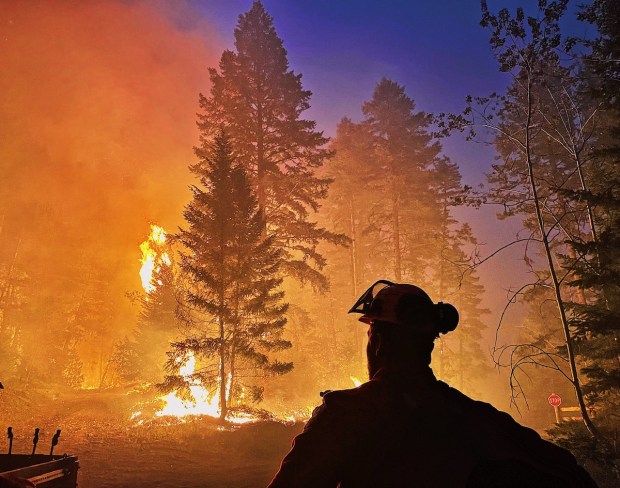
Rising climate risks form another major cluster in the issue. Logan Forman and Liam O’Beirne’s The Economic Impacts of Wildfires in British Columbia emphasizes the growing financial burden of wildfires in British Columbia. Jackson Weeber, in Cost-Benefit Analysis of Fire-Resilient Home Retrofitting, narrows the focus to the household level and shows that wildfire protection does not have to be expensive. Emerson Goodall broadens the geographic scope in The Rising Economic Costs of Extreme Weather in a Warming United States, showing that extreme weather events in the United States result in significant and rising economic costs.
The issue also includes important reflections on how climate change is exposing the limits of conventional responses, whether in mitigation, technological adaptation, or insurance markets. Balthazar Bellion’s Afforestation and Reforestation as Cost-Effective Mitigation Tools argues with urgency for reforestation and afforestation.
Mansieve Mahmood’s IPAT, Emissions Drivers & Economic Growth: Technology Alone Won’t Solve Climate Change offers a warning against technological complacency. Tinomuda Renee Nherudzo’s Insuring the Future: Catastrophe Bonds explores what happens when climate volatility strains conventional insurance systems. These commentaries show that climate change is exposing the inadequacy of business-as-usual approaches and is forcing societies to think more creatively about resilience and long-term protection.
What is especially encouraging about this collection is that the students do not treat economics simply as a technical toolbox, but as a framework for asking difficult questions about value, trade-offs, responsibility, and justice. Whether discussing free-riding, discounting, litigation, salmon, parks, wildfire retrofits, catastrophe bonds, or biodiversity loss, the students show a willingness to apply economic reasoning while also questioning its conventional limits.
What surprised me in this collection is that several students refuse to treat nature merely as a backdrop to human welfare. They bring forward the voices of nature and the often-overlooked welfare of non-human animals, a concern expressed most directly in Kathleen Moore’s critique of anthropocentric climate frameworks.
This special issue is therefore both the result of sustained undergraduate research and an invitation. It invites readers to see climate change not as a single policy problem, but as a field of interconnected economic questions. It also invites us to take undergraduate scholarship seriously.
If there is a common thread across the issue, it is this: climate change forces economics to become broader, and more attentive to the values and institutions that markets alone cannot protect.
Dr. Peter Tsigaris is a Professor of Economics at Thompson Rivers University.

 ArmchairMayor.ca
Leave a comment