
TAXES – Blaming senior governments for hikes is politically useful but false
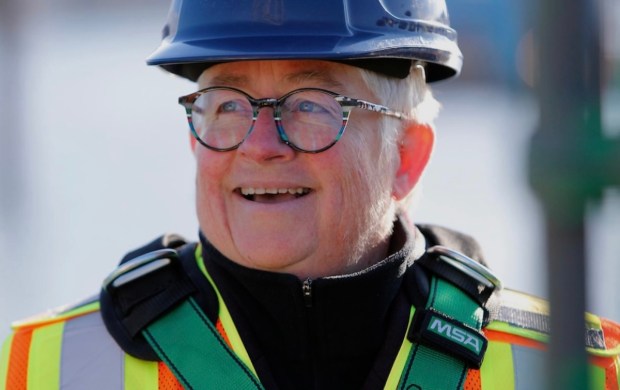
Mayor Marianne Alto.
The following is a guest column distributed by the Grumpy Taxpayer$ of Greater Victoria. While specific to Victoria, it provides some interesting examples of buck passing.
By ARTHUR McINNIS
Guest columnist for Grumpy Taxpayer$ of Greater Victoria
MAYOR MARIANNE ALTO has an explanation for Victoria’s 7.28% property tax increase. It is not her Council’s fault. It is somebody else’s.
“If you’re going to continue to expect local governments to do things like having an impact on social housing or social services, even some aspects of policing,” she told the Times Colonist, “then you have to have a more serious discussion about the sources of income for local governments.”

Arthur McInnis.
This is the downloading argument. Senior governments, the province, the federal Government, are pushing their responsibilities down to municipalities, leaving cities to pay for programs they were never meant to fund. It is a politically useful argument. It is also false.
The City of Victoria’s own 2026 Draft Financial Plan proves it.
What the Law Actually Says
Municipalities in British Columbia exist because the province created them. Under the Community Charter and the Local Government Act municipalities have defined powers and defined responsibilities. Roads, water, sewer, fire protection, bylaw enforcement, and parks are the core functions of a BC municipality. Provincial and federal governments retain responsibility among others for health care, mental health, housing, income assistance, immigration, and transit. That division is not a matter of opinion. It is constitutional law.
The Community Charter does give municipalities broad authority to spend on community “well-being.” That authority is permissive. It means the City may spend on other things if it chooses. It does not mean the City must. Is it any wonder the Mayor labelled her bold provincial jurisdiction takeover the “Community Safety and Well-Being Plan”?
Every dollar Victoria spends on social services, housing programs, and health-adjacent services is a choice made by this Council, not a legal obligation imposed from above.
What Victoria Is Spending On
Read the Draft Financial Plan and the downloading argument collapses on contact with the numbers. Here are some examples.
- Community Safety and Bylaw Services: $9,652,360, up 79.93% in a single year, nearly doubling from last year’s $5.4 million. The department’s own mandate states it addresses “public safety concerns, including those related to homelessness, street disorder and community conflict.” Homelessness response and mental health outreach are responsibilities of Island Health and BC Housing.
The City is not required to fund them. It chose to.
- The Office of Equity, Diversity and Inclusion: $494,070 annually, running programs on transgender inclusion, immigration integration, and the United Nations’ International Decade for People of African Descent. Human rights are governed by the BC Human Rights Code and the Canadian Human Rights Act. There is no gap the City is legally required to fill.
This office has no basis in any statute that defines municipal responsibility.
- The Youth Bus Pass Program: $630,000 per year, every year, to provide free transit for residents under 18. BC Transit is a provincial Crown corporation. Transit fare policy is a provincial decision.
Victoria property owners are subsidising a provincial service.
- The Rent Bank: $100,000 to provide emergency loans to tenants facing eviction. Income assistance and emergency financial support are provincial programs under the Employment and Assistance Act.
The City is running a social assistance program from the property tax base.
- Supporting Housing Transition: $200,000 proposed to help people move out of homelessness. BC Housing and Island Health operate transition housing programs for exactly this purpose.
This is a municipal supplement to an underfunded provincial program, paid for by Victoria property owners.
- Canada Day Celebrations: $210,800 for a federal statutory holiday that the federal government already funds through Canadian Heritage’s Celebrate Canada program.
Federal funding exists for these type celebrations.
- The Emergency Medical Services co-response program: $1.1 million was proposed and then cut from the budget. The City proposed to fund ambulance-adjacent services with property taxes. It was cut not because it was recognized as beyond municipal jurisdiction, but because the numbers had to come down from 13%.
Emergency medical services in BC are the exclusive responsibility of BC Emergency Health Services, a provincial Crown corporation.
One of Victoria’s Own Councillors Agrees
Councillor Marg Gardiner voted against the budget. She told the Times Colonist that: “the financial plan takes the city beyond its core responsibilities” and pointed specifically to the City’s plan to spend more than $17 million over three years on civic disorder and safety.
That is a sitting councillor confirming, in plain language, exactly what the Draft Financial Plan shows. The mayor’s downloading argument does not survive scrutiny from her own chamber.
This Council is spending property tax dollars on programs that are not within municipal jurisdiction.
How the 7.28% Was Achieved and Why It Will Not Last
The City’s Chief Financial Officer, Susanne Thompson, has confirmed that the combined property tax increase from 2023 to 2026 is just over 32%. The 7.28% for 2026 started at nearly 13%. It was reduced not by cutting programs, but by eliminating $2.8 million in contributions to parking infrastructure reserves and a $2 million debt-reduction payment costs that do not disappear but are transferred to future councils and future taxpayers.
The CFO has said an anticipated 2027 tax increase of 11% is now likely to be closer to 14%. That is not a new problem arriving from outside. It is the consequence of this Council’s spending decisions coming due.
The Downloading Argument Reversed
Mayor Alto is correct that municipalities should not be expected to fund social housing, social services, and health care from the property tax. She is wrong about who is doing the expecting. No law, no statute, no provincial directive requires Victoria to run an EDI office, fund a rent bank, provide free transit passes, propose an EMS co-response program or nearly double its community safety budget in a single year.
These are choices made freely, under the discretionary “well-being” power in the Community Charter by this Council. Ultimately, voluntarily absorbing the province’s financial burdens and then protesting the inevitable cost is not “downloading.” It is a deliberate expansion of the municipal mandate, sold to the public under a false premise.
Grumpy Taxpayer$ of Greater Victoria is a non-profit, unaffiliated, non-partisan, citizen’s advocacy group advocating for improved governance and better value for municipal tax dollars. Arthur McInnis is an independent legal consultant.

 ArmchairMayor.ca
Many thousands of dollars in “forgone” municipal taxes under the “infill scheme”…in Kamloops “passing the buck” takes on a whole new dimension…Does it have to be that way?
LikeLike