
CHARBONNEAU – American First Nations look to become Canadian
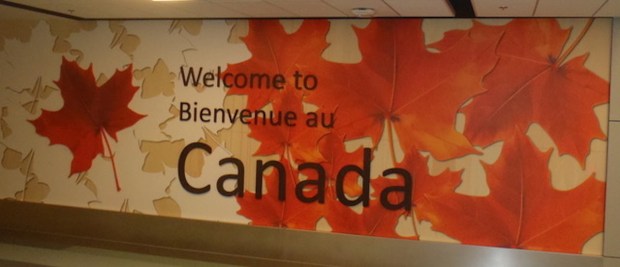
(Image: Mel Rothenburger file photo)
JUST AS SOME Albertans push to become part of the U.S., some American First Nations groups want to be considered as aboriginal peoples of Canada.
While Albertan’s wishes of becoming Americans are a fantasy, American First Nations have a claim under our constitutional law.
 However, a recent court decision has soured relations with Canadian First Nations and the claims by American First Nations are meeting with resistance.
At least three U.S.- based tribes are seeking aboriginal status. These claims could give them rights to shape decisions in B.C. based on assertions that their historical territory includes land that is now inside Canadian borders.
One of those groups, the Confederated Tribes of the Colville Reservation, won a landmark 2021 case before the Canadian Supreme Court, in which the Washington state tribe should be considered aboriginal peoples of Canada.
In light of that decision, U.S. tribes have sought to intervene in a B.C. port expansion, mining projects, forestry work and the provincial school curriculum.
For several years, American tribal groups have sought to assert the right to hunt, influence resource development and even shape school curriculums with their newly acquired aboriginal status.
But in the aftermath of the Cowichan decision, the American tribes can expect some pushback. That controversial ruling by the B.C. Supreme Court granted the Cowichan tribes title over privately held property in the city of Richmond.
Stung by the Cowichan decision, Premier David Eby is looking to limit American tribal claims.
Legally, it remains unclear whether the Lummi Nation, a reserve in the north-west corner of Washington state, would be entitled to similar rights as groups in Canada.
A Federal Court ruling in December, 2025, found that a less thorough consultation with the Lummi was acceptable, unlike the full duty to consult with B.C.-based groups such as the Tsawwassen First Nation.
The prospect of losing their homes to Canadian First Nations is chilling, the prospect of losing their homes to American First Nations is over the top considering hostility to Canada by the mad king.
What’s galling is the fact that there is no reciprocation in rights of Canadian First Nations whose traditional territories straddle the Canada/U.S. border.
The aboriginal people of Canada are protected by section 35 of our Constitution which states: “The existing aboriginal and treaty rights of the aboriginal peoples of Canada are hereby recognized and affirmed.”
There is no U.S. constitutional provision like Canada’s section 35 that broadly recognizes Indigenous peoples’ rights at the U.S. federal constitutional level. Instead, rights are grounded in federal statutes, treaties, and administrative recognition.
This means that Canadian First Nations couldn’t simply argue for constitutional status in the U.S.
The U.S. does technically honour the Jay Treaty signed in 1794 between Britain and the United States. It recognized that Indigenous peoples had the right to cross the Canada–U.S. border freely to continue their way of life.
But even this right is being threatened by lawless ICE agents at the border.
Canadians are feeling burned by reconciliation efforts. Sixty per cent of British Columbians say the Cowichan decision harms reconciliation with First Nations.
We are in no mood to accommodate American incursions of any kind.
David Charbonneau is a retired TRU electronics instructor who hosts a blog at http://www.eyeviewkamloops.wordpress.com.

 ArmchairMayor.ca
Leave a comment