
CHARBONNEAU – TRU administration walks fine line of political neutrality
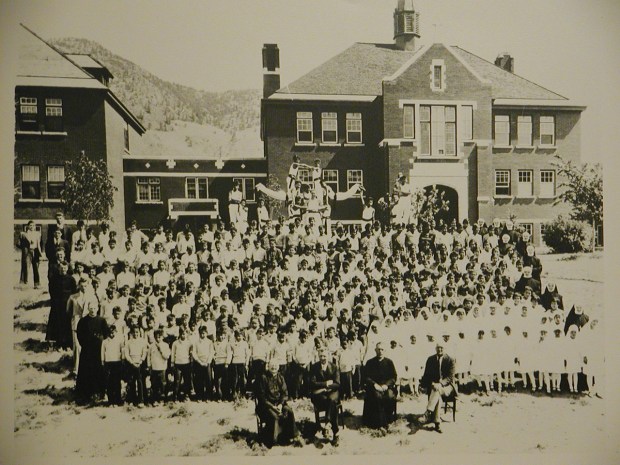
Kamloops Indian Residential School.
ADMINISTRATORS at Thompson Rivers University made a political statement in preventing residential school deniers from having a platform to spread misinformation.
 They prevented professor Frances Widdowson and OneBC leader Dallas Brodie from holding an unsanctioned event on campus. The event, called “Where are the 215 bodies?, was not approved by the university and organizers did not have permission to use the space.
Unfortunately, barring the denialists gives credence to conservative claims that universities are not politically balanced.
During the 2025 election campaign, Pierre Poilievre pledged to reduce funding to universities unless they “end the imposition of woke ideology.” Alberta Premier Danielle Smith is threatening to withhold grants until universities become more politically balanced (that is, conservative).
A political neutral response by TRU admin would have been to set up a moderated academic forum in which denialists and experts debate a specific topic.
Such a forum would encourage a structured academic debate: control who speaks, how they present evidence, and whether they stay on topic.
Students should not be shielded from ideas they find offensive.
Invited forum participants could include: experts in ground-penetrated radar, archaeologists, Tk’emlúps te Secwépemc Chief Rosanne Casimir, and others.
A structured forum could debate Brodie’s claims that there are “zero confirmed burials” at the former Kamloops Residential School.
This appears to be technically true. There are no confirmed burials because ground-penetrating radar surveys detected only “anomalies” which are likely, but not confirmed, to be burial sites.
As a panellist, Chief Casimir could clarify the issue, as she recently did on CBC Daybreak Kamloops. When asked about progress, she replied:
“And we’ve always said further investigation is needed — so survivors’ testimonies and historical records remain central to the truth. We’re working with various levels to make sure that we have all the information, and we’ve been very transparent about that.”
The status of the investigation is of national and international interest. Four years ago, the finding of more than 200 potential burial sites drew worldwide attention.
Tk’emlups was given jurisdiction early on over the investigation into the potential graves with federal funding, Police offered to support as needed.
Urgency surrounds the resolution of the potential burial sites as deniers use vigilante tactics. According to an intern report from 2023 titled Sacred Responsibility: Searching for the Missing Children and Unmarked Burials:
“Denialists entered the site without permission. Some came in the middle of the night, carrying shovels; they said they wanted to ‘see for themselves’ if children are buried there,” the report reads.
Canadians want to know. According to a recent Angus Reid poll, a majority of Canadians say they want more evidence before fully accepting that the anomalies are unmarked children’s graves.
Another topic that could be debated is a claim by Perry Bellegarde, The National Chief of the Assembly of First Nations, that the discovery of unmarked graves “means nobody can deny … that the residential schools were a genocide of our people.”
“Genocide” is a legally and philosophically loaded term, and its use in the context of these unverified burial sites is problematic.
TRU administration could help shed some light. A structured debate could help settle doubts surrounding the possible grave sites.
David Charbonneau is a retired TRU electronics instructor who hosts a blog at http://www.eyeviewkamloops.wordpress.com.

 ArmchairMayor.ca
Leave a comment