
FIRE – Another recycling facility blaze caused by lithium-ion batteries
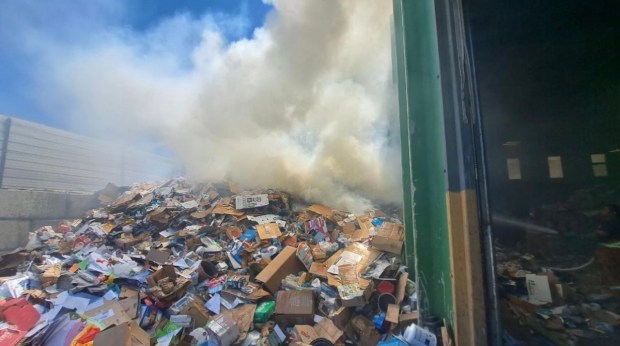
Fire at Emterra in June.
Residents are being warned to be careful with the disposal of lithium-ion batteries in the wake of a fourth fire at a Kamloops recycling facility.
On Thursday, June 19, 2025, a fire broke out on the tipping floor at the Emterra material recycling facility. It originated in a load delivered by a City truck, and it is believed that the fire was caused by a lithium-ion battery that had been improperly disposed of.
Lithium-ion batteries — commonly found in everyday items like cell phones, laptops, power tools, gaming consoles, baby monitors, vaping pens, and hearing aids — can pose serious hazards when tossed into regular recycling or garbage bins.
The batteries are highly reactive and can spontaneously ignite, creating dangerous situations for recycling and waste management personnel and infrastructure, according to a reminder issued today (July 9, 2025) by the City.
Batteries of any kind should be taken to a designated collection site.
The latest incident follows three fires at the Emterra facility in early spring, prompting the City and Recycle BC to issue a strong reminder to residents that batteries do not belong in curbside garbage or recycling carts or bins, as they can pose a serious risk to workers, machinery, and our community.
“Batteries that are discarded in curbside collection can cause explosions, fires, and pose serious risks to recycling workers. It’s extremely important residents don’t put something that is potentially explosive into a recycling bin,” said Maja Rusinowska, Recycle BC’s manager of stakeholder relations.
Marcia Dick, the City’s solid waste reduction coordinator, urged residents to use designated locations to recycle batteries.
“If batteries end up in curbside carts or multi-family bins, they could catch fire in the cart, in the collection truck, or at the recycling facility,” she said. “These are all highly dangerous scenarios for anyone involved, whether a homeowner, truck operator, or staff at the recycling facility or landfill.”
How to Properly Recycle Batteries:
When a rechargeable battery/electronic item containing a rechargeable battery reaches the end of its life, the battery and/or the entire item can be recycled at the following locations in Kamloops:
- North-Wood Environmental Services Household Hazardous Waste Facility (batteries only – no electronics)
- Mission Flats Landfill/Diversion Area
- Barnhartvale Landfill/Diversion Area
- Columbia Bottle Depot (electronics only – no batteries)
- Lorne Street Bottle Depot (electronics only – no batteries)
- A range of retailers that accept rechargeable batteries
Household batteries are also accepted free of charge at 27 Thompson-Nicola Regional District solid waste facilities around the region. Electronics and small appliances are accepted at 11 Thompson-Nicola Regional District eco-depots. Find the Thompson-Nicola Regional District online search tool here.
What Happens to Recycled Batteries?
Call2Recycle is the official battery stewardship program in British Columbia, accepting used household batteries from over 1,700 locations in the province. Call2Recycle is a non-profit organization committed to the safe and responsible collection and recycling of batteries across Canada while protecting communities from battery-related hazards. Call2Recycle’s mission is to reduce the environmental impact of used batteries by providing accessible, convenient drop-off locations and managing an efficient recycling program.
Other resources:
- Find a battery recycle drop-off location near you and learn about battery safety and more at RecycleYourBatteries.ca.
- Look up what can go where around the province using the Recycle Council of BC’s Recyclepedia search tool.
- Learn more about what household hazardous waste is and how to properly recycle it at Kamloops.ca/HHW.
- Look up what goes where using the Waste Wizard in the Waste Wise Kamloops app or online at Kamloops.ca/WasteWise.
- Find a list of depot locations at Kamloops.ca/DepotLocations.
- Learn more about the Electronics Products Recycling Association at Recycle My Electronics.

 ArmchairMayor.ca
Thanks for this post. Too much finger pointing when it comes to the use of lithium batteries.
The average citizen thinks of EV cars and truck when they hear the word lithium.
You quietly pointed out many daily household and personal items use lithium batteries. I would say that probably includes 99% of adults and most teens and a good number of pre-teens.
LikeLike