
ROTHENBURGER – Save the ostriches, if it’s based on science, not emotion
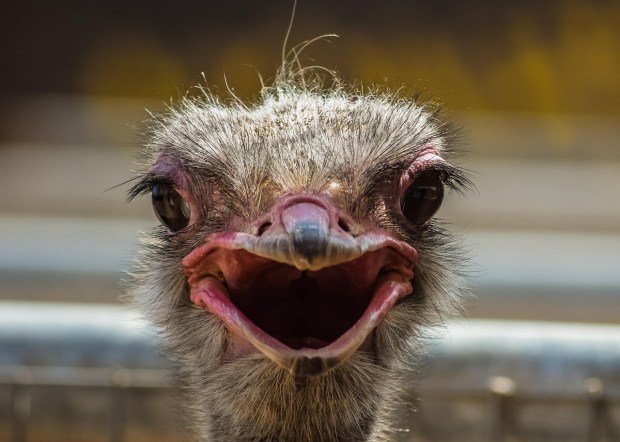
(Image: Dimitri Svektsikas, Pixabay)
IT’S NOT EASY being an ostrich. In the wild, they have to contend with lions, leopards, hyenas and human hunters. In captivity, on farms, they’re usually shipped to the slaughter house at a few months of age where various methods — none pleasant — are used to kill them.
 They’re farmed for meat, eggs, leather, oil and feathers. They, are, in short, poultry, very large poultry, comparatively smart as birds go, and cute in their own way.
Hundreds of thousands of chickens are “culled” in the battle against avian flu and nobody complains about that. But 400 (I believe the exact number is 399) ostriches at an Interior B.C. ostrich farm are designated for destruction and there’s a major uproar over it.
The current tense situation came about after 69 birds from the ostrich flock (or herd, as it’s commonly called) died, and two of them were found to have been infected with avian flu. As per policy, the Canadian Food Inspection Agency ordered that the entire herd must be destroyed, with compensation to the owners of $3,000 per bird.
Owners of the farm in Edgewood are opposing the cull, saying the remainder of the herd is healthy and should be exempted from CFIA policy because they have herd immunity and would be valuable for scientific study of how to fight avian flu.
But a federal court has ruled that the CFIA “acted reasonably” in ordering the herd’s destruction. The CFIA has also levied a $20,000 fine on the Universal Ostrich Farm for allegedly failing to quarantine its ostriches and carry out the cull, and for not reporting the initial illnesses and deaths in the first place.
The CFIA contends that avian flu has the potential to infect mammals including humans, and “allowing a domestic poultry flock known to be exposed to HPAI to remain alive allows a potential source of the virus to persist. It would increase the possibility of reassortment or mutation, particularly with birds raised in open pasture where there is ongoing exposure to wildlife. This could also increase the human health risk.”
That argument isn’t convincing the save-the-ostriches folks. Forty or so protesters have gathered at the farm vowing to prevent the culling. The union representing CFIA workers has expressed concern about online “intimidation and threats” against its members.
Katie Pasitney, a spokesperson for the farm, which is owned by her parents, insists, “We can prove to you we pose no public health and safety risk.” She says the birds should be retested for infection.
Meanwhile, the likes of RFK Jr. and Dr. Mehmet Oz in the U.S. have come down on the side of the farmers.
It’s become a highly emotional situation, with many supporters joining the cause to “save the ostriches.” Saving 399 meat birds thinking they’ll somehow live happily ever after seems a little ambitious.
It does, however, raise a number of legitimate questions.
Presumably, the owners’ hope that the ostriches will be saved for study means they wouldn’t meet their usual fate in the slaughterhouse but it’s unclear exactly what would be done with them if not destroyed. Who would care for them, and who would pay for it?
Are those demanding the CFIA withdraw its destruction order be content to live with the risk of avian flu mutations finding their way from the herd to other mammals, including humans? If the owners can prove the birds aren’t a risk, of what does that proof consist?
If the CFIA makes an exception to its rule that one infected bird must result in extermination of an entire herd or flock, what’s the implication for other cases of infection? Can the CFIA universally relax its rules without putting our health at risk?
These are questions that need to be clearly answered. Ostrich farming is a business (some animal activists believe ostrich farming should be banned entirely, but that’s a topic for another day), not a Walt Disney movie. Any changes to the rules need to be based on well-founded science, not emotion, as well-intentioned as it is.
Mel Rothenburger is a former regular contributor to CFJC-TV and CBC radio, publishes the ArmchairMayor.ca opinion website, and is a recipient of the Jack Webster Foundation Lifetime Achievement Award, and a Webster Foundation Commentator of the Year finalist. He has served as mayor of Kamloops, school board chair and TNRD director, and is a retired daily newspaper editor. He can be reached at mrothenburger@armchairmayor.ca.

 ArmchairMayor.ca
The problem is these less than thinking folk say they aren’t convinced. So what, get the bleep out of the way. Being stupid about this isn’t gonna help anyone or anything and having to convince them first is akin to having to convince a speeder they should get a ticket before giving them a ticket.
LikeLike