
INVESTING IN CULTURE – The Case for Kamloops’ Performing Arts Centre
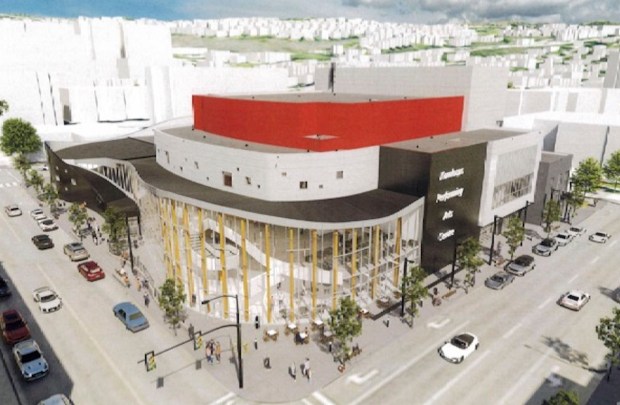
Artist’s rendition of PAC. (Image: Station One Architects)
By DR. PETER TSIGARIS
Thompson Rivers University
Prelude: This editorial is part of a book series I co-authored with my senior undergraduate students, titled In the Shadow of the Hills: Socioeconomic Struggles in Kamloops, published by TRU Open Press.

Samreena Noor.
One of the chapters, written by Samreena Noor, explores the challenges and economic rationale surrounding the construction of a performing arts centre in Kamloops. This editorial, based on research by Samreena Noor, highlights the external benefits of this investment and explores the concerns about the decision-making process and public support.
Cultural Infrastructure as an Economic and Social Investment
Kamloops is widely known as the Tournament Capital of Canada, a city that has long celebrated sports and outdoor recreation. However, as the city grows, so too must its cultural landscape. In 2024, the City of Kamloops took a historic step forward by approving the architectural plan for a long-anticipated performing arts centre in the heart of downtown.
Performing arts centres are more than just buildings; they are essential components of a community’s cultural identity. Numerous studies have shown that art centres generate positive externalities, benefits that go beyond the direct costs and private benefits experienced by taxpayers and ticket buyers.
These benefits include increased community engagement, enhanced quality of life, and economic activity driven by cultural tourism. Economic theory suggests that in the absence of government intervention, goods and services that generate positive externalities, like performing arts centres, are systematically underprovided by private citizens, as individual decision making often fails to reflect the full social benefits of these investments.
Former Kamloops Mayor Ken Christian, a long-time supporter of the project, emphasized the need to address the historical underinvestment in the cultural sector: “We embarked on the path to fix that.” The centre is expected to become a regional cultural hub, attracting visitors and generating significant economic spin-offs. According to city estimates, each tourist visiting the centre could contribute approximately $140 to the local economy.
The Referendum Dilemma and the Alternative Approval Process
The approval of the performing arts centre has not been without challenges. A public referendum in 2015 rejected the project, with 53.7% of voters voting against the proposal. One of the main reasons is that private citizens tend to decide based on their own private benefits and the taxes they would need to pay, often overlooking the broader external benefits that such a project brings to the community. As a result, the total social value of the project is underestimated. Additionally, a second referendum planned for 2020 was cancelled due to the COVID-19 pandemic and was never rescheduled.
In 2024, the City of Kamloops used an Alternative Approval Process (AAP) rather than holding another referendum. The AAP is based on an opt-out system: unless 10% of eligible voters actively sign a petition opposing the project, the city can proceed. This differs from a referendum, which is an opt-in system where people must actively vote in favor of a project.
Research shows that opt-out systems yield higher acceptance rates by participants because they assume collective agreement unless people specifically object. A classic example of the success of opt-out systems is organ donation. Many countries have the improved organ donation rates by switching from an opt-in to an opt-out system. In the context of automobile deaths from accidents, this has translated into more lives saved because most people remain organ donors unless they explicitly opt out.
Similarly, in Kamloops, the AAP for the performing arts centre allowed the city to move forward when opposition fell short of the required threshold. Although one community member filed a petition in B.C. Supreme Court challenging the AAP process, the judge dismissed the case in early 2025, confirming the City acted lawfully. The complainant later withdrew her appeal following a settlement.
Former Mayor Mel Rothenburger summarized the outcome of the AAP process best when he stated,
“MIXED EMOTIONS might be a good way to describe the outcome of the alternative approval process on borrowing for a new performing arts centre and an arena… At long last, it will become a reality… The PAC will do much to repair the imbalance between sports and the arts in Kamloops. It’s going to be beautiful. It’s going to be a place that brings together all Kamloops residents, not just the ‘elite’ as some claim.”
Mel Rothenburger,
The Armchair Mayor and former Mayor of Kamloops
Positive Externalities Without Referendums
The rationale behind the performing arts centre extends to many other examples of goods and services that generate positive externalities but are not subjected to referendums. For instance, vaccinations, homelessness reduction initiatives, public safety measures, air quality regulations, public education, and the provision of urban parks all benefit not only individual households but the broader community.
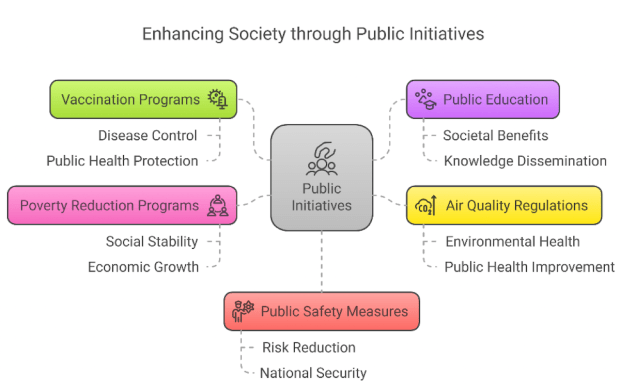
Figure 1: Goods and Services with Positive Externalities Image created by Napkin AI
These initiatives are often implemented by elected governments without holding referendums because their societal benefits exceed the private benefits considered by individual voters.
Funding the Centre: Public and Private Partnerships
The total cost of the performing arts centre is currently estimated at $154 million, with up to $140 million coming from local taxpayers. However, significant philanthropic contributions have already helped ease this burden. Kamloops philanthropist Ron Fawcett has pledged $10 million toward the project, and other private sector contributions are expected to follow.
Philanthropy plays a crucial role in making cultural infrastructure projects viable. As Noor’s research emphasizes, philanthropists do more than provide funding; they signal the social value of investing in the arts and help create opportunities for inclusion, reconciliation, and cultural celebration.
In addition to philanthropic contributions, the project is expected to receive further private sector support, making it a joint public-private initiative and helping to reduce the tax burden on the community.
Making the Arts Accessible and Inclusive
Public concerns about the cost of the performing arts centre have been valid and persistent. However, a key feature of the current plan is to ensure that the centre is accessible and inclusive for all Kamloops residents. Noor’s research outlines how cultural facilities risk becoming exclusive spaces unless deliberate strategies are employed to make them welcoming for diverse communities.
Proposed measures include offering discounted ticket prices for students, children, and seniors; partnerships with local schools and artists; accessible facilities for people with disabilities; and events that celebrate Indigenous cultures and our multicultural diversity. There is even the potential for subsidized access, similar to programs like Jumpstart in sports, ensuring low-income residents can experience the performing arts.
A Cultural Legacy for Kamloops
The performing arts centre is more than just a building; it is an investment in the social, cultural, and economic future of Kamloops. It will create jobs, attract professionals, support local artists, and contribute to the city’s quality of life. Moreover, it will provide a space where all members of the community, regardless of income or background, can gather, celebrate, and be inspired.
The path to this project has not been straightforward. It has required persistence, leadership, and a recognition that the value of cultural infrastructure cannot be measured solely by private returns. As former Mayor Ken Christian stated,
“There needs to be a kinder, gentler society. There is a calmness that comes from a performing arts centre—having this facility nurtures that. You don’t know what you’re missing until you have it. The performing arts will allow people to be exposed to more cultural entities.”
Ken Christian,
Former Mayor of Kamloops
The decision to proceed with the performing arts centre reflects a broader understanding of its role in fostering a kinder, more empathetic, and culturally enriched Kamloops.
I invite readers to share their views on this important cultural investment. How do you see the performing arts centre contributing to Kamloops’ future?
References available in Chapter 7: Cultural Alchemy: Navigating the Economic Challenges in the Performing Arts Centre by Samreena Noor.
Tsigaris, P., Awad, A., Forbes, C., Izett, P., Kadaleevanam, U., Mehta, G., Noor, S., Simms, O., & Thomson A. (2024), In the Shadow of the Hills: Socioeconomic Struggles in Kamloops, TRU Open Press, https://shadowofthehills.pressbooks.tru.ca/
Dr. Panagiotis (Peter) Tsigaris is an economics professor at Thompson Rivers University. Samreena Noor is a senior undergraduate student.

 ArmchairMayor.ca
Kamloops made a decision many years ago to be a shitty resource town and focus on sport at the expense of culture.
The PAC is a step to address this, but it’s too late to change a generational culture that’s been fully baked in.
And let’s save the BS claims of the PAC attracting doctors. Few people choose this town willingly. It’s always been a “good enough” kind of town and an art center won’t change that.
Add on the crime and disorder on the streets now, and the most the PAC will do is reduce parking and cost taxpayers a lot of money to fix the smashed glass when drug addicts have their pathetic tantrums because they’re mad at the world.
Let’s just drink the Kool-aid and prepare to welcome all the doctors now that the liars successfully used the backdoor method to get this approved.
LikeLiked by 3 people
Thanks to everyone who took the time to read and comment. I really appreciate the discussion and thoughtful criticism. It shows how much people care about the future of Kamloops.
I want to highlight something important that Sam pointed out. This Performing Arts Centre is not meant to be just for those at the upper end of the income distribution or those already engaged in the arts. The goal is to make it inclusive and accessible to everyone in our community, especially those who may not have had these opportunities before. As economists often say, we think at the margin. Simply making the PAC available increases the chances that people who might never have considered attending will now choose to do so. Same principle applies to the Tournament Capital Centre. Its existence encourages people to participate in sports and physical activity who might not have done so otherwise.
Change will not happen overnight, but by exposing children from elementary to high school to arts and culture, we can help shape a kinder, more empathetic Kamloops over time. This is not just about us today. It is about creating something meaningful for future generations.
And let us not forget how close we came to heading down a very different path. We almost became a mining city with a massive open pit mine next to us. It is thanks to those who stood up and fought for the land, especially the Tk’emlúps te Secwépemc people, whose cultural and spiritual values would have been lost, that we now have the opportunity to invest in a different vision. A vision focused on building a community through culture, creativity, and sports.
It is a long-term vision, and while I know not everyone will agree, it is my sincere belief that we are moving toward a culturally rich Kamloops.
LikeLiked by 2 people
A couple of additional thoughts on the “elitism” debate, if I may. As an example, the Tournament Capital Centre was designed and intended for use by a wide range of recreational and sport uses, from elite athletes competing at the international level to residents who just enjoy keeping fit or participating in various sports at the local level. As someone who was heavily involved in the TCC initiative, I can attest to that, and contend it has succeeded in its mission. In the case of the PAC (again, I was involved in it during its earliest days of conception 20 years ago), it, too, is designed and intended to be used both by local arts groups and “imported” artists for the enjoyment of all segments of Kamloops society. Voluminous studies have been done on the importance of the arts to community wellbeing. However, not every amenity we build, or service we provide, is going to be used by everyone, but that doesn’t mean we shouldn’t build or provide them. The classic example of that is our school system — many, maybe most of us, no longer have kids in the school system but we still willingly support it with our taxes because we know it’s for the greater good.
LikeLiked by 2 people
Maybe I missed the point when I read the chapter written by Samreena but I feel a large part of our local culture is indigenous. Is there no collaboration for the PAC with our First Nations people who share this community with us? Perhaps Peter could elaborate.
LikeLiked by 1 person
Great point John. Yes there needs to be collaboration with our First Nations people. I always encourage my students to include the importance of indigenous culture and their values in their work.
I wrote another book recently with my graduate students titled “The Value of Lakes Around the Secwépemc Territory which can be accessed here https://thompsonokanaganlakes.pressbooks.tru.ca/. I plan to write another series of editorials about this book after finishing this series. Given the importance indigenous people place on the natural environment, my student’s had to discuss indigenous values in each of the chapters.
The forward was written by Dr. Nathan Matthews our former Chancellor at TRU. It is worth reading: https://thompsonokanaganlakes.pressbooks.tru.ca/front-matter/foreword/
Sam did write about the indigenous culture. In the section: “How to Make the Performing Arts Centre More Inclusive” Sam wrote the following:
Diverse and a wide range of performances celebrating different cultures: This will touch various cultural, socioeconomic, and age groups. It may include different genres of music, theatre, dance art, and more. These performances celebrate different cultures and traditions and can make the members of the community feel represented. For example, months that celebrate history and holidays (such as Black History Month and Holi), Indigenous storytelling sessions, and much more can enhance community vibrancy and the use of the performing arts centre. The performing arts centre’s committee can partner with local cultural organizations (e.g. the Kamloops Multicultural Society, Kamloops Hindu Cultural Society, Sikh Cultural Society, and Kamloops Aboriginal Friendship Society) to co-produce events and ensure the authenticity of the events and wide local support. Indigenous storytelling sessions, and much more can enhance community vibrancy and the use of the performing arts centre.
LikeLiked by 1 person
Thanks for the reply, however, I think the collaboration would have happened by now if it had been a serious consideration.
I have long maintained that a much larger centre could be built “across the river”. Consider a 99 year lease on the land with a 5000 seat auditorium on the ground floor. There could be a world class cultural display centre upstairs for First Nations and others (including the world cultures who now compose Kamloops’ population). It could be a destination attraction for those who come from all over the world who take the Rocky Mountaineer, for example. More land is available for a spacious parking lot complete with charging stations for electric vehicles.
How many million dollars in grant money from the Federal Government have been “left on the table” by not having this project as an integrated venture from the word go?
LikeLiked by 3 people
As a PAC supporter, I can comment on the question suggested here:
“Did the TCC, vastly improve the general health of the local population?”
– No … from my perspective it didnt … I dont go.
Those that DO go and do that, have a better place to go, so thats good. But I wonder if the % of population that go to that type of facility is much different because of the TCC being built?
If the TCC was never built, would this exercising demographic unknowingly have just continued to go to whatever facility (local pool, YMCA, Mac Park, etc) that they did before, or find another way to work out? Likely. Humans are creative that way … we make do.
The TCC just made it better and easier.
But did it actually make those defined as non exercisers … exercise? I doubt it.
The PAC could be viewed the same way. Will it make people who are not inclined in the performance viewership way, show up to more shows than they would have before?
Recognizing the caveat that having this facility will allow traveling shows to stop when they previously wouldn’t have at the Sagebrush or the ice rink, and setting it aside for the moment … the answer should also be no.
People have and will continue to go to the shows that interest them. A modern country fan is less likely to attend a symphony show and you can draw that parallel the same way between a large collection of entertainment opportunities.
We all focus on events, music and theatrical shows that interest us. Now … add that caveat above back in regareding more available shows, and yes, more people will fill more seats with a good facility, but on its own it wont create entertainment fans.
Build it and they will come, is an adage that is inherently problematic and incorrect.
People either like live shows or they dont.
You cant make them come to a show.
You cant make me go to the TCC weekly.
From the same perspective the idea that a PAC will build a “kinder, gentler, more understanding society” … Im not certain on that.
Theres just too many people who have no interest in a kinder, gentler, more understanding society, or at the very least just dont think about it, whilst arguing with others about who to vote for, or other socially divisive subjects.
This kind of puritanical kinder, gentler, more understanding society, because of a PAC … ideal is one created by those that either need it in their own lives and are projecting onto the community, or need the talking point to justify the facility. Pure woo woo, mumbo jumbo.
You wanna go to a good show just go.
Dont muck it up with softball ideas like that.
I dont need facts and evidence to have an opinion, based on personal experience and my own perception of the world around me. Thats what an opinion is.
LikeLiked by 1 person
David the argument presented here about the cultural center (PAC) and its impact on society relies heavily on personal anecdotes and subjective assumptions rather than engaging with broader evidence. You dismiss the idea that the PAC could improve community health or cultural engagement by asserting that people’s habits, whether exercising or attending shows, are fixed and unaffected by new facilities, yet you offer no data or analysis to support this claim beyond your own lack of interest in attending.
Your personal experience ignores potential benefits, like increased accessibility or the appeal of improved infrastructure, which could shift behavior for others. The rejection of “facts and evidence” provided in some comments here as unnecessary undermines the argument’s credibility, as it leans on untested generalizations, like claiming that PAC won’t foster a kinder society, without exploring how cultural exposure might influence attitudes
LikeLiked by 1 person
Great comment David.
LikeLiked by 1 person
Thanks Rob. Sam has also done an extensive literature review. Here is a small sample from peer-reviewed journal publications about the benefits of culture and arts:
McCrary, J., Redding, E., & Altenmüller, E. (2021). Performing arts as a health resource? An umbrella review of the health impacts of music and dance participation. PLoS ONE, 16. https://doi.org/10.1371/journal.pone.0252956.
Findings: Performing arts participation for 30-60 minutes improves health across 17 domains.
Slanzi, C., Brusilovskiy, E., McCormick, B., Snethen, G., & Salzer, M. (2022). Participation in arts and culture among individuals with serious mental illnesses and its relationship to quality of life and recovery.. Psychiatric rehabilitation journal. https://doi.org/10.1037/prj0000553.
Findings: The results indicate that adults with serious mental illness, are as, or more interested in arts and cultural activities as adults in the general population.
Sonke, J., Rodriguez, A., Colverson, A., Akram, S., Morgan, N., Hancox, D., Wagner-Jacobson, C., & Pesata, V. (2023). Defining “Arts Participation” for Public Health Research. Health Promotion Practice, 25, 985 – 996. https://doi.org/10.1177/15248399231183388.
Findings: Arts participation has been linked to positive health outcomes around the globe.
Jindal‐Snape, D., Davies, D., Scott, R., Robb, A., Murray, C., & Harkins, C. (2018). Impact of arts participation on children’s achievement: A systematic literature review. Thinking Skills and Creativity. https://doi.org/10.1016/J.TSC.2018.06.003.
Findings: Arts participation in children and young people may enhance academic achievement, but there may be more intrinsic benefits to engaging in the arts than just improved academic standards
Zarobe, L., & Bungay, H. (2017). The role of arts activities in developing resilience and mental wellbeing in children and young people a rapid review of the literature. Perspectives in Public Health, 137, 337 – 347. https://doi.org/10.1177/1757913917712283.
Findings: Arts activities improved self-confidence, self-esteem, and relationship building
Block, E., Wong, M., Kataoka, S., & Zimmerman, F. (2021). A symphony within: Frequent participation in performing arts predicts higher positive mental health in young adults.. Social science & medicine, 292, 114615 . https://doi.org/10.1016/j.socscimed.2021.114615.
Findings: Daily participation in performing arts increased positive mental health by 0.315 effect size.
Lewis, D. (2024). Impact of Theater Arts Participation on High School Students. American Journal of Arts, Social and Humanity Studies. https://doi.org/10.47672/ajashs.2353.
Findings: Theater arts participation improved academic performance and social-emotional development.
LikeLiked by 1 person
The point of good research is to challenge presumptions and popular narrative not regurgitate any of it.
LikeLiked by 1 person
I think Dr. Tsigaris you raise insightful points about the role of culture and arts in driving social change, particularly at the grassroots level. The example of Venezuela’s El Sistema is a compelling one, from my perspective. Using music as an aspect of culture to provide the benefits you point to which is not a rigid mold to shape kids into something they’re not, but as a tool for self-expression and identity. It’s less about turning them into polished classical musicians and more about giving them a voice to reflect their own experiences. That’s a powerful distinction.
The idea that cultural movements emerge from the “everyday” rather than top-down policies resonate with how organic change often works. Scholars, that you use who support both your and my take on the value of culture focus on states and systems because they’re easier to study, tangible structures with data to analyze, but the real shifts often bubble up from people living their lives, creating, and connecting. El Sistema’s success (at least in its ideal form) seems to hinge on that: it meets kids where they are, rather than imposing something foreign.
My point here is that spending $175 million divides the “haves” and “have-nots”. Culture and arts can bridge gaps, you said it and no arguments with that, but only if they’re accessible and inclusive. If they become another privilege for the elite, they lose that transformative edge and just reinforce existing divides. Venezuela’s model, at its best, sidesteps that by over perfection, which might be why it’s caught attention globally. The Kamloops PAC does not prioritize participation but divides it and the ones that could benefit the most are excluded.
LikeLiked by 1 person
Rob I agree with every point that you have made I would love to see it built but lets call a spade a spade. Funding comes largely from taxpayers via government, with wealthier contributors and private donors playing outsized roles thanks to tax incentives. Every time I donate to arts and culture its tax deductible eventhough a higher income person contributes more, thus artists, organizations, and culturally engaged communities benefit most,. In fact its the upper income grup that can provide dance and music lessons or just school band where costs are huge and deduct the same from the tax bill. Lets face it exclusion hits hardest for low-income, rural, or overburdened families, half of Kamloops population, and unless equal oportunities to participate exists how fair is it that for the next 20 or 30 yeara average tax paid by famillies in Kamloops will go up by $200-$300 per year and many of these famillies will never see the inside of the PAC. The system aims for equity but struggles to bridge cost and access gaps, leaving some demographics, especially those stretched by family maintenance—on the sidelines.
LikeLike
There’s a lack of evidence and logic to your assertions. We pay taxes for other venues that many will never set foot in. As for those who may be in difficulty financially to attend an event, that same assertion applies to sports facilities and other amenities. Therefore, the better approach is to find ways to make the PAC accessible to those unable to afford. WCT has programs in that regard.
LikeLike
My original comment is is framed within its own terms as it ties funding disparities to access inequities and I framed it as a fairness issue. However, with all due respect, I find weakness in your response as it lacks evidence. I find that your argument fails to distinguish the PAC from other public projects which experience similar inequalities, however many of the activities that you mention do have subsidies for vulnerable children.
What is your solution for the inequality that I mention and provide examples? All such activities should be funded to achieve equity by normalizing tax-funded projects. Normalization is a method of ensuring that regulated utilities benefit from the various tax law provisions that were designed to encourage capital expenditures which should equally benefit all tax payers.
If you want to include other activities, I am OK with that but the discussion here is the PAC and the referendum as well as its financial burden. Please substantiate your points directly to what I said. I am not against the PAC as my comment is a proactive stance on issues of fairness, including the ones you use.
LikeLike
Hey Walter:
Anyone has access to a TV and for a small fee anyone can access great shows from all over the universe. Great “artistic” performances can be easily accessed that way. So really no one is excluded from “art”. Besides nature gives us great “artistic” shows every day every where. One just has to take a moment to look around…
LikeLike
The PAC will make things kinder and more empathetic. Attract “professionals” who will somehow ingore the weekly headlines of “guns drugs and money found” and “suspect seen setting fire” in favour of an inert structure. This paper is parroting the “doctors will come” media lines from council but now extends it to elite “professionals”, an underhanded dig at the people of Kamloops. It states philanthropy cues social awareness of the arts, inclusion, yet disregards entirely the exploitative mechanism that created the mega wealth that enables philanthropy in the first place. Does anyone think a local artist could afford to rent this space to perform or display art?
How many more magical attributes can be assigned to this building?
LikeLike
Another nonsense argument about the arts being elitist with no foundational research or facts.
LikeLike
Samreena Noor’s well written and documented exploration of the $175 million Kamloops performing arts centre (PAC) underscores its potential as both an economic and social investment, but the question of opportunity cost, what the city forgoes by not investing elsewhere, complicates this narrative. The trade offs are real for average and low-income families. Three-month soccer for two children $750 or three performances at the PAC.
Economically, the PAC promises positive externalities like $140 per tourist in local spending, job creation, and downtown revitalization, aligning with Kamloops’ average wage of $53,600 ($25.77/hour), which exceeds the $23.69/hour living wage for a family of four, suggesting some capacity for cultural spending.
Socially, it could bridge the city’s sports-centric identity, earning its “Tournament Capital” title, with a richer arts scene, fostering community pride and inclusion if accessible programming (e.g., $30–$60 tickets, as seen in Vernon’s 2025 shows) reaches beyond the affluent.
Yet, the $200–$300 annual tax hike per household to fund it, approved via the less participatory Alternative Approval Process (AAP) rather than a referendum, risks alienating moderate and low-income earners ($37,128–$69,601), who may see it as a subsidy for wealthier patrons ($80,000+), especially given ticket prices averaging $50–$70 province-wide and a history of referendum rejection (53.7% no in 2015).
The AAPs opt-out design, while efficient and legally sound, sidesteps the active consent a referendum demands, amplifying concerns that the PAC prioritizes elite tastes over broader needs, like bread and butter, affordable housing or sports upgrades, echoed in its potential exclusivity unless subsidies match Venezuela’s El Sistema model. Thus, while the PAC offers a cultural legacy and economic spin-offs, its value as an investment dim without measuring the lost opportunity to address pressing local priorities, a tension the AAP’s muted debate failed to fully resolve.
LikeLike
If we were to be responsible adults it makes little sense to build one fancy arse glass building when we could probably build 3 or 4 buildings of the the same size albeit less decorative and be able to use them for more than just entertainment. We might need them for recruitment centers soon if we don’t get our act together against rising fascism from various countries.
LikeLike
Let’s go off on a slight tangent for a brief moment. Let’s take a look at another big expensive expenditure Kamloops undertook years ago. Did the Tournament Capital Centre, colloquially referred as the TCC, vastly improved the general health of the local population (a positive externality)?
It seems to me, from just an empirical observation viewpoint, that it did not.
Will a fancy Performance Art Center make for a kinder, gentler, more understanding society? I highly doubt that.
It is just entertainment, a superficial (perhaps classifiable as frivolous) experience. Just like the guy down the street with all the imaginable toys in the overflowing garbage and driveway. Similarly, the City of Kamloops has to have all the fancy buildings others have trying to justify them as positively as possible.
And I am sure, in typical Canadian fashion, many would want to crush my skull into the (hockey arena) boards for writing/stating a differing opinion.
LikeLike
Differing opinions are welcome, but they are hollow without facts and evidence.
For example, you suggest that the TCC has not “vastly improved the health of the local population.” On what evidence do you make this assertion? What is the “empirical observation” to which you refer?
The arts are not “just entertainment.” They are much more than that. For example, if you read The Impact of the Arts by the Canada Council for the Arts (link below), you will note that:
All of the above assertions are backed up by research and statistics, noted within the piece.
https://canadacouncil.ca/research/arts-impact
LikeLiked by 1 person
I could easily reply to each point but I don’t think it that would be a time-wise pursuit.
LikeLike