
JOHNSON – Taylor Swift’s Eras Tour was all about effectively marketing a story
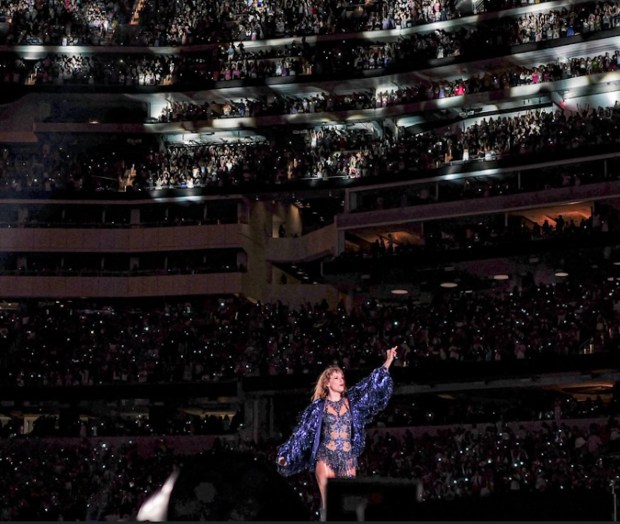
(Image: Paolo Villanueva)
SO THE TAYLOR SWIFT Eras tour is over … its been a long one, totalling 149 shows over 21 months – that’s a show every 4.2 days – playing 51 cities in 21 countries. I don’t wonder in the slightest that Taylor herself is about to spend a year sitting on a beach somewhere … sleeping.
 Am I a fan? No, not my cup of tea, but that’s fine.
I mean, I don’t have a problem with her music … it’s OK … middle of the pack pop’ish whatever, but not a musician or musical genre of resounding Mozart level innovation. Its fine.
What I am though is old enough to remember many massive tours that took over the world’s consciousness for a period of time. From the Beatles to Riverdance to U2, to the inevitable The Who final tour … again. These are events in their time, cultural moments, and Swifties around the world pulled off another one.
In fact, this one reset the bar at a stratospheric level.
Watching these kinds of cultural moments happen over the years, provides the grace of perspective that its happened before, and it will happen again … and this phenomenon is worth study.
It’s “suppos’d to be about the music, man …”, and in Swift’s case … no, it’s not really.
This was about an event.
But did it fill $2Billion dollars of stadium seats on its own merit? No, not without some help.
So, what’s going on here? How did it go from being a ‘big tour’ and cross into 10 p.m. national news in every country it touched, type of territory?
What this is about, is the best today example of a marketing machine that said that ‘this thing matters’ and an incredibly powerful demographic responded with attention and dollars – the female under-age crowd – the one that the Beatles (or maybe Elvis) first woke up, but this time rather than it being organic, it’s intentionally programmed by marketing,
… and they showed up and spent money.
A lot of money.
Remember … this is the first tour of anything, that earned $2Billion in revenue.
That’s over double the number two statistic; that of Coldplay’s ongoing Music of the Spheres World Tour, the only other tour to gross more than $1Billion … and Swift doubled it.
The mania began months before the March 2023 kickoff of the Eras Tour. Presale tickets went on sale in November 2022 — sending millions of fans into a frenzy and causing Ticketmaster to crash. A class-action lawsuit and a congressional inquiry followed.
This was just advertising and marketing fodder.
The average American ticket price paid was about $500. That burst of spending has revived the entertainment industry after a years-long pandemic slump and it redefined entertainment economics.
The tour’s economic boost spread far past the walls of Swift’s stadium venues, as fans traveled to any show they could get their hands on.
Hotels, restaurants and shops around the country felt the upswing, with millions of dollars flowing into the cities Swift visited. It became normal to see in local news reports of where the tour landed, of ‘how city finances changed’ as a result of what … a musical tour?
That’s a pretty powerful demographic that can pull that off every weekend for almost two years.
Economic impact as a subject, is what actually absorbed the news. This fan group literally stopped traffic around the world, and brought police contingents to their knees in their attempts to keep everyone safe, and keep the peace.
There was more focus on the fans and what they were doing for a city, than it being about Swift and her music. On the fans side, the average Swifty fan wasn’t just attending a concert, but embarking on a full-blown adventure?
In Vancouver, it’s estimated that for each of the three concert days, $25Million per day increased revenue was earned by the restaurant sector only. Compared to the average NHL game in town that sees an increased revenue of $2Million each … this is more than a blip. Swift numbers are more aligned with daily 2010 Olympic restaurant revenue numbers.
With an estimated per attendee spending of $1,300 on tickets, travel, accommodation, and merchandise, it’s clear that attending a Taylor Swift concert was more than just a show – it was a pilgrimage.
To get the individual fan from listening to music in their bedroom, to shelling out $1,300 each is a feat of monumental proportions and was not an accident, but a curated progression. Taylor Swift and her team prior to the tour laid out a plan and then just executed it.
From generating buzzworthy content, leveraging social media, and creating an aura of excitement … and Swift herself forging a personal bond with each and every fan … not just as a business venture but actual genuine commitment by organising pre show gatherings, spontaneous meet and greets and online contests. These initiatives not only made fans feel deeply involved and invested in the tour’s success but also gave them a sense of ownership in its achievements.
To top it off, Taylor incorporated a money-can’t-buy experience during her shows where one lucky die-hard fan gets chosen to meet her, further solidifying the bond between artist and audience. She remained engaged through interactions and responses on stage and online, asking for opinions and incorporating these ideas into the product, and rewarding customer loyalty.
Are we beginning to see the marketing lingo creep in here?
She and her team then took on Ticketmaster … on behalf of fans with the Verified Fan Program … literally forcing Ticketmaster to rewrite their ticket selling software to suit her needs.
That’s power.
In fact, theres a report that suggests that prior to the launch of ticket sales, the team realized that Ticketmaster would not be able to process the crush of tickets, therefore curated the sequence of events and the messaging to media and fans, then preplanned their support of the class action lawsuit, and even nudged Senators and Congressmen in the U.S. to start asking questions and initiate hearings … all planned even before tickets went on sale.
All of it ready to be triggered by the Ticketmaster crash.
That alone is an astonishing forecast at a massive scale, of a worldwide event, ran by a team of marketing gurus. The goal being … using everything as hype train material.
Then on stage, she embraced the idea of ‘Eras’ in the show’s design, where she used nostalgia from her own repertoire to attract fans of each, any or all parts of her career. No one was left out, and fans of various … eras … showed up. See what she did there?
This is the real strength of the Eras Tour as it is a perfect illustration of showcasing her skilful storytelling as she takes her audience on a journey through the various chapters of her musical career.
On top of just the show itself, the external business operated by her, raked in large. From branded clothing to other exclusive goodies, fans were determined to get their hands on a piece of the Taylor Swift experience. Posters were priced at $40 US, tour hoodies commanded a staggering $120, and T-shirts were tagged at $65. Water bottles were a hefty $40, and canvas tapestries were available for $55, with fans eagerly queuing up ahead of the shows to secure these prized items. Some can be found today on Ebay with a zero added to the price.
When fans use these products in their own life, they also play a roll in generating buzz as they become brand ambassadors. Free advertising.
The Eras Tour intricately customised their marketing tactics to connect with distinct target demographics, even within the demographic that is a Swift fan. This methodical strategy guaranteed precise resource allocation, significantly boosting the impact of their promotional endeavours and playing a pivotal role in the tour’s triumph.
They monitored metrics like engagement rates, website traffic, and sales to see what’s working and what’s not, and instantly adapted strategies to continue building excitement and drive growth at the next show or tour leg.
Now we are talking like a board table of marketers.
They also intentionally leveraged data to personalise fan experience, using customer data to deliver personalised Taylor product recommendations, targeted email marketing campaigns, and customised offers for individual preferences and needs.
If Tayor sent an email, people agreed, bought stuff or even voted in elections.
In the world of marketing, storytelling becomes a powerful tool that adds a personal touch to brands, transforming them into more than just products or services but into relatable and unforgettable experiences, and with the design of the Eras tour as entry point to Taylor’s journey through her career … this is ALL real storytelling, from tickets to t-shirts.
Now its all over, everyone involved but the bean counters are on holiday, and we can return to whatever we were before Swift was the top news story. Somewhere the next team of marketers are licking their pencils and taking notes.
Something changed this year,
… maybe it really is no longer “about the music … man.”
David Johnson is a Kamloops resident, community volunteer and self described maven of all things Canadian.

 ArmchairMayor.ca
that’s a great article
LikeLike
Certainly not a cognitive experience, just an emotional one. Goes to show where we are heading…in the realm of surreal AI?
LikeLike