
CHARBONNEAU – Music made by nobody for an audience of no one
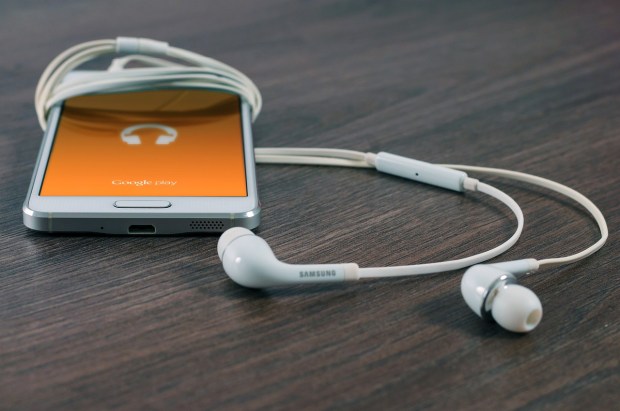
(Image: Firmbee, Pixabay)
MICHAEL SMITH of North Carolina is being charged with the theft of millions of dollars of royalty payments intended for real artists.
 In an elaborate scheme, he allegedly used artificial intelligence to generate songs he claimed were his, then named the songs and invented artists who played them.
Then he supposedly streamed the AI-generated songs on streaming services, such as Amazon Music, Apple Music and Spotify. The money started to roll in, a fraction of a penny at a time.
Streaming only pays significant amounts through the volume of streams. Smith, according to legal documents, created an artificial audience to listen to his artificial music.
Smith’s audience of thousands of fake streaming accounts was created using e-mail addresses he had purchased online. Authorities contend he had as many as 10,000 accounts, even outsourcing the task to paid co-conspirators when creating the accounts became too much work.
To make the fictitious listeners appear real, they had to appear to be listening from various computers. So he allegedly created software to stream his music from different computers.
Artists, real and fictional, are paid a paltry sum for each stream. There’s no way that struggling artists can make a living that way. Spotify, for example, only pays about $0.003 to $0.005 per stream.
Despite the meager payouts, streaming is big business. Spotify, which now has 356 million users around the world including 158 million paying subscribers, paid out more than $5 billion to music rights holders in 2020.
Big name artists, who earn millions from other sources and probably don’t need the extra money, can make substantial amounts from streaming.
Struggling artists have trouble buying groceries and paying the rent.
Smith, says the charge documents, calculated that he could stream his songs 661,440 times a day. At that rate, he estimated that he could bring in daily royalty payments of US$3,307.20 and as much as US$1.2-million in a year.
However, the issue is much larger than the theft of royalty money from artists. The problem is that AI uses music created by real artists to generate its music.
The artificial intelligence allegedly used by Smith violates copyright owned by the artists and whose voices and music are used in producing artificial music, says the Recording Industry Association of America.
The RIAA has filed lawsuits against the AI-music generators Suno and Udio on behalf of record labels.
In their defense, AI-music generators say that their use of copyrighted works should be given a “fair use” exemption under the law. Fair use allows for limited use of copyrighted material without permission from the copyright owner for criticism, comment, news reporting, teaching, scholarship, or research.
Unless we want to live in a sterile, artificial world, artist’s voices, compositions, and images must be protected.
Tennessee has passed legislation to protect songwriters, performers and other music industry professionals against the potential dangers of artificial intelligence.
Out of curiosity, I generated tunes from the AI-music generator Suno. They are surprisingly good but I feel guilty of theft.
Suno and Udio should collect fees for songs generated that would be distributed to artists they have stolen for their software.
David Charbonneau is a retired TRU electronics instructor who hosts a blog at http://www.eyeviewkamloops.wordpress.com.

 ArmchairMayor.ca
Leave a comment