
ELECTION ’24 – Harm reduction should be part of a comprehensive strategy
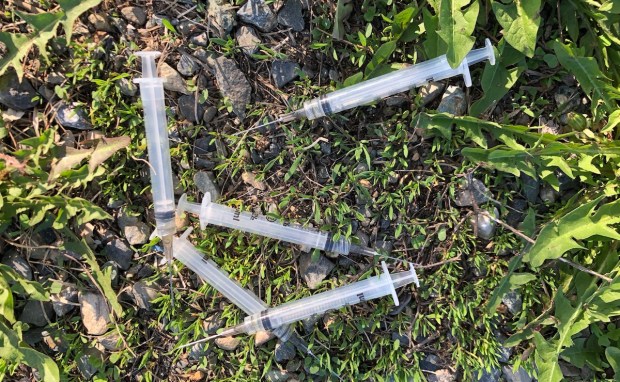
(Image: Mel Rothenburger)
ArmchairMayor.ca welcomes submissions from candidates on issues in the Oct. 19, 2024 provincial election.
By DENNIS GIESBRECHT
Conservative BC Candidate
Kamloops Centre
The ongoing debate surrounding British Columbia’s approach to drug addiction treatment, particularly its emphasis on harm reduction, has become increasingly contentious. While proponents of harm reduction argue it aims to minimize the negative consequences of drug use without necessarily requiring abstinence—through measures like safe injection sites and the provision of safe supply drugs such as prescription heroin— this strategy is clearly falling short.
The alarming statistics speak for themselves with overdose deaths in B.C. skyrocketing from around 200 per year in the early 2000s to over 2,500 in 2023. This troubling trend suggests harm reduction alone is not sufficient to address the growing opioid crisis. Despite the extensive implementation of harm reduction policies, the continued rise in overdose deaths indicates these measures may not adequately tackle the root causes of addiction or provide a clear path to recovery.
The absolute failure of the so-called ‘safe supply’ needs to be curtailed immediately. The NDP and Dr. Bonnie Henry’s own reports likened the program to ‘handing out cash to users’— of course the David Eby government attempted to bury this report.
Moreover, some critics argue that while harm reduction strategies prevent certain immediate harms, these strategies inadvertently perpetuate addiction by not placing enough emphasis on treatment and recovery.
There is a growing call for a full four pillars approach that integrates harm reduction with robust addiction treatment services, prevention programs and giving police effective tools to actually make an impact. We are nearly a decade into this crisis and are still not taking a comprehensive approach. Such a comprehensive strategy could more effectively address both the immediate risks of drug use and the long-term goal of helping individuals achieve recovery and reintegration into society.
While harm reduction plays a crucial role in preventing deaths and managing public health, it should be part of a broader, more holistic strategy that includes prevention, treatment, and recovery services. Without this balance, the risks perpetuating the cycle of addiction and overdose deaths continue.

 ArmchairMayor.ca
I should have added that I also support involuntary treatment as an alternative to prison, with prison terms and potentially criminal record wipes (depending on severity of crimes committed) for those that complete treatment and successfully integrate back into society.
But the corrective aspect of the criminal justice system must play a fundamental part, even if it acts mostly as a potential diversionary step toward treatment. That alone sidesteps the thorny issue of involuntary treatment, as the addict then has a choice – prison or treatment.
The focus can’t be on the addict alone. It must also take into account all the rest of us.
We have all seen what happens when addicts are handed free drugs with no strings attached. When progressives do something that turns even David Eby into a non-believer, something is very very wrong.
LikeLike
I certainly have mixed feelings about Bonnie Henry’s approach. Feeding addictions with a “safe supply” is not dealing with the real issues.
Every time I hear a large fire truck racing Code 3 (lights and sirens) toward a busy intersection while responding to an overdose call, I cannot help but think of the sheer madness. One of these times, an innocent family in a vehicle is going to be killed by this insanity.
The addicted who are living on the street, who need food, water and the necessities of life simply do not understand “the four pillars approach.”
A personal hero of mine is a man by the name of William Booth along with his wife Catherine. They founded The Salvation Army many years ago in the slums of East London, England. “Soup, soap and salvation” was their motto. The abuse of alcohol was at that time the scourge of society.
Feed a hungry person, supply them with clean clothes, a bath and a safe space to live have to happen first. Then, and only then, could people be in a place where recovery could happen. In Booth’s case, he used the word ‘salvation’. In our modern day world, it might be ‘recovery’.
Supplying a safe and free supply of booze for people then would have done nothing. Supplying free drugs to people nowadays hasn’t worked.
Free expression costs little except a word of thanks and appreciation to the Armchair Mayor for allowing us to express ourselves.
LikeLike
Harm reduction radicals lost their minds long ago. Bonnie Henry recently called for even more opioids to be dispensed, without a prescription. Like BC communities need more of the same widespread problems and failures. Diversion, long claimed by harm reduction proponents as a myth, has become a serious problem.
Bonnie Henry recently commissioned a study on harm reduction by an expert in the field. The expert was chosen by Bonnie Henry. That report effectively eviscerated the concept of harm reduction and the BC approach in general. That report was quietly pushed to the side.
Society has had well enough of drug addicts ruining our communities. We have had enough of harm reduction radicals that lack even the most basic of common sense. Our communities are not opium dens and giant flop houses. Had harm reduction radicals worked with communities, perhaps the story could be different. It’s now a poisoned chalice that even David Eby runs in panic rom at the first mention of hydromorphone.
I spoke a few years ago about the pendulum swing that will result from the fallout of the BC drug policy (and it’s abject failure) of the last 5 years. I mentioned that progressives have bought into their BS far too much, put ideology above common sense, with the result being a major and prolonged correction. See the community pushback in Richmond this week against a proposed flop house for a taste of what’s to come.
The pendulum swing is now upon us, and what a swing it will be. Once councils smell their political futures floating away, they too will change their tune. If not, they will be replaced by others that will.
We will take back our communities. We will stop throwing billions of dollars down the drain so that drug addicts can continue to abuse themselves and the communities they ravage. We will fix this mess.
LikeLike
Have you read the report, what’s the title? Please send the link so we all can study it for ourselves
LikeLike
It was written by American drug policy expert Jonathan Caulkins. The BC NDP quietly uploaded it without fanfare. Adam Zivo covered the major points in an NP article. Caulkins’ analysis suggests rampant safer supply diversion is all but inevitable and, per his own words, constitutes a “financial windfall” that is “almost as good as giving (drug users) cash.You can Google that if you wish.
You can find the article here:
https://www2.gov.bc.ca/assets/gov/health/about-bc-s-health-care-system/office-of-the-provincial-health-officer/reports-publications/special-reports/economic_framework_for_thinking_through_possible_effects_of_prescribed_safer_supply.pdf
LikeLike
Successive governments at all levels for decades followed what Conservatives call today the “four pillars approach” … but we have seen how that approach is not just as ineffective as todays safe supply, but actually far worse, considering through the crack, meth, cocaine and back in the day … heroin addiction problem … this basic approach did nothing.
This old school mantra of political posturing that today is dressed up as “integrates harm reduction with robust addiction treatment services, prevention programs and giving police effective tools”, at the end of the day means addicts go to prison, for being an addict … but your kid gets a pamphlet at school that says ‘Just Say No’ … and Conservatives think its going great.
“Giving police effective tools”, means arrests, clogging up the courts, and dumping people in prison without rehab or reintegration, so they are just released to society without the skills to make different choices. The cycle continues.
We did that for decades … no thanks.
Political Conservatism does not, can not, and will not accept that this is a health care issue, not a justice issue … a simple change in thinking we all made long ago … but the BC Conservative Party seems to be oblivious to that reality.
We all know that the only truly effective addiction recovery system means many, many billion$ of new infrastructure to build facilities and properly staff rehab and post rehab living / lifeskills learning, long term housing in every affected community across the province (or country for that matter, but its a provincial jurisdiction), that is backed up by a federal willingness to break open the Charter and create a temporary two tiered civil rights system … so a judge can send someone who has not broken much of a law, to this system for enforced treatment.
It wont happen because of the last part, but either way,
It is a very progressive approach,
… which makes it la la land to Conservative ears.
So what do we get from them today? A rehashing of the exact same approach that failed for decades, rewrapped in words to make it sound new … it isnt.
LikeLike
Homelessness is not a crime. Nor is drug addiction.
But what is a crime is theft, assaults, drug possession, carrying weapons, open air drug use, public defecation, public urination, illegal encampments, trespass, arson, harassment, organized crime, drug trafficking and much much more that is tied to the world of permissive attitudes toward drug use.
Just as a drunk driver should be in jail for killing someone while driving drunk, so should addicts be held accountable for crimes committed.
The train on harm reduction has left the platform and is not coming back.
Lets do the sensible thing and admit that there’s no helping these people to any substantial degree. We’ve tried everything. We’ve spent enormous sums for very little progress. Once we recognize that all the approaches tried thus far almost always fail, from the four pillars to the most progressive drug use facilitation fantasies of Bonny Henry, the better prepared we are to approach this from a rationale and reasonable perspective.
I would rather have drug addicts in jail each and every time they screw up than running wild in the streets destroying our communities while they spiral down in a never ending cycle of drug abuse. The most important lesson a life guard can learn is to not let a drowning victim pull them under with them.
LikeLike
I see a good deal of overlap of what you’re saying and what David has said. Both of you are talking about forced incarceration; one in a jail which history has proven to have dreadful rehabilitation success and the other a type of health treatment facility has had far better success.
I’d like to see us focus more on this middle ground to find solutions, pointing fingers has proven fruitless.
LikeLiked by 1 person
The conservative are stuck with some old ideas they can’t shake and the liberals (including all parties of similar “bent”) can’t find the pot of gold at the end of the rainbow to finance all of what’s needed plus the purported tweak to the charter hence the only affordable, pragmatic thing to do is to hand out pamphlets warning people that if they take drugs they likely will end up living in utter misery.
LikeLike