
JOHNSON – Perspective is everything when looking at Israel and Gaza

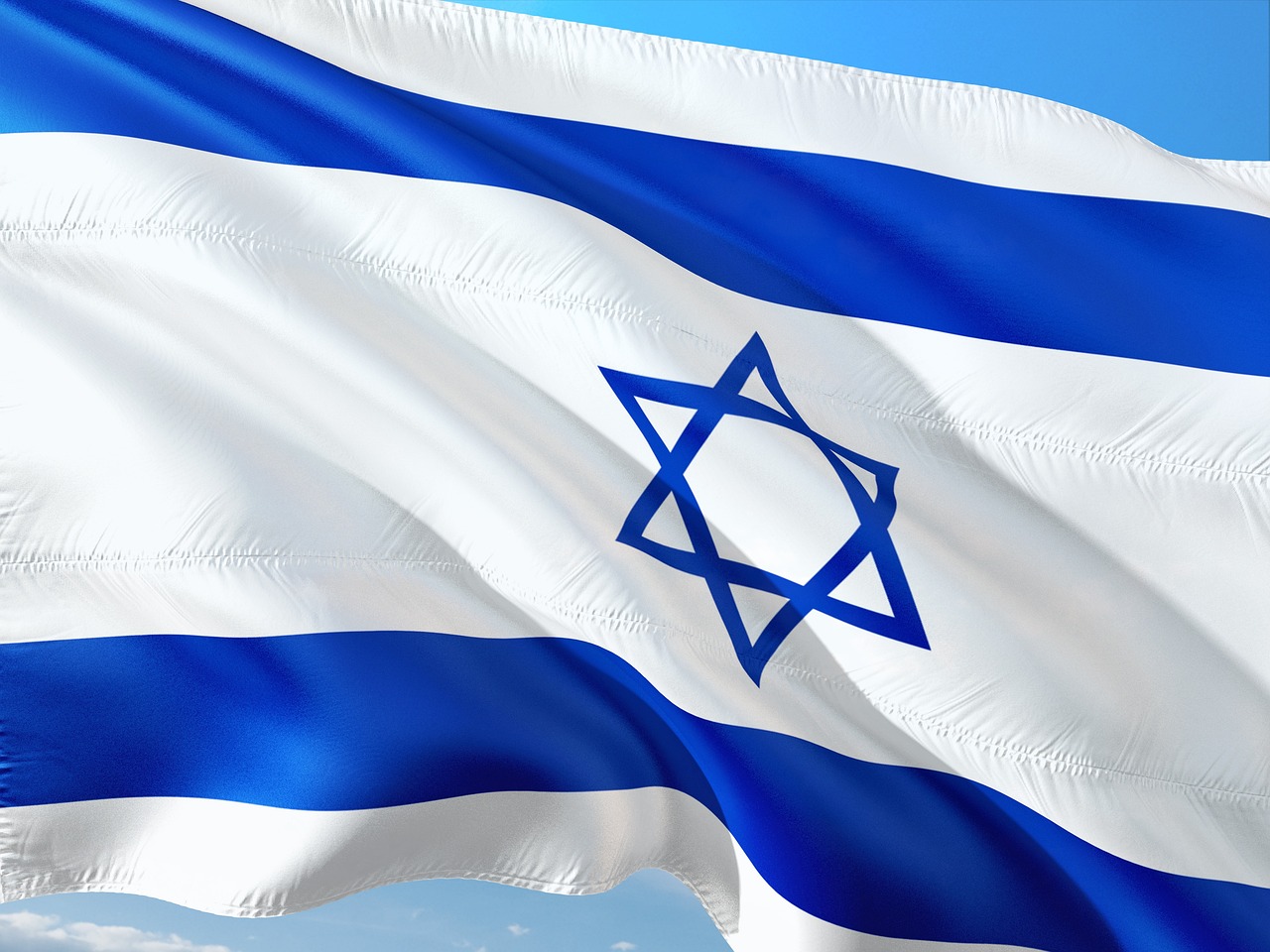
(Image: Hosny Salah, Pixabay.com)
Let’s look at why this conflict, more than any other, seems to be the one that everyone cares about in a world of localized wars and armed conflicts
OVER THE YEARS and more recently during this latest conflict, we have all heard or seen some of the arguments, rhetoric and hyperbole from speakers, pundits, commenters and political leaders regarding the Israeli/ Palestinian conflict.
 Of course, none of this is necessarily new; we know it’s been going on since the establishment of the Israeli state in the 1940s much less the long-ago history of the Persians versus the Crusaders in the 10th Century AD.
Recently we have seen how friendships and relationships around the globe can be torn apart by what’s going on, as protests from both sides have hit the streets around the world.
This worldwide passion can sometimes feel a bit disproportionate given not that many people even live in Israel or Palestine in the first place, and not withstanding the recent horrors, the amount of death and displacement that the conflict has produced remains considerably lower than that of many other Global conflicts including those in other parts of the Middle East.
I don’t say this to minimize anybody’s suffering; obviously every life loss to war or terrorism or oppression is a tragedy, but it is an objective fact that the Israeli/ Palestinian conflict is not and never has been the world’s worst war zone, by the numbers or by intensity, so it seems that interest in it is driven by more than just basic human empathy.
There is new ‘Free Palestine’ graffiti in Vancouver, and Israeli flags flying in Northern Ireland, thousands of people marching in support of Israel in Argentina and thousands more marching in solidarity with Palestine in South Africa.
Ever since the Oct. 7 massacres and subsequent expansion of the war in the Gaza Strip a lot of relatively apolitical people are scrambling to educate themselves in an attempt to understand why this is happening, and there is certainly no shortage of educational Youtube videos and written articles out there providing introductory lessons in Israeli/ Palestinian history.
The reason people care so much about this conflict
It seems that a lot of this stuff tends to fixate on the data point history of modern Israel, which implies that understanding the conflict is mostly a matter of learning a bunch of names and dates of wars and treaties and prime ministers and that sort of thing.
What we should ask is if this is why people are lighting up monuments with the Israeli flag or holding Free Palestine marches. Perhaps this isn’t happening because protesters have deep opinions on the justness of Lord Arthur James Balfor’s declaration in 1917 … which was the public pledge by Britain to establish “a national home for the Jewish people” in Palestine.
No, the reason people care so much about the Israeli Palestinian conflict is because this conflict has become a sort of metaphor for what people perceive to be the fundamental themes of power, that define our contemporary world.
This may seem a simple take on a decidedly intensively complex issue, so please keep in mind that this discussion is primarily talking about the perspectives of those located outside of Israel or Palestine itself.
Obviously, the passions of people whose lives and families are directly affected by the violence of this conflict don’t require any great analysis to understand. The loss or injury of loved ones, friends or countrymen and the damage to homes and communities as well as the ruin of peace itself where the innocent live, needs no clarification or discussion.
Looking at why people around the world who care, who have no real personal connection to the people, land or associated religions attached to this conflict, is the more interesting question to explore today.
One big reason is the American angle. Israel is a strong ally of the United States, and over the course of the last few decades has received a lot of American military and financial support and is generally a cooperative and supportive strategic partner to the United States in the Middle East.
President Biden once said in 1986 when he was a member of the U.S. Senate Committee on Foreign Relations “were there not an Israel … the United States of America would have to invent an Israel … to protect our interest in the region.”
This has come to mean that people’s opinions on Israel have often been heavily influenced by what they think about U.S. foreign policy, and the United States itself more broadly.
If you think that U.S. foreign policy is generally respectable and America is a country that is broadly motivated by the pursuit of global peace, stability and freedom … then Israel is easily defendable as an important assistant in pursuing these goals.
This arc of ideology tends to be the disposition of people center or center right of western politics and are those who are generally differential to American geopolitical leadership.
However, if you think that U.S. foreign policy and the U.S. in general is mostly a force of war exploitation and authoritarianism in the world, then you tend to see Israel as just another odious American-backed regime committing human rights abuses with Washington’s active knowledge and consent and the Palestinians living in Gaza and the West Bank are victims of 21st century colonialization.
The harshest critics of U.S. foreign policy are on the far left
The harshest critics of U.S. foreign policy tend to be found on the further left end of the political spectrum, both in the developing world and in the west. This has been the case since at least the cold war when a certain left-wing argument was popularized positing that American foreign policy consistently favored the rich and powerful over the weak and oppressed.
Since Israel is a rich and powerful nuclear armed nation state, and the Palestinians are poor and stateless … it is not difficult to fit their conflict into this frame and judge America for siding with those who need less help.
A similar but distinct phenomenon is the idea of seeing the Israeli/ Palestinian situation through the lens of anti-imperialism, where relations between countries is fundamentally defined by an exploiter versus exploited dynamic in which one group of people conquer, oppress and subordinate another group of people for their own benefit.
Often these are people who would otherwise have nothing to do with each other. One group simply wants to take something that the other group has, usually resources or land. The decision to conquer in turn is often informed by racism and prejudice. One group often sees the other as inherently inferior to themselves, therefore making conquering and exploiting them no big deal in the eyes of those who believe imperialism to be the primary explanation of how foreign relations operate.
We can cherry pick a lot of situations around the world that easily slide into this definition, but perhaps not when discussing Israel and Palestine.
The 1948 establishment of the state of Israel could be depicted as for European Jews who migrated to the Middle East post second world war, displacing the native Palestinians, taking their land and making them into a second-tier class of person.
A lot of Israelis heavily dispute this characterization of the formation of their country, but most arguments regarding this issue are disputable today. Many people who have been protesting on behalf of Palestinians use words like ‘decolonize’ and ‘settler’ which are terms that evoke the idea that Israel is akin to a European Colony or Empire.
A lot of these people are fond of calling Israel an ‘apartheid state’ as well, which is a reference to the system imposed on the black people of South Africa by its small white minority.
Certainly, if one has been paying attention to the daily and monthly goings on in Gaza over the years … the characterization isn’t completely unwarranted.
The political leadership of the Palestinians for its part has been very keen to present itself to the world as leaders of an anti-colonial resistance. The late Palestinian leader Yasser Arafat in particular put a lot of effort into forging alliances with other world leaders who define themselves as being part of the anti-Imperialist struggle including Nelson Mandela, Fidel Castro and the Communist rulers of Vietnam.
This remains a very popular way of looking at Israel in significant parts of the global south to this day, often in Muslim countries but notably also in certain countries with far-left governments like Venezuela and Bolivia as well as among academic students in Venezuela and Iran and even Hong Kong … who have made anti-imperial or anti-colonial theory central to their worldview.
Let’s talk about the big one: antisemitism
It has been called mankind’s oldest prejudice, and has been the norm in one form or another for hundreds if not thousands of years. In modern times we hear of a specific sociological argument that is now branded as antisemitism, which involves a fundamentally conspiratorial approach, which posits Jews as having secret powers over everything behind the scenes and using this power to be deliberately evil and selfish.
The power of Jewish money in Hollywood and American politics as an example.
The existence of the state of Israel has accordingly been incorporated into a lot of antisemitic conspiracy theories claiming that the Israeli government has made world leaders into puppets and that there’s some sort of giant conspiracy between Jewish politicians and journalists to spread pro-Israeli propaganda to the masses, and if your worldview suggests that Jews are inherently bad sinister people, then you’ll logically support anything that helps weaken or destroy the world’s only majority Jewish country … even though you have no attachment to Palestine or Islam at all.
Conversely, in many Muslim countries right-wing antisemitism is still predominant in conservative religious and nationalistic attitudes, but in Western countries it is becoming increasingly common to argue that antisemitism is becoming more of a left-wing thing.s
The idea is that Christian and conservative arguments in favor of Israel have proven quite persuasive to people on the center right, and far right-wing antisemitism has become an increasingly fringe movement in the West, at the same time.
The rising popularity of anti-Israel arguments on the left have made antisemitism at least more theoretically compatible with the agenda of some of the more strident left-wing factions attempting to distinguish arguments against Israel regarding Palestine.
‘War on Terror’ is a defining theme of U.S. policy
The ‘War on Terror’ is the defining theme of American culture and global foreign policy in the aftermath of the 9/11. Those attacks heightened global awareness regarding Islamic fundamentalism, and, all of a sudden, the west became more unsympathetic and dangerous as the elimination of Islamic fundamentalist terrorists became a huge international priority, this group viewed as the biggest world threat to peace and security.
This fear only increased following other Islamist terrorist attacks in other countries after 9/11, making this seemingly American led ‘global war on terror’ … truly feel global … and this in turn helped make the situation in Israel/ Palestine easier to understand for a lot of people who previously had not paid that much attention to it.
The binary of good vs evil was easier to parse for many, but more on that later.
Palestinians are overwhelmingly Muslim and the Palestinian terrorist groups like Hamas, responsible for attacks against Israelis, are all generally led by Muslim fundamentalists.
This fact has helped make these enemies of Israel equal to as the enemies of other countries under similar threat from other Islamic fundamentalist groups.
Today, the United States stands shoulder-to-shoulder with Israel in the stated defense of ‘our common civilization’ and ‘against common threats’. It’s not difficult to argue that World War ll and the Holocaust is a pivotal event of the last century … the orientation point from which much of our modern world is organized. There is no event more central to that war than the methodical and extraordinarily deliberate genocide of Jewish Europeans — an event so monstrous and horrifying, it invited the world to engage in a moral reckoning that has basically never ended.
The post-war establishment of a safe and independent Jewish homeland and critically the active support and encouragement of this new country by much of the world, was seen as one of the most important ways that mankind as a whole could offer atonement and restitution for the crime of the Holocaust.
To this day, a lot of people see the Holocaust as being relatively recent history with many of the global conditions that justified the creation of a safe Jewish homeland still being very much present in our contemporary world. The Hamas attacks solidify that.
Anti-Arab racism … like Jews … Arab people have long been on the receiving end of their own targeted form of prejudice, though one less elaborate and conspiratorial than antisemitism, but that is quite revealing unto itself in many parts of the world. Arabs have simply been stereotyped as unimpressive, uncivilized, violent and ill-tempered.
At the beginning of the ‘War on Terror’, there began a rising tide of prejudice against the religion of Islam with assertions that Islam was a fundamentally violent and terroristic faith, and that the values Europe stands for — freedom, democracy and human rights — are incompatible with Islam and that Muslim Arab culture was one in which acts of murder against non-Muslims would be inevitable.
People who see the world this way tend to be found in the west, and sympathize with the Israelis because they project their own prejudices onto them, so Israel’s conflict with the Palestinians becomes understood through a kind of crude racist binary in which the Israelis are good and civilized … and the Palestinians are savage and bad.
This sort of binary framing has, of course, been common in all sorts of wars throughout history, but perhaps it has become less of a commonality more recently, making the Israeli/ Palestinian conflict feel unique in that sense.
You could argue that the racist people and the Anti-Imperialist people have a bit of a symbiotic relationship in how they view the conflict. Both of them are often inclined to view the Israelis as politically right, for example, which is a classification many Israelis themselves reject.
On the other side, anti Arab racists tend to be right-wing, but not exclusively. Very atheistic left-wing people can often be extremely anti-Islam and view the Israeli/ Palestinian conflict as a clash of civilization versus barbarism. Technically, that would be more of an Islamophobic frame than a racist one.
The role played by Christianity while drawing this line
Senator Tim Scott (R-SC) — a 2024 GOP Presidential candidate — said: “I stand before you as a strong supporter of the Jewish State not because I was elected to congress, not because I’m a republican, not because I’m a conservative, but because I am an Evangelical Christian.”
Devoted Christians the world over have become some of Israel’s strongest supporters in recent decades and it’s a phenomenon that sometimes confuses people. Christianity, after all, is a religion that explicitly regards Judaism as being an incorrect faith in several hugely important ways, so the alliance isn’t necessarily self-evident from a theological perspective.
Many strict Christians believe that the Bible describes the Jewish people as enjoying a certain divine favor in the ‘eyes of the lord’ as well as having a divine mandate to rule certain lands in the Middle East as described in the Old Testament.
This is obviously a view held by many Orthodox Jews as well. There is a faction of evangelical Christians who get a lot of attention for believing that Jewish control of some portion of the Middle East is necessary to hasten the arrival of Christ’s second coming, and the end times.
This has played a role in motivating the anti-Israel side as well, with secular and especially aggressively anti-religious people arguing that too much of the Israeli/ Palestinian debate is boned up in faith-based appeals to scripture.
In many Western countries, especially the U.S., devote Christians tend to be allied with conservative political parties, which is one of the reasons you can generally take it for granted that the Western right tends to be firmly pro-Israel.
There also exist devote Muslims whose scriptures posit their divine mandate to control certain parts of the Israel/ Palestine region, specifically the city of Jerusalem which Israel currently uses as its capital. Many Muslims view Israeli control of Jerusalem as a serious offense to their faith and sorting out how to divide or share the city remains one of the big sticking points in negotiations over the so-called two-state solution which suggests Israel and Palestine be split into two independent countries.
So what we have going on here, outside of Israel and Gaza, is a very complex set of allegiant systems, from very disparate groups supporting both sides, from every angle of all political spectrums, for a huge variety of reasons. When you see a particular protest about this conflict in some far-flung corner of the world supporting one side or the other, keep in mind that perspective is everything … and hard to nail down.
The long-term future will likely show that the Oct. 7 Hamas massacres and the Israeli response in Gaza will be seen as a substantial inflection point in the almost one hundred (or one thousand) year long history of this conflict, and is happening in 24-hour-news-cycle-real-time, creating a sequence of events that is now testing previous assumptions regarding race, religion, cultures and international politics and perhaps … causing some to one day break down and change.
However it works out, the only guarantee is that the innocent will pay the ultimate price for the politics of the few, and sign waving protests far away from the battle ground won’t stop that.
David Johnson is a Kamloops resident, community volunteer and self described maven of all things Canadian.

 ArmchairMayor.ca
Leave a comment