
CHARBONNEAU – ArriveCan disintegrating into ArriveCan’t
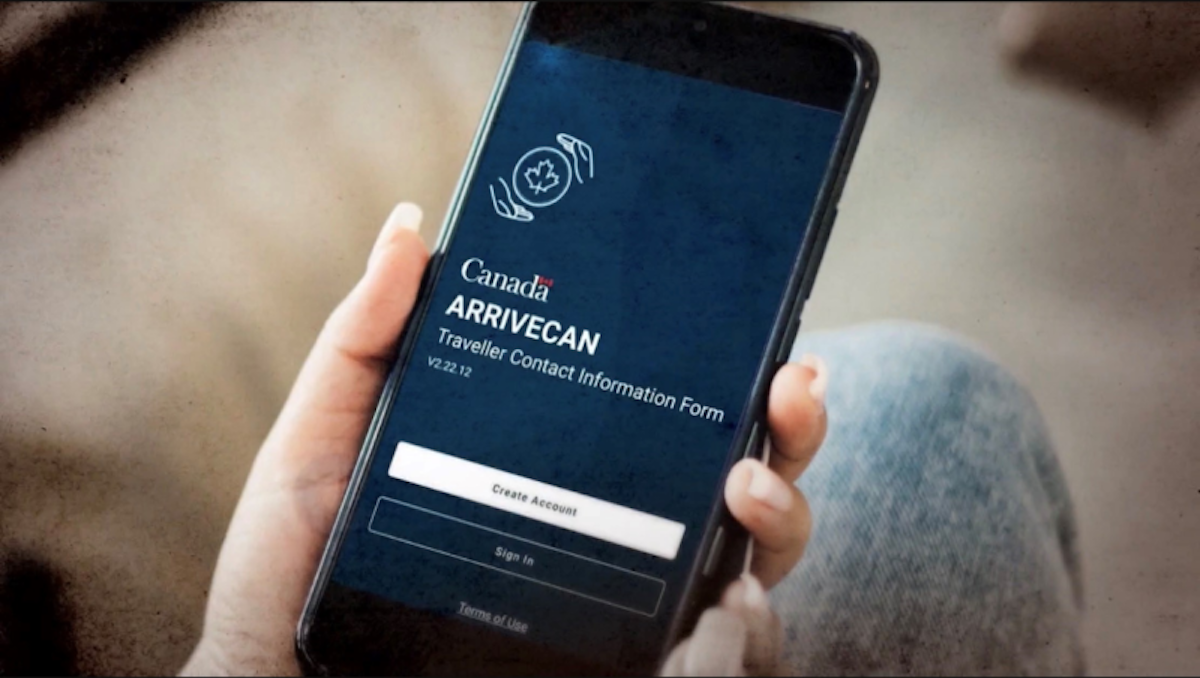
(Image: Govt of Canada)
‘LADIES AND GENTLEMEN, this is your captain. Due to turbulence, ArriveCan has been grounded. We at Canada Border Services Agency apologize for inconvenience.”
ArriveCan, a good idea, has turned into a gong show.
 The app was introduced at the start of the pandemic in 2020 as a way of streamlining arrival to Canada. You could upload travel documents and proof of vaccination in one app. The use of ArriveCan became mandatory in November of 2020.
ArriveCan helped us get back into Canada when COVID struck early in 2020. We were scrambling to get back from Mexico and, because we had the app, entry went smoothly.
Now ArriveCan is proving to be a boondoggle and bureaucratic nightmare.
The initial cost of developing the app was first pegged at $12 million with $5 million to maintain and update it. Now the cost of ArriveCan has exceeded $54 million and parliament wants to know why.
Parliament has been trying to get to the bottom of the mess through the government operations committee. The committee has focused on the Canada Border Services Agency’s (CBSA) use of private IT staffing firms.
Development of ArriveCan didn’t have to end up an incomprehensible labyrinth with layers so deep that no one knows who’s doing what. It’s become a rabbit hole.
Cameron MacDonald was director-general at CBSA when outsourcing of the ArriveCan app was first being considered.
MacDonald’s boss at the time, Minh Doan, told the government committee that Deloitte Canada could have developed and built ArriveCan but they were rejected.
Deloitte would have been a better choice. They have the expertise to build apps. “Our industry-leading application architecture teams can guide your organization through all phases of optimizing your technology systems,” says their website.
MacDonald told the committee that he suggested Deloitte to his boss but that Doan had rejected the idea because: “no one can work with Deloitte.”
So instead of choosing a recognized company to develop ArriveCan, a relatively unknown company called GCStrategies was chosen.
This is where it gets curiouser and curiouser.
Doan told the committee that he didn’t know who chose GCStrategies. Really? The boss didn’t know who was doing the work?
Later, MacDonald told the committee that, in fact, Doan chose GCStrategies.
Now, GCStrategies is my kind of company: a two-person IT staffing firm based in Ottawa with no office and little overhead. They received more than $11 million to work on ArriveCan, more than any other private contractor.
GCStrategies did nothing to develop the app. Instead, they subcontracted out the work and collected a commission of between 15 per cent and 30 per cent of the contract.
I could do that kind of work from the basement of my house, charge less and still earn millions.
Just give me a call for a quote.
David Charbonneau is a retired TRU electronics instructor who hosts a blog at http://www.eyeviewkamloops.wordpress.com.

 ArmchairMayor.ca
Leave a comment