
BEPPLE – Shelter allowance no longer keeping up with costs of housing
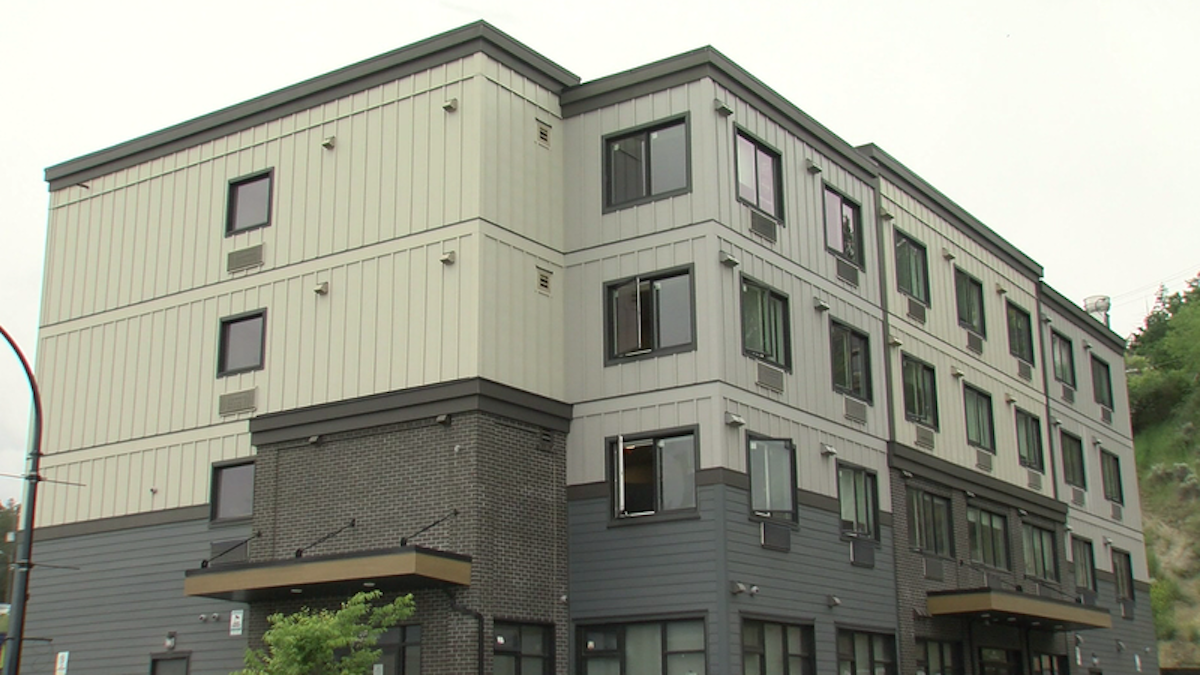
HOMELESSNESS IN KAMLOOPS keeps getting worse. In 2011, a Point in Time (PIT) count found there were 99 who were unhoused in Kamloops. By 2021, 206 individuals were identified as experiencing homelessness.
 Fast forward to now, and the most recent Point in Time count conducted in 2023 found 312 people in Kamloops were unhoused.
Between 2021 and 2023, individuals experiencing homelessness in Kamloops increased 51%. Between 2011 and 2023 it increased by 215%.
Homelessness in Kamloops is going in the wrong direction. Homelessness just keeps getting worse.
It’s cold comfort that across B.C., homelessness is increasing. In Greater Vancouver, their PIT count measured 4,821 homeless, an increase of 32% since 2020. Vernon’s PIT count was 279, an increase of 25% since 2020. Campbell River had an increase of 70%, with 197 counted in 2022. Comox counted 272, an increase of 106%. I reviewed the PIT counts for communities across B.C. and did not see one community where homeless counts have decreased in the last two years.
Cold comfort for the thousands who are unhoused. Difficult for every community too, as homelessness creates street disorder that impacts the wider community.
What has changed from 2011 until now? Why are so many more people in Kamloops struggling, living hard and sleeping rough?
One thing that hasn’t changed is the proportion of people on social assistance. A report published by the Maytree Foundation found that from 2011 to 2022, the number of people in B.C. receiving income assistance declined. The number of people on welfare is going down, but the number of people who are homeless is going up.
In the 2022 Kamloops PIT count, 62 per cent of respondents received income assistance/welfare. There were also 33 per cent on disability assistance. Of respondents, 71 per cent stated the reason they were experiencing homelessness was because they could not afford housing. That was the number one reason given for being homeless.
The amount provided to people on income assistance or disability for rent (called the shelter allowance) in B.C. is currently at $500 per month for a single person. Back in 2011, the shelter allowance was $375 per month.
In 2011, when the Kamloops’ PIT count found 99 people unhoused, the cost for a private market rental for bachelor and one-bedroom apartments was $400 to $600 per month in Kamloops. Someone on social assistance or disability could find housing in the private rental market.
Now, in 2023, that option is unrealistic. Canada Mortgage and Housing Corporation’s latest data shows that the average rent for a bachelor apartment in Kamloops in October 2022 is $1,083, up from $932 in October 2021. The average one bedroom rented for $1,169 in October 2022, compared to $869 in October 2021.
There are solutions, including building more affordable housing. This requires investment from BC Housing, the agency responsible for delivering housing in B.C.. It also requires support of local government. For example, the City of Kamloops recently sold land along Tranquille Road to BC Housing for the creation of affordable housing for seniors and families. Finally, it requires partners in the community, such as CMHA, AskWellness, and A Way Home , to take on the long-term management of the properties.
But one issue remains. Back in 2011, the shelter allowance was sufficient for private market rent. Now it is not. The provincial government’s shelter allowance drives people out of the private market and increases the burden of local governments like the City of Kamloops to support social housing.
As the Province ignores the wide gap between the shelter allowance and the private market rents, local governments are shouldered with finding solutions to homelessness.
City of Kamloops is responding to the homelessness crisis by allocating land for social housing projects. It has also set up a Land Trust to provide land for lower cost, entry level housing. It waves development cost charges for social housing projects.
As well, the Province has mandated that the City of Kamloops build 4,236 housing units in the next five years. This will be housing for all types of people from low-income, mid- and higher income. A larger supply helps keep housing costs lower for everyone.
Building more housing, all types of housing will help.
But there also needs to be a review of shelter allowances for people on social assistance and disability assistance. Otherwise, the City of Kamloops and local taxpayers will have larger and larger demands to create affordable housing to fill the gap between what the Province provides for shelter allowance, and what the private market can provide.
Nancy Bepple is a Kamloops City councillor with a strong interest in community building projects.

 ArmchairMayor.ca
Denny Law has said it all. What we don,t hear is what is being done about the organized criminal gangs in the business of dealing in hard drugs. They are murdering hundreds of thousands of people a year. In places like Singapore there are no drug dealers. Here in our so called civilized society,drug addiction is destroying that concept. We have to get rid of the source, not the result.
LikeLike
They never speak of this. Not only do they not acknowledge organized crime in our streets, but the death and destruction at the hands of drug cartels manufacturing the substances we are providing, or facilitating for our street addicts.
You speak of harm reduction, while increasing harm in countries like Mexico that have sadistic drug gangs murdering hundreds of thousands of people each year. Harm reduction? Proponents think of themselves as angels of mercy, but can’t see the rivers of blood they leave in their wake.
It’s hypocrisy at the highest degree. Or ignorance. Or both. Stop gaslighting the public and let’s get back to logic. Do the crime, do the time. Not carry a loaded rifle in your car, with drugs and cash, and the headline is “suspects were released and no charges are anticipated”.
In Kamloops, I’m Denny Law.
LikeLike
The jails are already full to the brink. And harm reduction strategies are not, repeat not, increasing the amount of addicts. The problem with addiction lays elsewhere.
LikeLike
Does “a second project in the works” refer to the city’s plan for its half of the Tranquille road site that still has the hotel on it?
The social housing for seniors and families you refer to is BC Housing’s plan for its back half of the site.
At last report, the city planned to recoup its $6million+ investment in the front half by clearing it and then selling it to a developer for “market housing.” Now that demolition has stalled due to an apparent TELUS lien and commercial land prices are falling, is this still a viable hope?
It’s starting to look to me like 22-50 social housing units were removed from the community inventory for nothing and further, at a steep loss to taxpayers.
Relocation of the former Village residents meant their 22 vacated spaces plus their 22 new spaces were removed from the local supply: a combined loss of 44 spaces no longer available for people in need of affordable shelter.
Sure, the province should increase welfare payments and the feds could raise old age pensions. But it seems hypocritical for a city government to complain about other levels of government while at the same time removing spaces from the local shelter inventory.
LikeLike
Nancy states that costs will rise for municipal tax payers unless the Province steps in. This is technically true. What is glossed over by her column is that provincial tax revenue is paid by…. taxpayers. There is no free money out there. It’s all coming from our pockets in the end.
Which begs the question, why are you continuing to raid the pockets of taxpayers when you can’t show results? How many more decades of failure before you clue in that none of this is working?
LikeLike
Officials need to extract the concepts embedded in “homelessness” and stop talking about it as a single entity. There are two main factors here – housing/shelter, and drug addiction/mental health. They are not mutually inclusive. One does not necessarily contribute to the other, nor does a remedy in one aspect remedy the other. Studies show outcomes for those provided private housing are no greater than shelter or even remaining on the street. But somehow I doubt supporters of the current regime are interested in data.
Housing someone without a home might very well make them no longer “homeless” as that is conceptually the issue described. But the shrapnel hitting the community from “homelessness” would likely continue even if housing all these street people.
But having a home will not solve street disorder and crime if housed individuals are still addicted to drugs. Neither will deaths decrease as individuals will die in private when they overdose in their social housing. If you gather up a bunch of street people and put them in a housing unit, all you’ve effectively done is gather a captive audience for organized crime and dealers.
Until officials begin to truly make the distinction between housing/shelter and drug abuse/crime, we will continue to fumble down the current path, spending absurd amounts of money and fixing not much of anything.
I would like to see an official speak to the need to lower spending on an issue that is showing no progress. Taxpayers are entitled to ROI. There has been zero ROI. First it was build housing, that will fix it. Then it was to reduce the stigma and decriminalize, that will fix it. Now it’s spend more, that will fix it.
People are stretched thin. Municipalities should not be in the business of spending money to fix homelessness. Rather, they should spend to maintain law, order, and the proper functioning of the community so that those who pay the bills aren’t subject to the wilderness that is now our streets, thanks to the wayward policies of leaders blindly following the same path that has failed everywhere else.
Shelters and treatment. No exceptions. Prison for criminals and sanitariums for those with severe mental health. Living on the street and facilitating substance abuse that rots the human sole from the inside is not compassion.
In Kamloops, I’m Denny Law.
LikeLike
Then why did you close down the old Village Hotel before you had a plan of how to replace the beds? All that did was increase the homeless count, the hotel had 50 rooms but only 22 where being used, so why kick these people to the curb before other housing which is planned or being built has actually been finished for these people to move into?
LikeLike
Housing for the people in the old Village was found before it was shut down. They were assisted in moving to new housing. That site will now have 80+ units of new affordable housing for seniors, families built plus space for a second project in the works.
LikeLike
Apparently you voted in favour of the 25% increase in utility rates for the year 2024. I guess you don’t consider the hardship experienced by seniors and those on fixed income when you make a decision like that, Councillor Bepple.
How many seniors could be one step away from being “unhoused” as a result of your vote?
Are you able to see the wider, full screen view of the problem here?
LikeLike
Max:
Note the cost we as taxpayers will incur as a total after the demolition of the building will be completed sometime next year. A perplexing event was its purchase in the first place. Then be prepared for more property tax and utilities increases. But patting the council’s back is seemingly the only favourable engagement they like…no tricky questions are welcome.
LikeLike
Back in 2011 there were plenty of economic opportunities. Fast forward to 2023 there are still good economic opportunities.
Typically economic opportunities provide people with enough income to at least provide for basic needs.
That said, there sure are cases where certain people face physical and mental challenges to purse economic opportunities. For them help needs to be available for their basic needs. I just wonder if more detailed stats are available to identify which portions of the homelessness count could be challenged to pursue economic opportunities. We also know a large number of homeless people are natives. For them, are the various First Nations councils providing the necessary help?
LikeLike