
HIGHWAY DANGER – Crash highlights concerns about highways, trucking
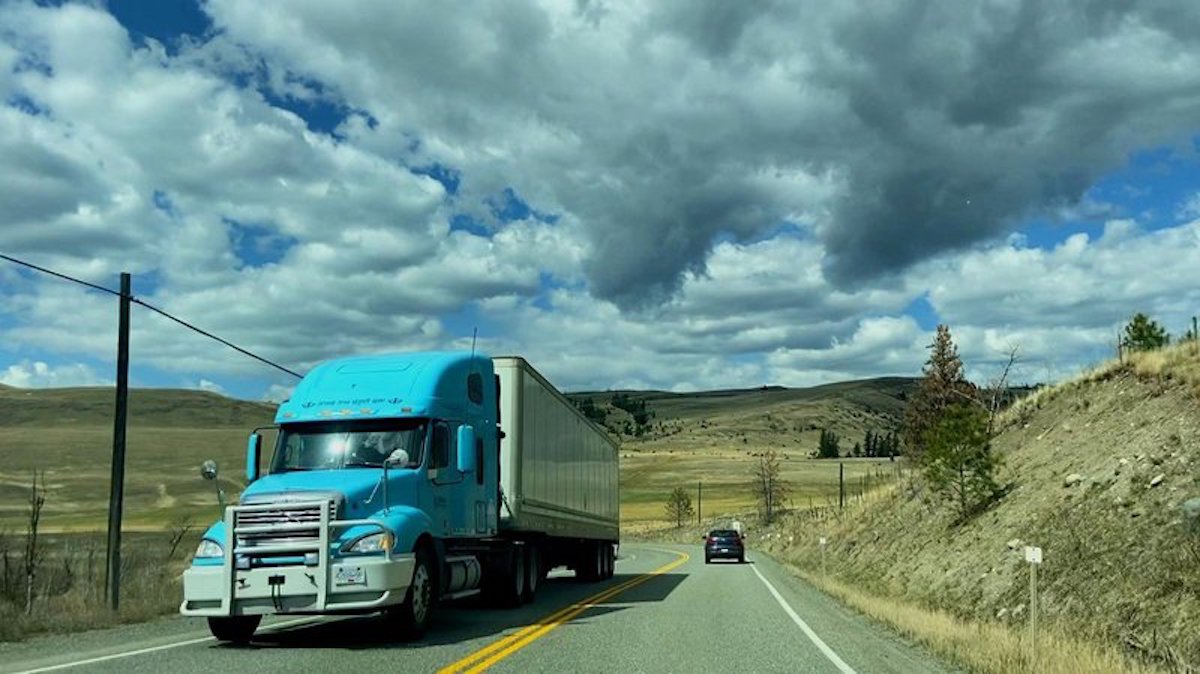
(Image: File photo)
By AMIE McLEAN
Intercultural Coordinator
Thompson Rivers University
DETAILS ARE STILL EMERGING about the recent collision between a bus carrying seniors and a semi-truck in Manitoba. It is now clear that the truck had right of way, however, police have not yet determined cause or potential culpability.
What we know for certain is that this is one of the worst road accidents in recent Canadian history. Sixteen people are dead and nine others remain in hospital. The scale of the incident is shocking, and it will take time for investigators to determine all the factors at play.
The incident has raised questions about the safety of at-grade intersections, where local roads intersect with highways. Manitoba Premier Heather Stefanson has said the province will review the safety of the intersection where the collision occurred. Such reviews are necessary and need to take place across the country.
Too often, there is a problematic blame game after these collisions. It is all too easy to rush to judgement and blame truck drivers. However, the involvement of a semi-truck was clearly a factor in the sheer scale and deadliness of the crash. That fact, as well as comparisons to the 2018 Humboldt Broncos bus crash in Saskatchewan, means questions will likely be raised about trucking industry safety.
Trucker safety
The mass casualties associated with the Humboldt collision and the criminal conviction of the truck driver involved increased public attention to trucking industry safety.
There is general recognition that truck drivers have a heightened responsibility to drive safely because of the increased risk posed by the size and weight of their vehicles. Police, politicians and members of the public have raised concerns that unsafe driving among truckers is getting worse, and my research indicates that many truckers share these concerns.
Responses to this issue have mainly focused on changing truck driver behaviour. This includes adopting basic mandatory truck driver training and compliance initiatives. However, focusing solely on the behaviour of truck drivers obscures the complex ways the organization and regulation of the industry are at odds with public safety.
The majority of long haul truck drivers in Canada work as contractors who are paid by the kilometre. That means most truckers only make money when they are moving. The further and faster they go, the more they make.
Most truckers are not paid for loading and unloading, securing cargo, mechanical inspections and so on. Conducting safety checks, brake adjustments or even slowing down all cost drivers time and money. To anyone interested in public safety, this is ludicrous.
Then there are regulations regarding truckers’ hours of service. Under these rules, once a trucker starts driving, the clock on their allowable driving window begins. According to the National Safety Code, truckers can drive a maximum of 13 hours in a work day. In my research, I have interviewed truck drivers who spoke about the pressure those hours can have. As one driver explained:
I used to drive, and if I felt tired, I pull over and have a nap! And then I could just get up again, and drive. You can’t do that now. […] They think that they are changing the rules to make it safer! You’re not!
All these pressures combine to push drivers to keep going — no matter what. Current regulations and by-the-kilometer pay discourage and penalize drivers from resting when they feel tired, or stopping when road conditions are bad.
Truckers under pressure
Working conditions for long haul truckers are also challenging and create safety issues. When drivers do finally stop, they often attempt to rest in a noisy truck stop parking lot or remote highway pullout. They may or may not have regular access to food, bathrooms or showers. They are away from their families, health-care providers and communities for long stretches of time. Access to healthy food is limited, and there are very real health implications to doing this kind of work.
Small wonder, then, that there is a shortage of truckers. To find drivers, companies increasingly rely on initiatives such as the Temporary Foreign Worker Program. These workers are especially vulnerable to exploitation and unsafe work. The increasing reliance on these programs is also factoring into racism in the industry.
When we think about semi truck-involved collisions, we rarely think about the impacts of road collisions on truck drivers themselves. This is not to diminish the unimaginable loss, pain and suffering of the victims of any truck-involved collision. But if we only think of truck drivers as potential perpetrators of collisions, then we can’t recognize the harm many truckers experience or the links to public safety.
Due to the sheer number of hours and long distances they travel, truck drivers are at higher risk of being in, and witnessing, a road collision. Many of the truckers I’ve spoken to as part of my research recounted harrowing stories of witnessing road collisions.
Many had experiences of saving crash victims’ lives, providing end-of-life care and dealing with human remains at collision sites. Often this work was voluntary. Other times, police and first responders requested their help.
What happens after such incidents? Often, truckers keep driving. It may be hours before they can shower or take a break. They often have little or no access to mental health supports. Their ability to rest and recover depends on their employer, the individual job and their relationships with dispatchers.
Nothing about this is safe for anyone.
It is easy to dehumanize truckers and assume they are at fault in any collision. Among the professional truck drivers I have known, there is no greater fear than being at fault in a fatal collision.
Canada’s long-haul truckers are facing dangerous working conditions. Governments need to take meaningful action to improve the safety of Canada’s highways and regulation of the trucking industry.
Amie McLean is Intercultural Coordinator, Thompson Rivers University; Project Manager, Justice, Equity, and Inclusion, Work-Integrated Learning (on leave), Simon Fraser University. This article is republished from The Conversation under a Creative Commons license. Read the original article.

 ArmchairMayor.ca
100% trucker concerns.
The bus driver has some concerns as well.
The bus was driving SOUTH. At the intersection with the 4 lane highway there is a STOP sign for the SOUTH bound traffic for the first 2 lanes that are the WEST bound highway.
Then there is a space to stop or yield before the YIELD sign for the EAST bound highway. At this location the bus driver would be looking through the various glass surfaces and past various window frames and door frames. The driver may even be able to remotely open the right front loading door for better visibility.
Having a YIELD sign in stead of another STOP sign surprises me.
The bus driver may also be a senior with the “required jabs and boosters’ along with the hidden VAERS ailments and unless these possibilities are eliminated or investigated BUT not IGNORED, we won’t know that the driver collapsed at the steering wheel or froze and could not move their foot to the brake.
LikeLike