
KARPUK — ‘I caught one! I caught one!’
COLUMN — There were children ages nine to 11 sprawled over the frozen surface of the lake, peering into dark holes drilled into the ice.
They caught glimpses of silver fish gliding just under the ice as they tried to entice them onto hooks baited with corn and worms.
 Their concentration was absolute and determination fierce.
“I caught one! I caught one!,” cried one enthusiastic student.
It was his first fish.
The Ministry of Environment biologist participating in the Kay Bingham elementary class trip to Edith Lake took a look at the small Brook Trout and ruled it was just big enough to keep.
For the next few hours, the boy’s classmates continually visited his spot on the ice to glimpse his catch, hoping to get their own fish, too.
Earlier in the day, these same students spilled out of their Grade 4/5 classroom in an eager wave and loaded into waiting parent vehicles for the drive to the lake.
The day-long ice-fishing trip in January, organized as part of their science studies, was further enhanced with expertise from three B.C. Freshwater Fish Society biologists, along with the Ministry biologist.
During the outing, students learned how to identify fish, what species were in the lake, why invasive species are harmful and about the ecology of the lake.
The experts told them about the work done by fish hatcheries and how lakes are stocked. In return, they were peppered with questions from students.
What happens if a lake is invaded by an introduced species and how can it be fixed?
Which fish are better to eat?
What do fish eat?
Do they sleep?
Teacher Scott Johnson had spent the previous weeks teaching the class about fish biology and the ecology of rivers and lakes.
Students had also spent a day earlier in the fall at the Big Little Science Centre, where they studied salmon, solved problems about water chemistry, created clay salmon and calculated the number of eggs a female would lay.
A tank in their own classroom allowed the students to watch salmon eggs get fertilized and hatch. They had also been to the Adam’s River to watch the salmon struggle to return to their home waters, reproduce and die.
Their learning has been happening inside and outside the classroom — from their teacher, community members, scientists, and artists.
They’ve used smart boards to watch videos and look at diagrams; clay and paint to demonstrate different types and sexes of salmon; and fishing rods, augers and bait to see fish up close.
They’ve spent hours on a bus to watch fish spawn and hours on the frozen surface of a lake to watch fish nibble on bait.
Through it all, they’ve gained applied knowledge in science, math, social studies and art.
This spring, the class will release their salmon fry into a local stream.
They will learn about the hazards fish face as they migrate out to sea.
They will calculate the odds of one of their fish making the return trip.
They’ll know why the vegetation on the stream bank is important, how chemicals dumped down sinks and drains affect the water and why conservation matters. They will study the importance of the salmon to First Nations and how salmon and other food sources determine the cycle of living.
Students will end the year with a deep understanding of the ecology of fish and an appreciation of the importance of natural systems.
Additionally, each child will have gained personal, hands-on experience that’s been explored and questioned.
And, best of all, one of them caught their first fish.
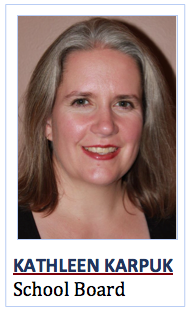
Kathleen Karpuk is a trustee on the Kamloops-Thompson school board.

 ArmchairMayor.ca
Leave a comment