
ISSUES — Footloose in Taber, and Kamloops
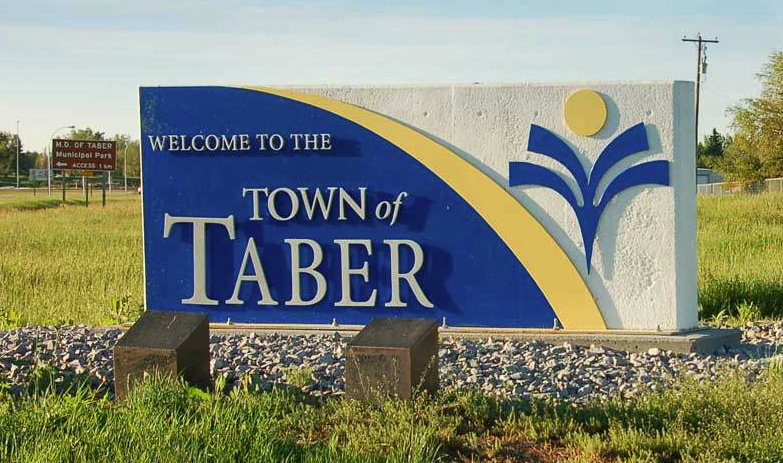
Welcome to Taber.
ISSUES — It’s often said — too often, in fact — that governments can’t legislate behaviour.
Taber, the Corn Capital of Canada, is trying. (As we shall see, Taber and Kamloops aren’t far apart, philosophically speaking.) The Alberta town of 8,000 has adopted a Community Standards Bylaw that has become rich fodder for media, which have taken to comparing it to Bomont, the town featured in the 1984 movie “Footloose” starring Kevin Bacon.
As an aside, Bomont was based on the real Oklahoma town of Elmore City, which really did ban dancing, for more than 100 years. The first high school prom wasn’t held there until 1980.
Taber doesn’t ban dancing but it has legislated itself the authority to enforce against spitting, swearing and public gatherings of more than three people, and put a curfew on young people. Media love this sort of stuff — coverage not so subtly paints Taber’s bylaw as plain dumb.
Never mind that most of it has been on the books for years, and isn’t at all uncommon in cities across the country and south of the border, too. The ridicule in social and traditional media prompted the Town of Taber to issue a media release Tuesday defending itself. The new bylaw, it said, is “intended to consolidate existing municipal regulations and allow enforcement under a municipal bylaw rather than the Criminal Code.”
The press release continued, “The Town of Taber has taken proactive steps to address community issues impacting quality of life in our community, similar to other cities in the Province of Alberta; for example Calgary, Edmonton and Lacombe.” The bylaw will be reviewed in six months.

Footloose, Paramount Pictures movie.
Town of Taber Mayor Henk De Vlieger expressed surprise at the media attention, saying “it was not our intention to stir up a media storm. Many other Alberta municipalities have very similar bylaws and we expect the same common sense with enforcement to prevail here.”
Taber Municipal Police Commission Chair Ken Holst said, “The Taber police have sworn an oath to uphold the rights and freedoms of all Canadians as protected by the Charter, and will continue to do so while still enforcing the laws of the land.”
Friday, CBC Radio and CBC TV were still wringing everything they could from the story, complete with audio and video clips from Footloose. Taber Police Chief Alf Rudd went on The Current, CBC Radio’s morning current events program, to offer assurances that the new bylaw wasn’t going to result in police cracking down on family picnics or other legitimate and peaceful gatherings. It was a tool for use when extreme situations warranted.
His explanation was reasoned and rational but, not to be robbed of a good story, CBC immediately followed that interview with one with a legal expert questioning the constitutionality of the bylaw. The story signed off with a cute remark about it still being legal to dance in Taber.
Meanwhile, CTV, the Calgary Herald and the Globe and Mail went big on the Kevin Bacon angle, reporting that the actor was being touted as a hero and saviour. Indeed, a YouTube video proposed a Kickstarter campaign to raise $100,000 to entice Bacon to a dance party just outside Taber.
The National Post story began with a reporter asking Rudd, “If I were to swear right now, I wouldn’t get a fine?” Then the reporter says “shit” and “damn,” writing that he received no fine. Clever.
To be sure, enforcing a law against swearing might prove problematic in court, as there are nuances to the definition of “swear” and to the manner in which swearing is done. In a time when “f” and “b” words are used as common nouns and adjectives by so many in private conversation, trying to control it via bylaw is questionable.
However, put in context — as opposed to taken out of context, which most of the coverage has been — the anti-swearing clause becomes pretty tame. “No person shall yell, scream, or swear in any public place.” So now we aren’t allowed to yell? Well, no, it’s just that in Taber you aren’t supposed to yell or make other loud noises, such as using engine retarders, that create a disturbance.
The Town of Taber has no intention of wasting the valuable time of its police hanging out in coffee shops and beer halls trying to overhear course language. The bylaw is an honest attempt to add clout to the police department’s ability to control behaviour that threatens the public peace.
Take the public gathering clause, for example. Is there anything wrong, or even uncommon, with police having the legislated authority to break up a gathering — such as, say, a parking-lot crowd of drunken, swearing rowdies — preferably before they start breaking car windows?
Governments have a tendency to over-legislate and it’s easy to paint extreme scenarios such as a wedding being busted up by baton-wielding squads of Taber’s finest but laws are seldom pure, and this one isn’t intended to be enforced to the letter any more than other bylaws. They require reasonable application and interpretation, and courts are there to ensure it.
Spitting, by the way, is a filthy habit that is also a health hazard. A little enforcement in that direction wouldn’t hurt. It’s our recollection that Kamloops, if it doesn’t now, once had a law against spitting on the sidewalk. Prince Albert still has one. And local courts quite often see defendants who are accused of spitting on other people.
In case an anti-spitting bylaw offends your sense of civil liberties, be aware that in Taber it’s part of a section that also prohibits urinating or defecating in public other than in a washroom. Such restrictions are common and, all things considered, discouraging the exercise of bodily functions in streets and parks isn’t such a bad idea.
And, while curfews are out of fashion now, they were once pretty normal fare. Why is it necessary for anyone under the age of 16 (which is the age affected by the Taber curfew) to be out on the street by themselves between 11 p.m. and 6 a.m. anyway? It’s worth mentioning, since nobody else is doing it, that the Taber bylaw grants exceptions to those youngsters if they’re with an adult, involved in an emergency, or on the way home, and so on.
What dire consequences face a 15-year-old, or a 12-year-old found on the street in the middle of the night in Taber? They’re told to go home. Or given a ride there in a police car.
Town of Taber Bylaw 4-2015 describes itself as a bylaw “to regulate and prohibit certain activities in order to prevent and compel the abatement of noise, nuisances, graffiti, and public disturbances and to provide for a curfew for minors.”
Ignored in all the media hype is the bylaw’s reference to graffiti and panhandling. Kamloops and most other towns and cities have legislated against graffiti for years, and Kamloops council was talking about expanding its anti-panhandling law only last week in response to pressure from the business community.
Taber’s Community Standards Bylaw is little more than another nuisance abatement bylaw. Like the one Kamloops started working on 10 months ago. Which is just like the one Nanaimo has used for more than a decade.
Remember that? A North Shore neighbourhood begged Kamloops council to do something about the noise, fighting and drug dealing on its streets. Kamloops has had bylaws aimed at controlling substance abuse and shutting down crack houses for quite some time, but there was no really effective way of dealing with noisy parties and other disturbances.
The Nanaimo template gives City council the power to force payment of costs resulting from anti-social behavior. For example, if a complaint is received about a loud party, the homeowner or renter can be billed for the costs of police going to check it out.
It defines a nuisance as “an activity which substantially and unreasonably interferes with a person’s use and enjoyment of a public area or of land he or she occupies or which causes injury to the health, comfort or convenience of an occupier of land and, if it does so, without limiting the generality of the foregoing, may include, an activity such as a noisy party, a group of people making noise, loud music, car racing, revving engines, yelling, shouting, screaming, fighting, littering and trespassing.”
Sounds a lot like Taber. And, like Taber’s bylaw, the Nanaimo bylaw is considered at risk if it were to be challenged in court. That’s why Kamloops has been cautious, but it’s expected staff will bring forward a proposal very shortly that will include a request for an additional RCMP officer to enforce it.
No doubt, the national and social media will have a good time with that one. But, they’ll probably point out it’s still legal to dance in Kamloops.

 ArmchairMayor.ca
Leave a comment