
GINTA — An apple a day… as long as you choose the right kind
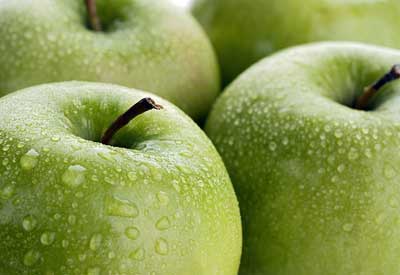
Arctic apples. (prwatch.org)
Daniela Ginta writes for The Armchair Mayor News on Fridays.
COLUMN — I could never make peace with the grapple. I remember seeing the four perfect apples in a plastic container roundly shaped to contain them and, having been a dedicated apple lover all my life, I considered the very package and its contents an insult to all apples out there.
 It is still around, the grapple. Still packaged in sets of four, and if you are curious to know how a grapple comes to be… Well, according to its inventor, you select certain types of apples, select the right size and sweetness and drop them into a bath of grape flavour. In my world, a chemical is a chemical is a chemical.
If the apple is conventionally grown, it has already seen and felt its fair share of chemical spray by the time it reaches the consumer, or the grapple makers.
So there you have it. I thought we could not insult the apple further. It turns out that since we have the insult, we can now add the injury. Cue in the genetically modified apple, or the Arctic apple.
Recently approved by the USDA, the apple that takes longer to brown (think days) will hit the markets by 2016 or so. Maybe later, depending on how willing the trees are and how the crops develop.
Now, a little bit of gene play never hurt anyone, some would say. After all, if we didn’t do that with the apples, we’d be on the tart side with them crabapples. They really are sour. Yet grafting and selection of good, sweet, crunchy, or whatever quality one values in apples, have been practised for many years with great results.
And yes, those apples would get brown. If brown spots are offensive, prevent them by squeezing some lemon juice on a cut apple, or by sprinkling some cinnamon, why not. But an apple will get brown spots after being cut or bitten into, because that is what an apple does.
We have canned salmon with no skin or bones, though we know by now that the skin contains vitamin D and the bones are soft enough to be eaten (just crush them with a fork) and they contain calcium. They are meant to go as a package.
Same with the apple. It will get brown here and there. Is there no way around it? Commit to a whole apple, or share it, or do as suggested above to prevent browning (a first world problem indeed.)
If you think you’ll be able to tell because you’ll see some clue on the bag, good luck. Genetically modified apples, just like some of the potatoes, beets, squash, tomatoes and corn that we find in stores, are not labeled as such. You can stick to organically grown ones, ideally locally grown or at least within the provincial boundaries.
The uneasiness about genetically modified foods does not come from some gastronomical whim. People squirm and for a reason: if they are safe, why have things in the open? GM foods have yet to be long-term tested before they can be declared unequivocally safe. And then again, why would we modify so many – and sometimes for reasons that seems trivial at least at first sight – instead of trying more traditional methods that do not involve playing God, but rather some collaboration instead?
To feed the poor, for one, some would argue. That might be true to a certain extent (think the golden rice, intended to prevent blindness in developing countries that normally consume the rice without any vitamin A precursor) but as it stands right now, the food waste that is happening every day in the western world (unforgivable by all standards) could be rethought in a way that would allow for better distribution.
Also, Arctic apple or not, if the price of apples is too high for a family living under the poverty levels here in our own province, what’s the non-browning quality of the apple going to do if the apple stays put? Sour grapes only become sourer, unless we look at food with new and old eyes alike.
GM crops are paired with powerful custom pesticides which in time push weeds to a level of resistance that rivals all toddlers of the world put together. That has already been observed; they are called superweeds, except that there is nothing super about them from our perspective.
If we think profit before the greater good, people and the environment, we are bound to see some ugly bits of hindsight, way uglier than any brown spots on apples or potatoes or tomatoes.
It is high time that we either make it fair by labeling GM foods as such, so that consumers have a choice, or we rethink the food strategy. Public education did not receive a lot of funds, according to the recently announced budget for this year, but the information is out there. With some critical thinking in place, some verified information sources and a good debate here and there, I bet we can see better days food-wise. Emphasis on wise.
Daniela Ginta is a mother, scientist, writer and blogger. She can be reached at daniela.ginta@gmail.com, or through her blog at http://www.thinkofclouds.com.

 ArmchairMayor.ca
Good article. GM foods were never about feeding the poor of this world, they are about profit, pure and simple.
LikeLike