
Letter — Public has a right to comment on changes to Ajax plan
LETTER — Re: Response to Scott Bailey saying “No” to a new public comment period on the Ajax mine project.
The refusal by Scott Bailey of the B.C. EAO to hold a public comment period on the changes to the Ajax mine proposal needs to be challenged by the people of Kamloops.
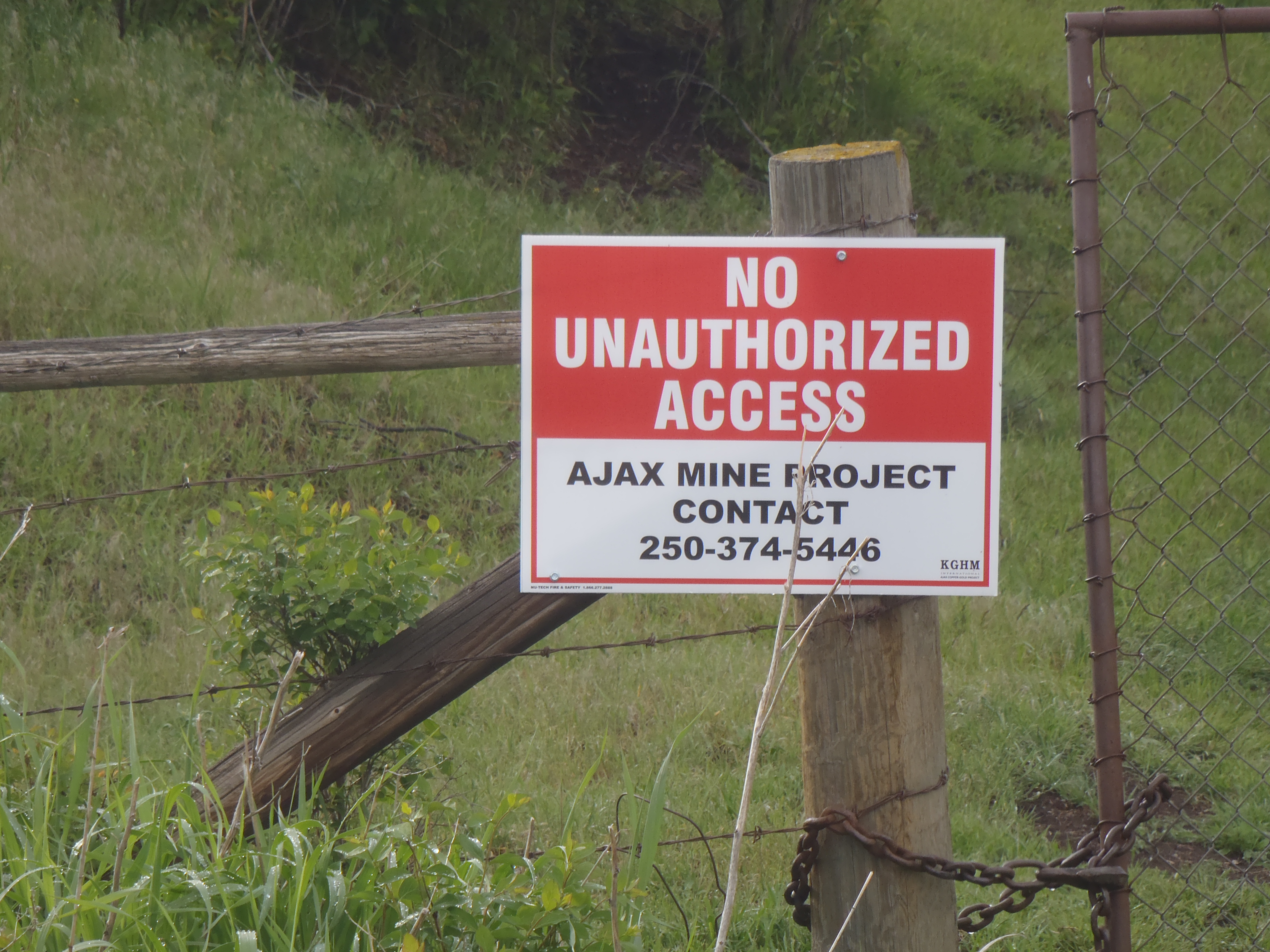 In his Aug. 13 letter to the City, Bailey states: “Based on my current understanding, I expect that the changes to the AIR/EIS will focus on updating the project description and study area boundaries and not the types of information to be collected or studied, which are the focus of public comment periods in the Pre-Application Stage.”
What Scott Bailey is saying is that a project proponent can make major changes to a project proposal and the public has no right to review and comment on those changes.
What are some of these changes that Mr. Bailey believes the public has no right on which to comment? Beginning about three kilometers upstream from where Peterson Creek meanders through the Knutsford/Kamloops RV Park, or about 10 kilometers where Peterson Creek enters downtown Kamloops, near the Glenfair senior citizens’ housing complex, KGHM Ajax proposes to construct and operate the following facilities:
- Seepage water retention facilities;
- Waste rock, ore stockpiles and reclamation stockpiles on both flanks of Peterson Creek, the closest such stockpile being only about 104 metres from the creek on an average slope of about 16%;
- A 600 hectare tailings sludge pond that will need to hold back 500 million tonnes of powdered rock in perpetuity (it is noted that these facilities are located closer to human habitation than is the failed Mount Polley tailings facility).
Mr. Bailey is essentially saying that the public has no right to be thoroughly informed about the nature, location and size of these facilities, and the consequences if they fail. Further, he is saying that the public has no right to ask questions or provide comments on this proposal until the proponent has filed an Application that may or may not contain all the information the public needs to understand the downstream risks posed by these facilities.
It is speculated that the Ajax Application will be in the order of 20,000 pages. The public comment period for the Application will be 75 days. For one person to read the entire Application, 266 pages will have to be covered each day. This is what constitutes public involvement in environmental assessment in this province.
Implicit in Mr. Bailey’s response is that the information requirements that were established in June 2013 for the Ajax project are adequate. The Kamloops Area Preservation Association recently sent the BC EAO a letter documenting many of the deficiencies in the Ajax assessment process, including Mr. Bailey’s refusal to require the proponent to release assay data for the project so that scientists can understand the potential levels of toxic elements in the ore and waste rock.
Those who are “sitting on the fence” about the Ajax project, waiting for the science to be done before they make up their minds, should be prepared to continue sitting for a long time because, in many instances, the information necessary for good science is not being collected.
One example illustrates this point. The BC Government Mine Waste Rock Pile Research Committee Interim Guidelines, which the Proponent has stated it will reference in its assessment work, states that “It is generally good practise to establish a climatological station at the mine site.”
Based on information provided by KGHM Ajax, there is not a single weather station on the Ajax mine site. The only station KGHM Ajax is operating to collect vital meteorological data is in the lee of Sugarloaf Hill, about five kilometres away from the proposed open pit and mine waste sites, which is similar to having a weather station at Rose Hill to profile the meteorological conditions at the mine site.
Oddly, KGHM Ajax’s air quality consultant, Stantec, states in the dispersion modelling plan for the Ajax mine (page 4-10) that the Sugarloaf Hill station isn’t even one of the four surface stations that will be used for the air quality modelling. Even stranger, all of the four stations Stantec proposes to use for surface weather data (Kamloops Airport, Brocklehurst, Afton, and Walloper) are even farther from the mine site.
So yes, Mr. Bailey, please come to Kamloops and hold a public meeting on the Ajax assessment process, as you have offered. Many Kamloops residents have a lot of questions to ask you about the many flaws in the Ajax assessment.
PAULA PICK
On behalf of Kamloops Area Preservation Association (KAPA)

 ArmchairMayor.ca
Leave a comment