
Editorial — The things we do to dead people
SUNDAY MORNING EDITORIAL — There’s a law in this country that requires we treat the bodies of dead people with dignity.
But then there are those traveling exhibitions of dead human bodies often posed to look as if they’re participating in a sport, playing a musical instrument, or even having sex. Without question, such exhibits offer some fascinating insights — an inside look if you will — into the human body.
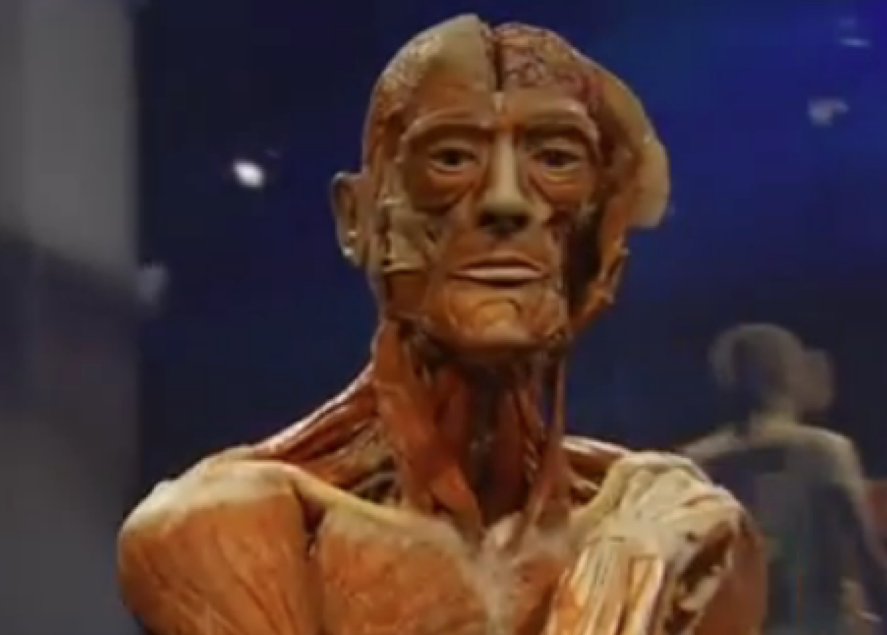
Screen grab, Body Worlds video.
Sometimes the bodies in these exhibits are whole, sometimes dissected, peeled open or sliced in half.
The process that allows is this called plastination, which involves replacing bodily fluids with a type of plastic material that hardens, allowing the cadavers to be placed in lifelike poses and preserved indefinitely.
The inventor of the process is Dr. Gunther von Hagens, who says he wants to “teach people about the human body and show them its full potential.”
But what about that issue of dignity for those who have passed? Exhibitions declare the corpses are those of men and women who gave permission for them to be used in such fashion.
Now, though, there are accusations that a “Bodies Revealed” display in Ontario is using the bodies of executed Chinese prisoners. A group called Choose Humanity says if the people whose bodies are used for the exhibit didn’t give permission, the display is illegal. (Vancouver Sun, Sept. 6, 2014.)
Premier Exhibitions, the outfit that puts on the display, says on its website it can’t confirm the bodies aren’t those of Chinese prisoners.
This legal debate seems rather academic. Ultimately it’s rooted in the issue of treating dead people with dignity. If you’ve ever attended one of these exhibits, you’ll know there’s nothing dignified about what’s done to those bodies.

 ArmchairMayor.ca
Leave a comment