
Spark — Make hay while the sun shines, so cliche but so true
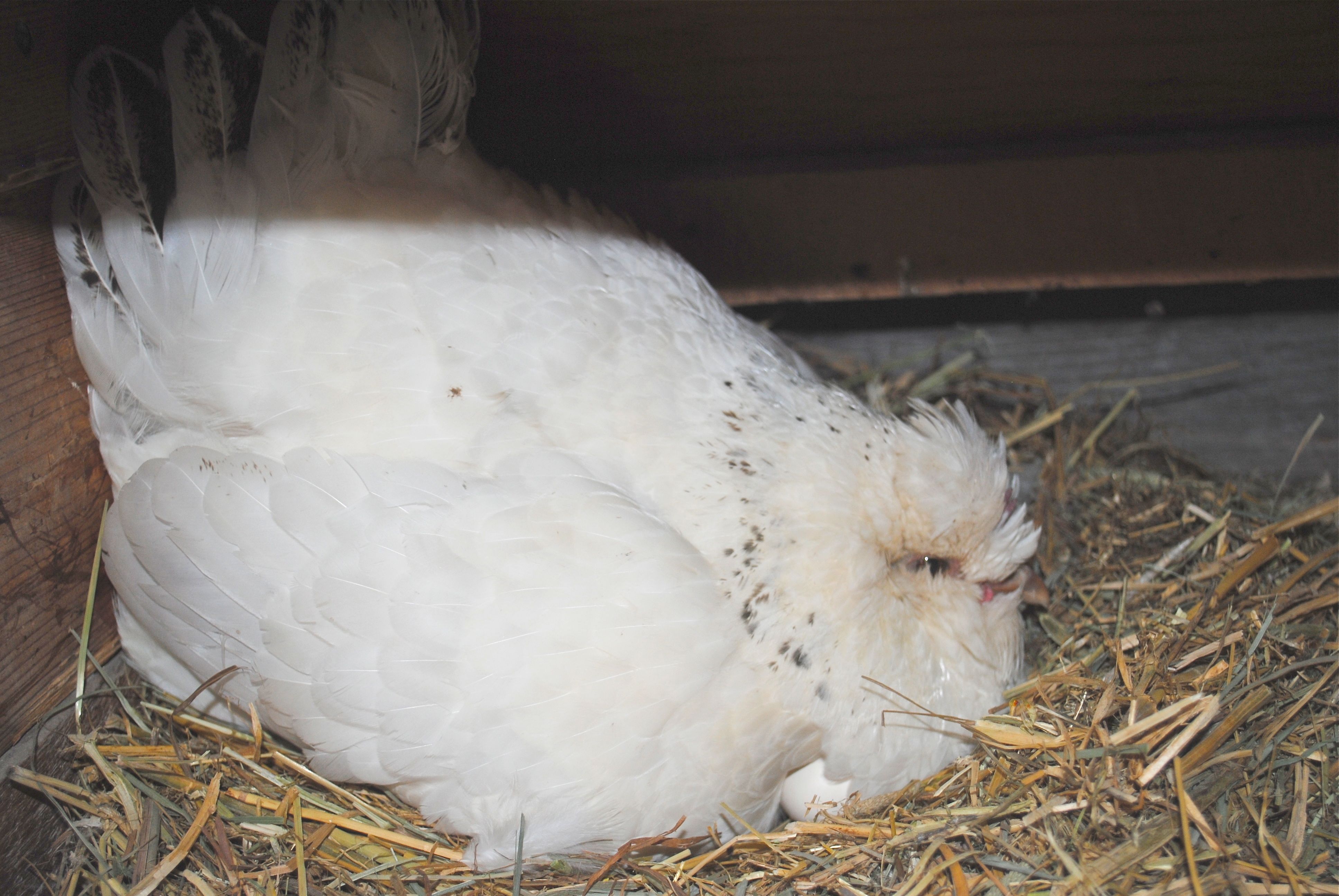
A broody hen sits on top of a fertilized egg with the hope that a fluffy chick will hatch
after 21 days. We have learned, however, not to count our chickens before they’re hatched.
Dan and Jody Spark take turns writing about The Rural Life each week for The Armchair Mayor News.
COLUMN — Make hay while the sun shines.
The axiom is just one of many agriculture-based truths that have found their way into our vernacular decades and, sometimes, hundreds of years ago. Indeed, many of the cliches we know today were born on the farm.
 As a former copy editor such cliches were anathema in newspaper articles, but now with several years of living the rural life, there is a newfound appreciation for the many idioms that have their roots in farming. It has been fun to fully realize the nuggets of truth in all of our culture’s go-to sayings.
Take, for instance, the ones having to do with chickens, which include coming home to roost, all cooped up, taking them under her wing, pecking order, don’t put all your eggs in one basket and don’t count your chickens before they’re hatched.
Pecking order is an interesting expression when you first witness how it came to be. It’s easy to tell, for instance, which chickens are at the bottom of the pecking order by the bald spots on the back of their head and neck. Chickens are notorious bullies and if a chicken doesn’t quite fit in, it stands on the bottom rung of the roost and gets pecked by those on the rungs above and behind it. The pecking order seems sad and a little unfair, but like many things having to do with the animal kingdom, nature isn’t always pretty.
One cliche, don’t count your chickens before they’re hatched, also hits close to home. With hopes of a handful of spring chickens — another cliche — our family has often counted the number of fertilized eggs settled nicely under a broody hen, fully believing that every one of them would produce a fluffy new chick. The truth is, that hardly happens and the number of chicks that hatch compared to the number of those nestled under the hen can vary greatly. There have been many disappointments in that regard.
Of course, chickens aren’t the only farm animals that are the source of our modern-day idioms. Indeed, there are many, including till the cows come home, put out to pasture, milking it, black sheep, taking the bull by the horns and, my favourite, you can lead a horse to water but you can’t make it drink.
That last one can easily be realized when considering just how stubborn a horse can be. In this arid climate, there have been many times my daughter has led our halflinger to the water tub on a scorching hot day only to have him stand there looking at the water as if a skunk had drowned in it. You can make a well-trained horse do a lot of things but if it doesn’t want to drink a drop of water, as the cliche goes, you can’t make him drink.
Some agriculture-based idioms, of course, have nothing to do with animals but have their roots in the ground (pun intended). My favourites are separating the wheat from the chaff, reaping what you sow, off to greener pastures and seed money. They all ring true but the one I am most familiar with is separating wheat from chaff.
I love wheat. I love wheat so much that I grow it and cut and thresh it by hand. And when it comes to winnowing the wheat, that’s when the wheat gets separated from the chaff. It’s usually done on a windy day when the threshed wheat kernels are dropped from a bucket to a garbage can and the wind carries away the chaff, leaving the kernels to fall free from its outer skin to the can below. It’s a process that draws a clear picture of separating something valuable from something worth burning.
There are many, many other expressions that draw a clear picture — betting the farm, fertile ground, fox in the hen house, stubborn as a mule, can’t hit a barn door, farm out — but the one I most believe in is making hay while the sun shines.
We know the expression as taking advantage of an opportunity while you can, but when you have livestock to feed, it’s easy to see how the saying came to be. Making hay needs several days of heat and sun, with no rain, to do it right. It’s so important that every hay farmer no doubt checks the weather forecast before cutting — and when sun is expected, tractors from all around seem to take to the field at exactly the same time.
All these idioms bridge modern times with our agricultural past and it is satisfying to have some of our favourite expressions be brought into better focus.
Having said that, there is one expression I hope to remain ignorant of, however: selling the farm.
Dan and Jody Spark are in their fourth year of living their back-to-the-land dream on their small acreage at McLure and they are having the time of their life.

 ArmchairMayor.ca
Leave a comment