
Disaster animal response volunteers begin training
By MICHELE YOUNG
A simple piece of plastic tube attached to an animal-pen gate or even a household mailbox could save those four-legged family members.
Inside that tube, keep updated information on the number of animals in the pen or house, along with any idiosyncrasies they have that might make it easier for rescuers to get them out if there’s an emergency. Oh, and mark ICE on it (In Case of Emergency) so they know it’s for them.
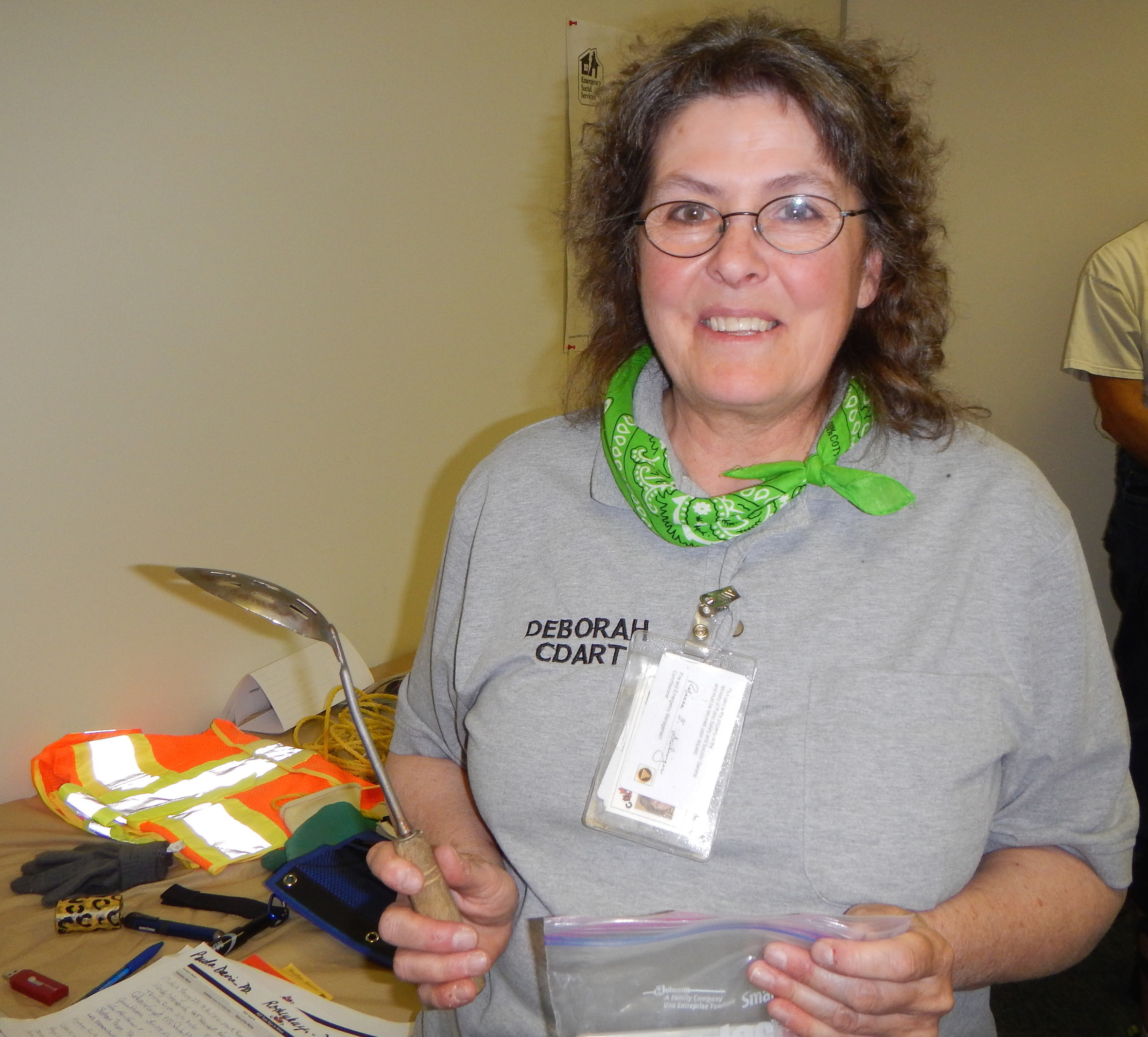
Deborah Silk with a few of the things animal rescuers carry with them.
For example, Silver the horse doesn’t like people wearing baseball caps, but responds like one of Pavlov’s dogs to the sound of oats being shaken in a can.
That’s the kind of information that Deborah Silk with the Canadian Disaster Animal Response Team (CDART) would like to see everyone make available.
For the people who go out to evacuate animals when wildfires are threatening rural properties or flood waters are rising, those simple tubes can make getting animals out of danger much easier and faster.
Silk addressed a group of 25 volunteers Sunday who showed up to learn some of the basics of dealing with animals in emergency situations.
In Kamloops, situations such as the 2003 wildfires that ravaged Barriere and Strawberry Hill (as well as the Okanagan) left some homeowners ordered off their properties. Authorized emergency volunteers were allowed to go in and help evacuate animals left behind.
CDART is building a group of volunteers in Kamloops to be at the ready when disaster strikes.
Participants in Sunday’s day-long session included representatives from the SPCA, Kamloops and District Humane Society, Thompson Rivers University, Kamloops Veterinary Hospital and Noah’s Wish.
Silk, who has worked with Noah’s Wish and is now with CDART, recalled a wildfire in 1994 that burned so hot, wildlife was seeking respite from the scorching ground by standing on the road. While CDART now focuses its operations on animals, she and other volunteers set out tubs of water for them — with a towel over the ledge so any smaller creatures falling in could get back out. Predators and prey were seen drinking, side by side, she said.
CDART volunteers will meet monthly to upgrade their skills year round.

 ArmchairMayor.ca
Leave a comment