
Catch and release: cleaning up the city’s population of feral felines, one spay at a time
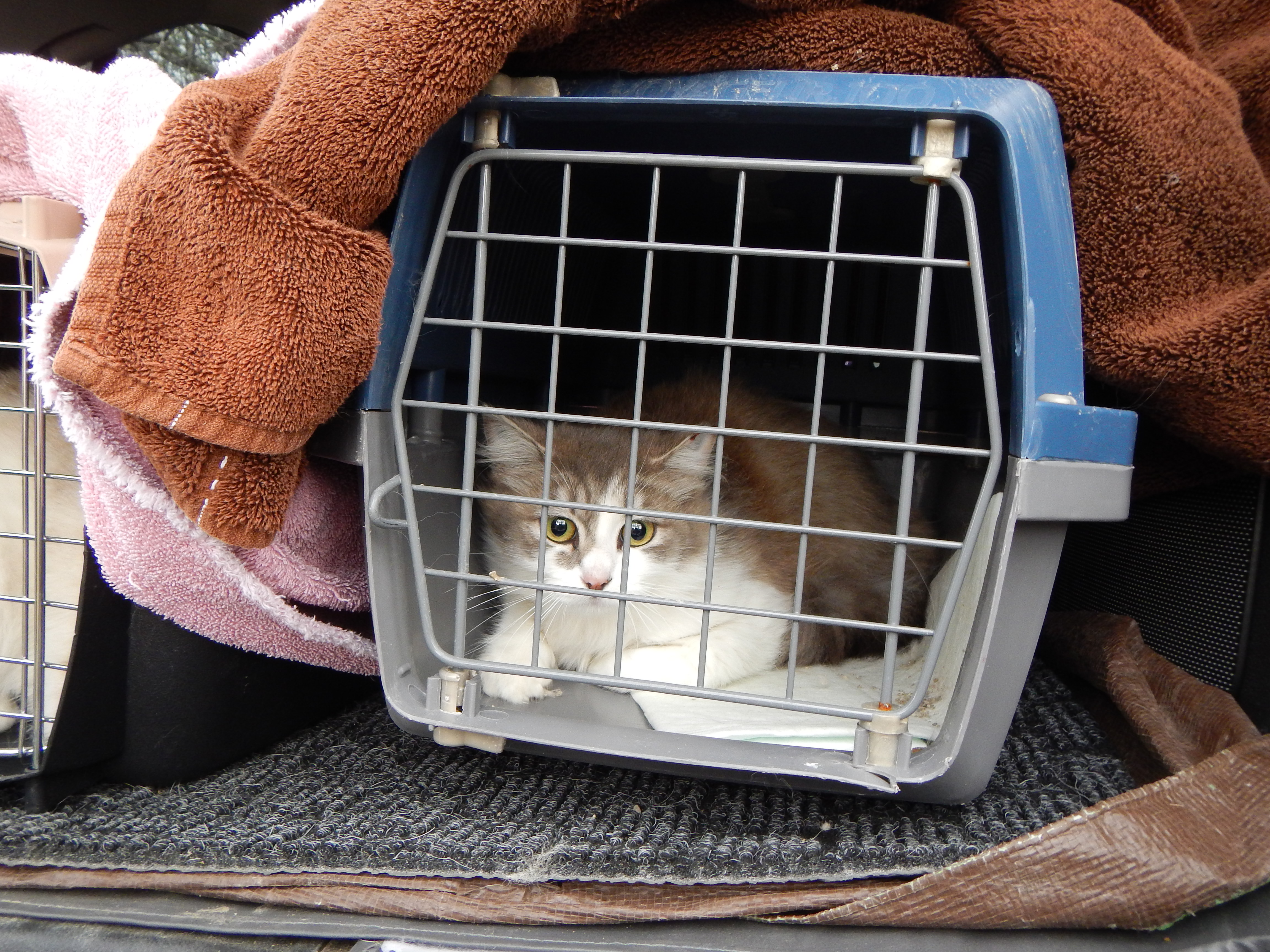
Waiting for release.
By MICHELE YOUNG
Early evening still holds some warmth from the spring day, even as the sun starts to fade. Barb Zibrik pulls into the overgrown driveway of a man who lives in a part of Kamloops where time-worn homes, apartments and small businesses mix.
The homeowner enjoys watching the wild cats and kittens that hang out in the neighbourhood. Zibrik has convinced him, however, that the cats need to be spayed, neutered and vaccinated. She also feeds the colony regularly, which helps keep the felines healthy.
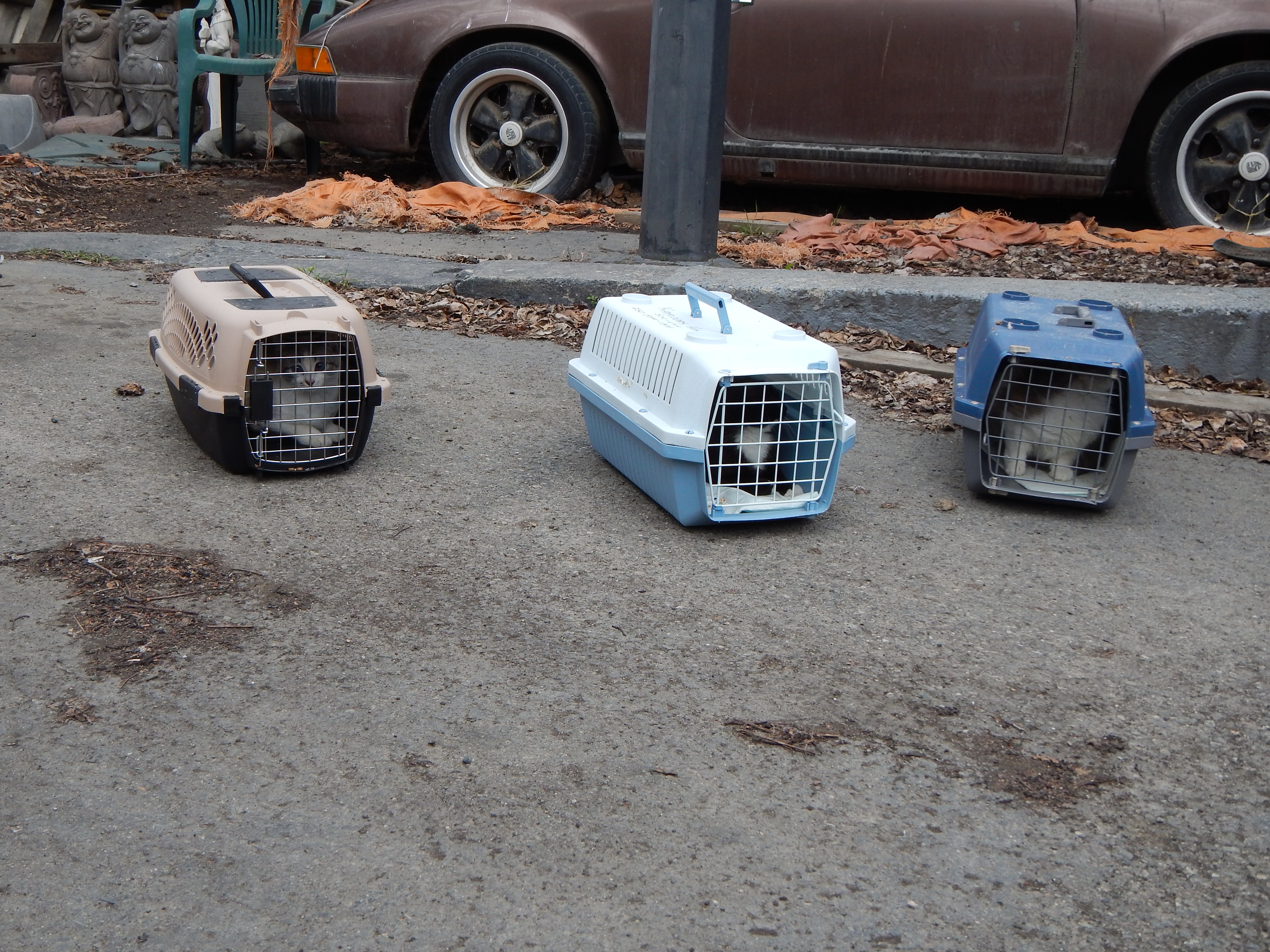
Three spayed and ready to go.
Today’s food rations were withheld. Zibrik needs the wild ones to be hungry enough that they’ll go into one of the two cat traps she sets up at the end of the driveway nearest the house.
Since the society began trapping this group two years ago, 102 cats have been spayed or neutered and returned for release. Another 20 or so still have to be caught. The longer they are left, the more litters of kittens will be born. Kittens that face malnutrition from mothers bearing three litters in a year, disease and exposure in winter.
Zibrik ‘baits’ the traps at the back so the cats will have to step on the plate that triggers the door to close. She scatters a few treats around the entries to lure her victims.
Then she returns to her SUV, pulls back a few metres, and waits.

Thinking it over.
An orange tabby she has named Felix is first to step forward, which Zibrik predicted would happen. Felix was trapped long ago. He won’t go back in, but he’ll scavenge any scraps he can around the traps.
A young, light-gray female circles the cages but doesn’t get close. A female calico hangs back under the truck in the driveway. A flame-point Siamese (white with orange ear tips and face) sniffs around, then wanders toward Zibrik’s SUV.
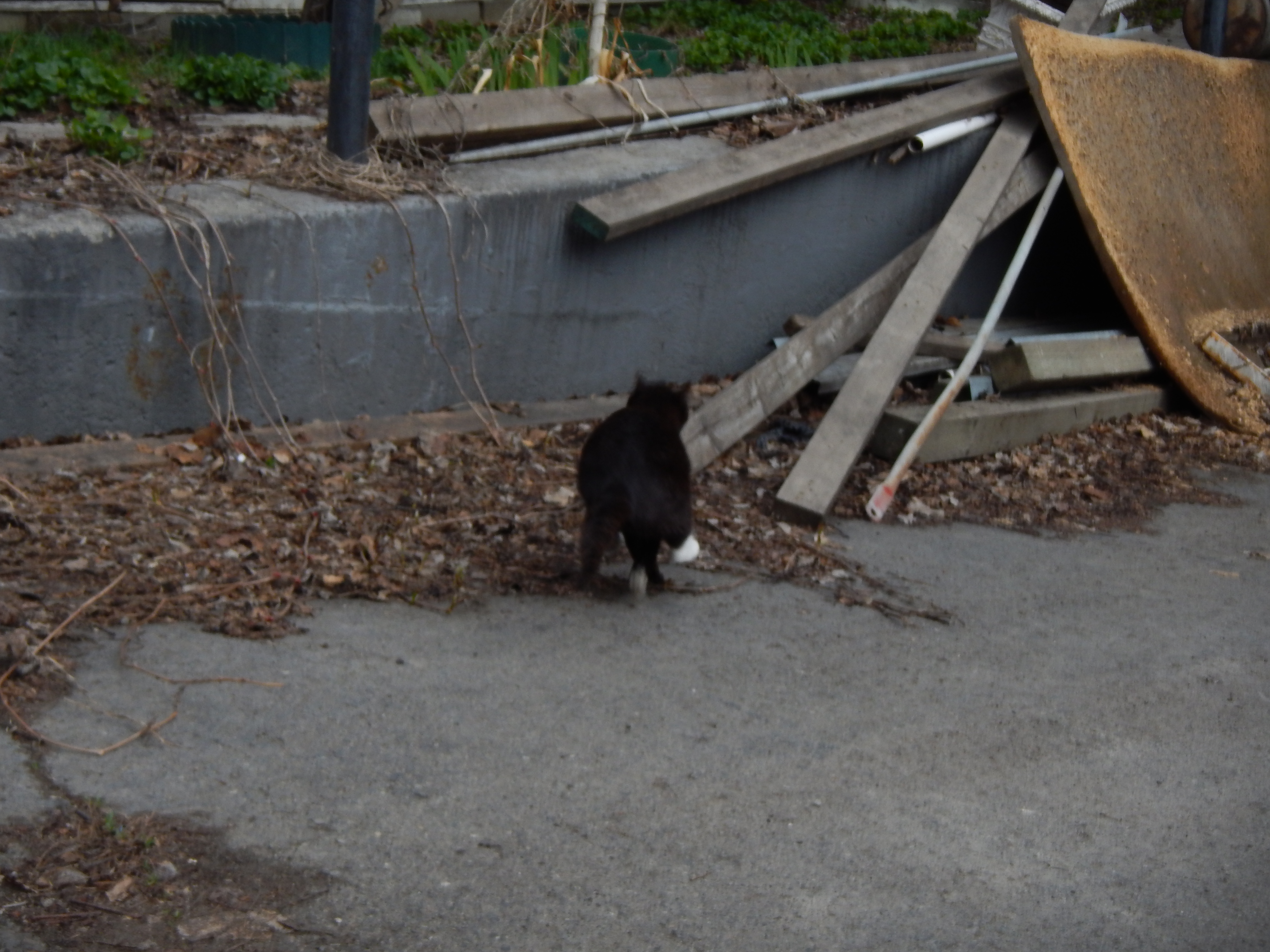
Freedom!
All are on her list of cats still needing to be spayed or neutered. None are going in the traps tonight.
• • •
Trapping a wild cat can be a challenge. They are wary creatures, suspicion and caution are their means of survival.
Like any urban centre, Kamloops has feral cat colonies scattered around town. The Kamloops and District Humane Society, of which Zibrik is executive director, has done trap/spay/neuter/return in several areas. Volunteers put food and water out and the cats live out their days without reproducing.
Some of the colonies have dwindled to just a few; a couple have vanished entirely years after the cats were fixed.
While they’re at the vet, the cats have one ear snipped so that even at a distance, it can be identified as being spayed or neutered. Once they’re released, no one will be able to get close enough to see if they are tattooed.
Groups like the humane society that trap and release do so under the belief that if the cats are killed, others will move in to take their place. Besides, they provide a service, keeping the mouse numbers down for nearby homes and businesses.
• • •
After rebaiting the traps twice, Zibrik packs it in. The vet clinic is about to close, and she doesn’t want to take any ferals home with her. The more they get transported around, the more they are stressed.
She’ll come back another night. Maybe she’ll have some luck like she did on a night last week.
On that night, despite the drizzly weather, she set up the traps and crossed her fingers. Within 45 minutes, she had caught three young females.
They were spayed and vaccinated, then spent a couple of days in a quiet part of Zibrik’s home recovering. Females are at higher risk of infection because of the invasiveness of the surgery.
With towels draped over their carriers, the trio were returned to their home turf. One by one, Zibrik opened the wire carrier doors. Each cat stepped out hesitantly, then dashed for a familiar safe spot.
Zibrik scattered some canned food on the ground, but the three she let go weren’t about to come back that fast. Instead, she wanted to take inventory.
“I always stay for a while to see who shows up,” she said.
Other cats skulked toward the food, including the notorious Felix and Murphy, a gray tabby who is another frequent responder when there are snacks to be had.
Tonight’s empty traps are discouraging, but Zibrik reminds herself of the 102 who have been spayed and neutered. That’s 102 cats who aren’t creating kittens; 102 cats who were vaccinated and are leading healthier lives for it; 102 cats who will continue to be fed and watched and checked on.
When she remembers that, Zibrik feels better. She’ll be back to trap another night.
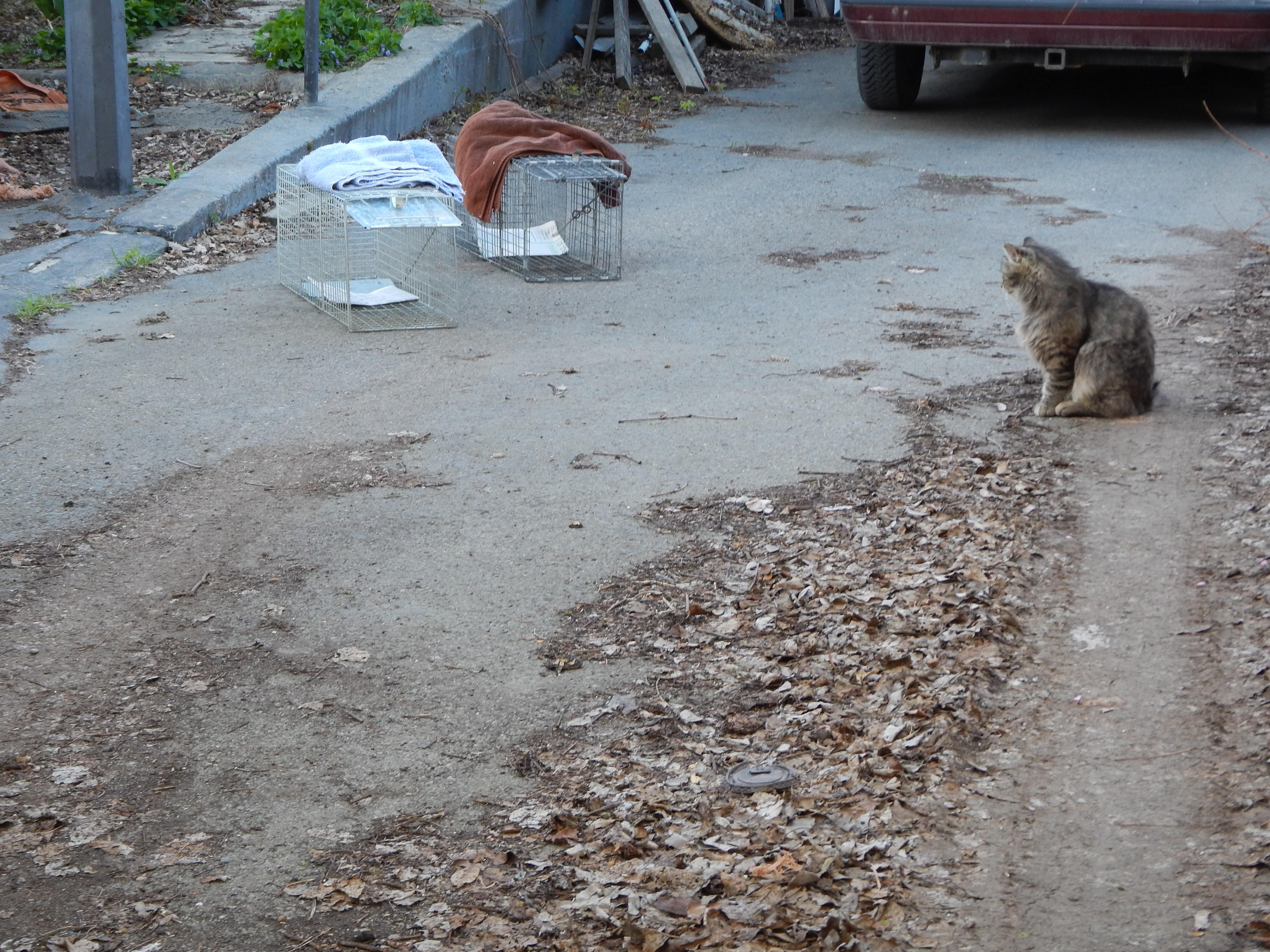
Tempted. Murphy looks at cat traps.

 ArmchairMayor.ca
Leave a comment