
A look ahead at what promises to be an election year of few issues and little change
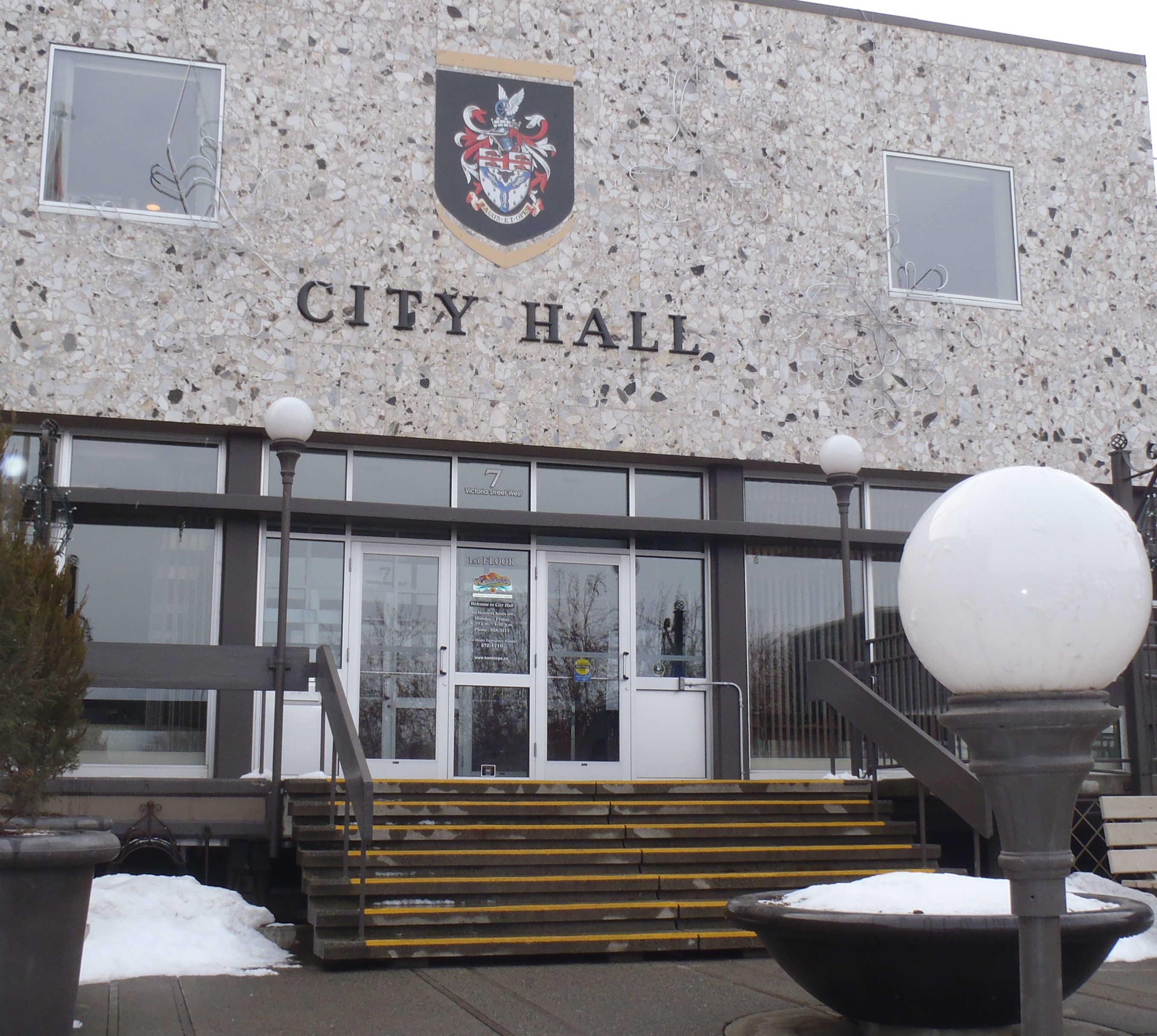
Who will be in City Hall for next four years?
By MEL ROTHENBURGER
CITY HALL/ ANALYSIS — This is the time of year when gardeners start planning what to plant, and candidates start planning their run at a chair on City council.
Early indications are it will be a year of few issues, few changes and, as a result, a low turnout.
But a low turnout in itself makes the trends in this election hard to predict because the vote can be dominated by influential blocks that don’t get balanced out by the mainstream.
In 2011, only 19,442 eligible voters went to the polls in Kamloops. That’s less than 30 per cent, compared to 60 per cent or more in some previous elections.
The result was significant change, though it was also heavily influenced by the parkade-in-the-park issue that almost cost incumbent Mayor Peter Milobar his job to the previously little-known Dieter Dudy. A mere 235 votes separated them, and if not for the protest vote being split among Milobar’s three opponents the result might have been much different. As it was, the incumbent mayor’s majority plummeted from 74 per cent to less than 50.

Mayor Peter Milobar.
What if more people had voted? Would it have gotten Dudy over the top, or would status quo voters have widened Milobar’s margin? Will the new four-year terms encourage, or discourage potential candidates?
This time out, without a major issue like the parkade, nobody’s expecting much of a challenge to Milobar, though there will probably be other names on the ballot. His plea to keep the status quo at City Hall is likely to be heeded — by the end of his next term, he will have served on council for an impressive 16 years.
Dudy has decided his chances are better running for council and won’t go up against Milobar this year. Neither will Coun. Ken Christian.
A fixture on school board for many years, he topped the council candidates comfortably in his first try in 2011, 3,000 votes ahead of his nearest rival, incumbent Marg Spina. He would, in all likelihood, be a serious mayoral contender but prefers to stay out of that race while Milobar is in charge.
Incumbents Tina Lange and Pat Wallace rounded out the top half of the slate last election, and former councilor Arjun Singh made an impressive comeback to land in fifth, while incumbent Nancy Bepple took sixth.
The last two slots — and therefore possibly the most vulnerable in 2014 — were filled by newcomers Donovan Cavers and Nelly Dever.
With the resignation of Nancy Bepple for health reasons, there are, realistically, three chances for newcomers to get on board.
Cavers has emphasized his green roots throughout his first term but it remains to be seen whether his anti-Ajax stand will help or hurt him. Dever has lately made a concerted effort to dominate the role of guardian of the purse strings, questioning several major projects.
Her position is always that she supports such things in principle but wants to be sure money is being spent wisely. That could either strengthen her chances for re-election or leave her with an image of being a negative Nelly.
She squeaked into the last available seat in 2011 by 119 votes over retired firefighter Andy Philpot, who isn’t saying yet whether he’ll run again. If I were a betting man, I’d say it’s a safe wager he will.
“I haven’t made it official yet,” he told The Armchair Mayor News, which gives you a pretty good idea. He says he’ll be able to say for sure in August.
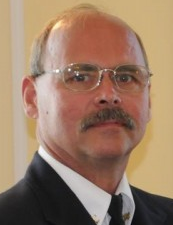
Andy Philpot. In the race?
“This is going to be a tough year because there’s not going to be a lot of big issues out there, and there’s not a lot of seats open.
“You’ve got to boot somebody out of there (to be elected).”
Philpot is right about that, but predicting the outcome of Kamloops elections — which is exactly what we’re trying to do here — is a dicey business especially this far in advance.
Peter Sharp, a former two-term councillor, was a few hundred votes behind Philpot. He refuses to say if he’ll run again, but admits he’s thinking about it.
John De Cicco, on the other hand, is adamant that he’s done with politics. He served four terms and that’s enough, he says.
I wasn’t able to reach Christ Ortner but 13th place finisher Brendan Shaw — who was only 1,500 votes behind Dever — hasn’t ruled out another try.
“I haven’t made a decision yet,” he said. “I haven’t ruled it out.”
Shaw said it depends on what happens in the next few months but his view of how many seats will be “open” is similar to Philpot’s. ”They’ve done a pretty decent job,” he said of the incumbents.
“Could we do better? Of course. I think I could improve on things if I was on council.”
Another name frequently mentioned as a candidate is banker Daljit Sadhra, who told me quite some time ago he’s interested in running.
If any of the above do run, they’re likely to have a lot of company — Kamloops is well-known for its big election slates in civic elections. One year, three dozen candidates vied for the eight council jobs and five for the mayoralty.
In 2011, there were 24 candidates for council and four for mayor, plus 13 for the four city seats on school board.
Quiet election or not, there will be plenty to choose from.

 ArmchairMayor.ca
Less than 30% of eligible voters voted last time?
Did half of them, only 15% of our eligible voters, vote in our present mayor? 19,442 voted / 2 = 9,721.
Less than 10,000 voters might have changed these last years.
LikeLike
There are no serious issues? Hello! From local food production/security to ongoing livability issues like noise and air pollution to our chronically ill downtown to urban sprawl to infill, just to name a few. Our present council does not strike me as particularly “progressive” (am I stating the obvious?) and none of the potential candidates mentioned in the article appear to be “progressive” either.
Although a couple of them show some potential. I hope they come out with a bit of a platform should they decide to run.
LikeLike